What Is Photoaging? Understanding UV Skin Aging | ME MEDSPA
What Is Photoaging? How Sun Exposure Changes Your Skin Over Time
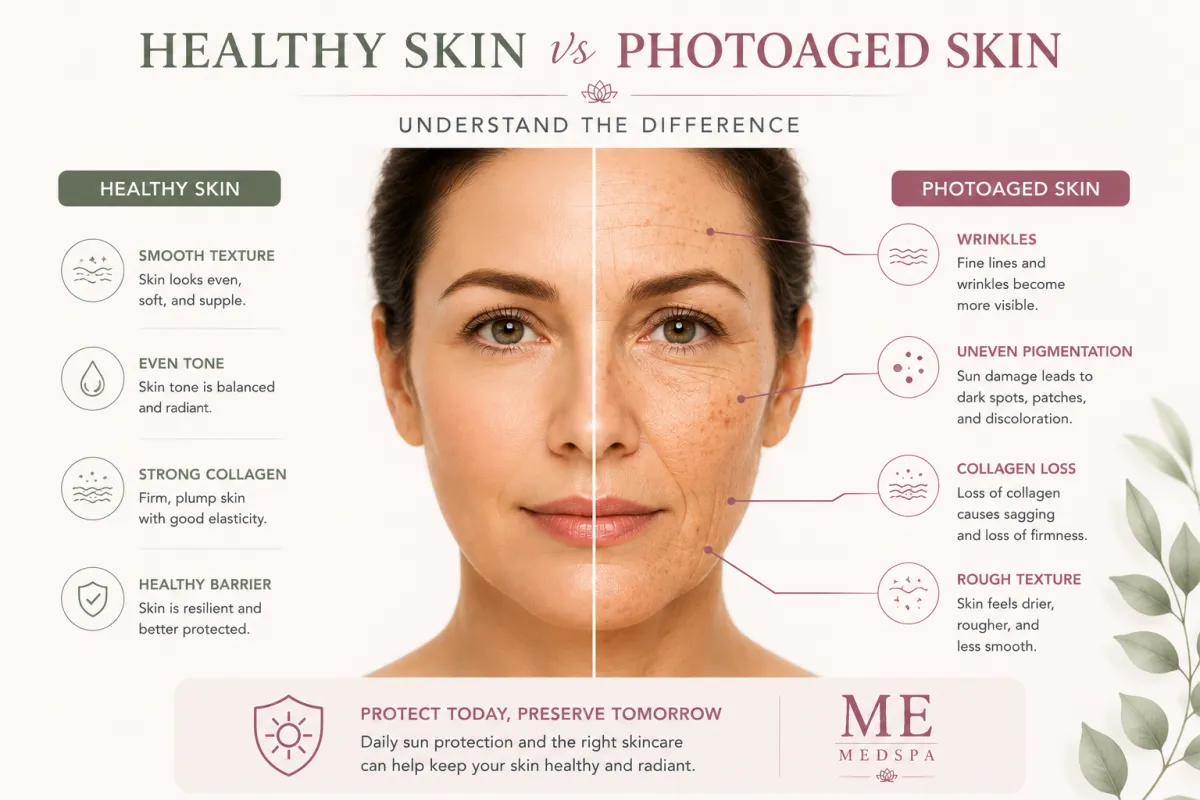
Most people associate skin aging with getting older, but a significant portion of visible skin aging is influenced by something else: long-term exposure to ultraviolet (UV) radiation.
This process is known as photoaging.
Unlike natural aging, which occurs gradually over time, photoaging refers to skin changes caused by repeated exposure to sunlight and other sources of ultraviolet radiation.
Over the years, UV exposure can contribute to:
Fine lines and wrinkles
Uneven skin tone
Brown spots
Reduced skin elasticity
Rough texture
Thinner-looking skin
Loss of firmness
Although photoaging is common, many of its effects can be reduced by protecting your skin from ultraviolet exposure and adopting healthy skincare habits.
In this guide, we'll explain what photoaging is, how it differs from natural aging, and what you can do to help maintain healthier-looking skin.
What Is Photoaging?
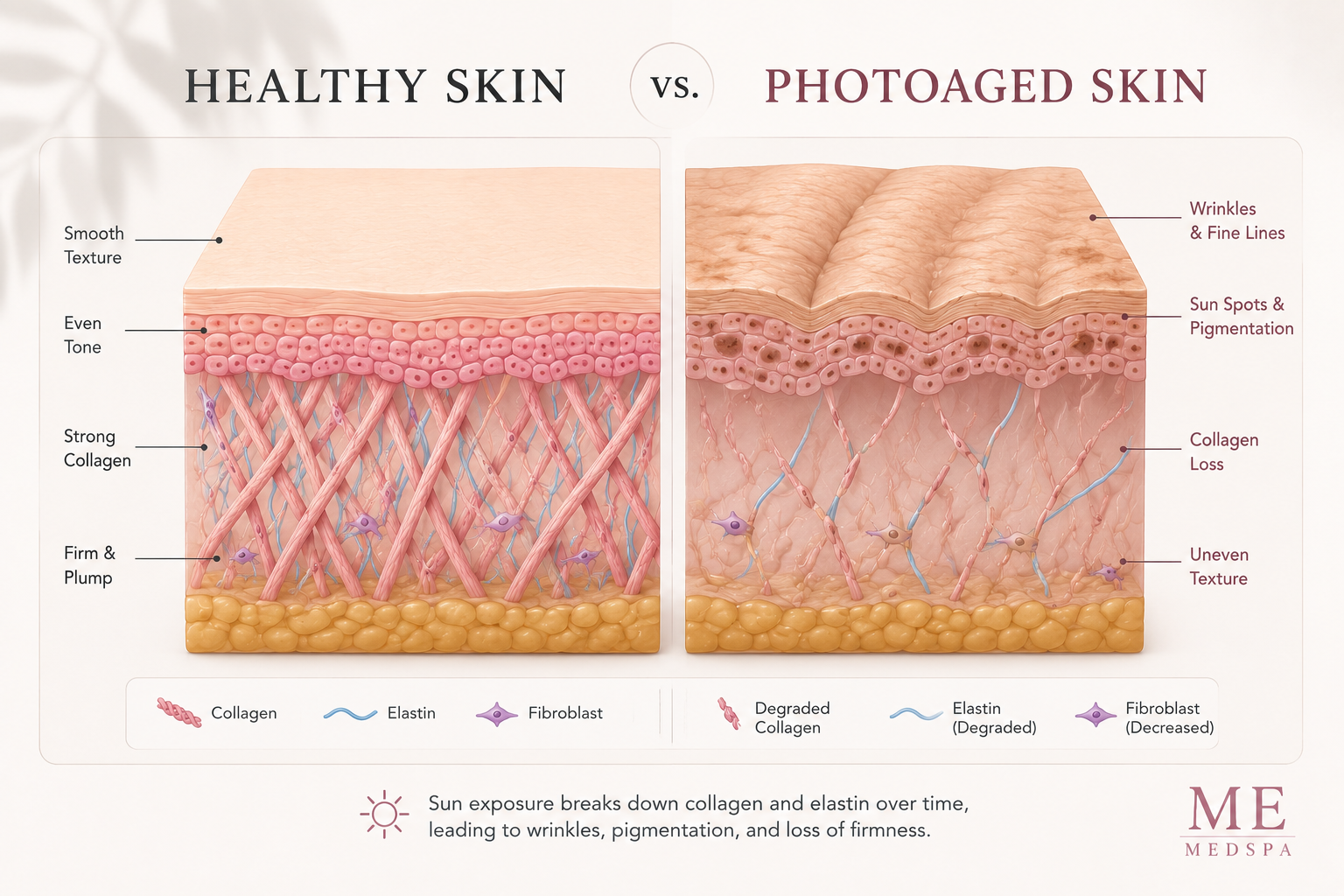
Photoaging refers to premature skin aging caused primarily by long-term exposure to ultraviolet (UV) radiation.
Unlike intrinsic aging—which happens naturally as we grow older—photoaging is largely influenced by environmental exposure.
Over time, repeated UV exposure affects several important components of the skin, including:
Collagen
Elastin
Pigment-producing cells
Blood vessels
Skin barrier function
These cumulative changes contribute to many of the visible signs people associate with aging skin.
Photoaging vs. Natural Aging
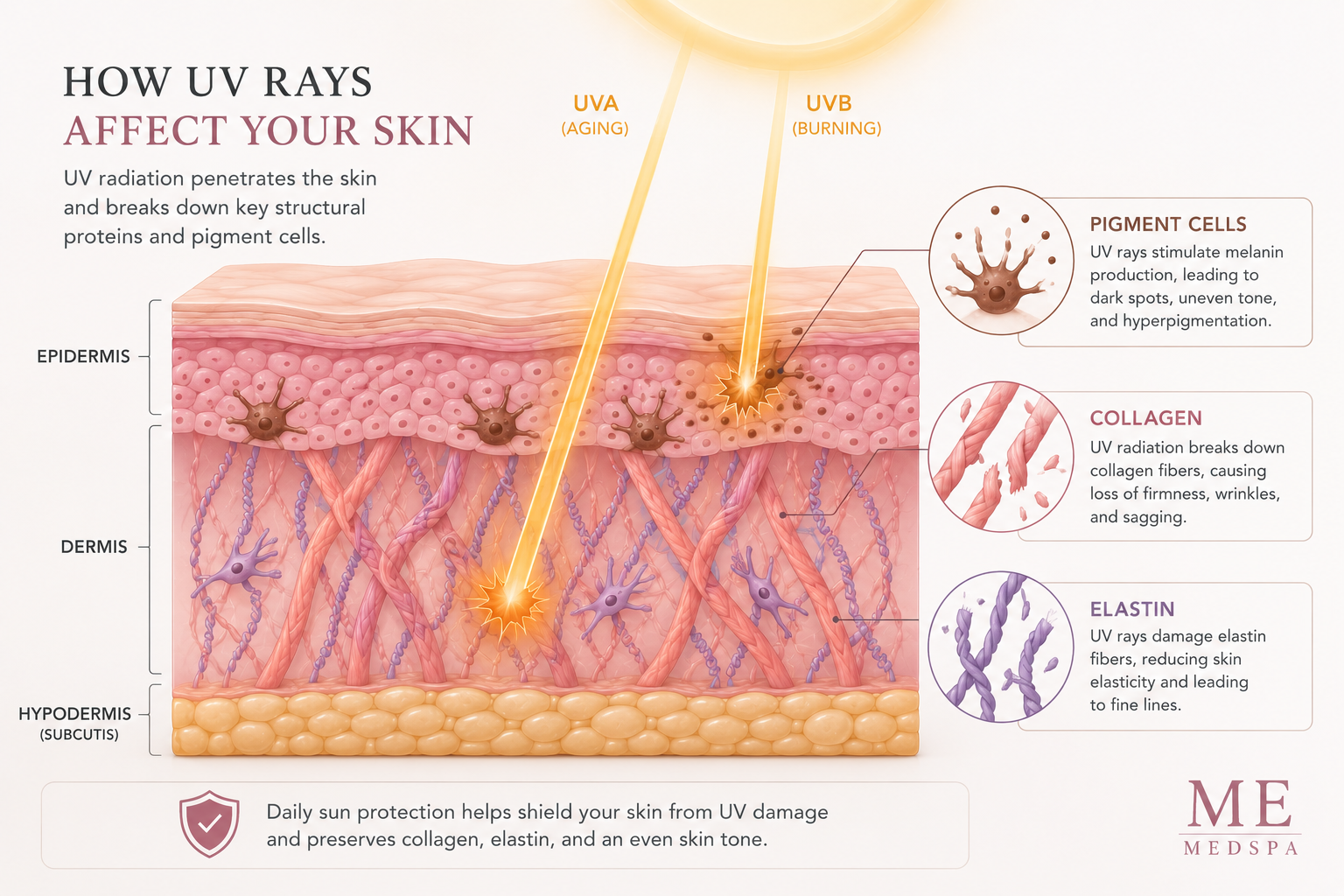
Although both processes occur together, they are different.
Natural (Intrinsic) Aging
Natural aging occurs because of the normal biological changes that happen over time.
It is associated with:
Gradual collagen decline
Reduced elastin
Slower skin-cell turnover
Natural thinning of the skin
Photoaging
Photoaging is primarily caused by repeated UV exposure.
It often contributes to:
Deeper wrinkles
Uneven pigmentation
Rough texture
Brown spots
Broken capillaries
Reduced elasticity
Because these changes accumulate over many years, protecting your skin early in life can help reduce premature aging.
What Causes Photoaging?
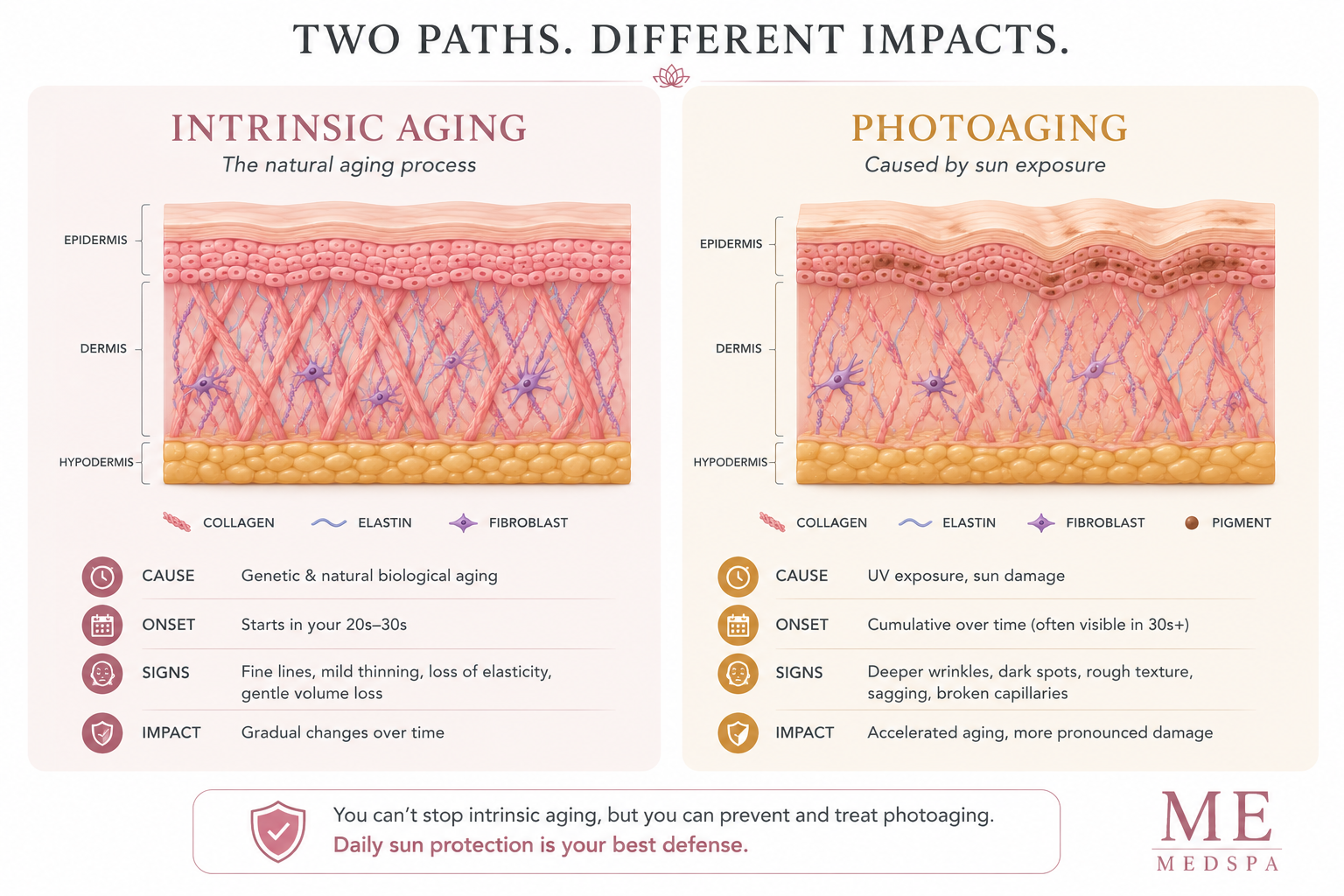
The primary cause is repeated ultraviolet exposure.
Sources include:
Daily sunlight
Outdoor activities
Driving
Recreation
Tanning beds
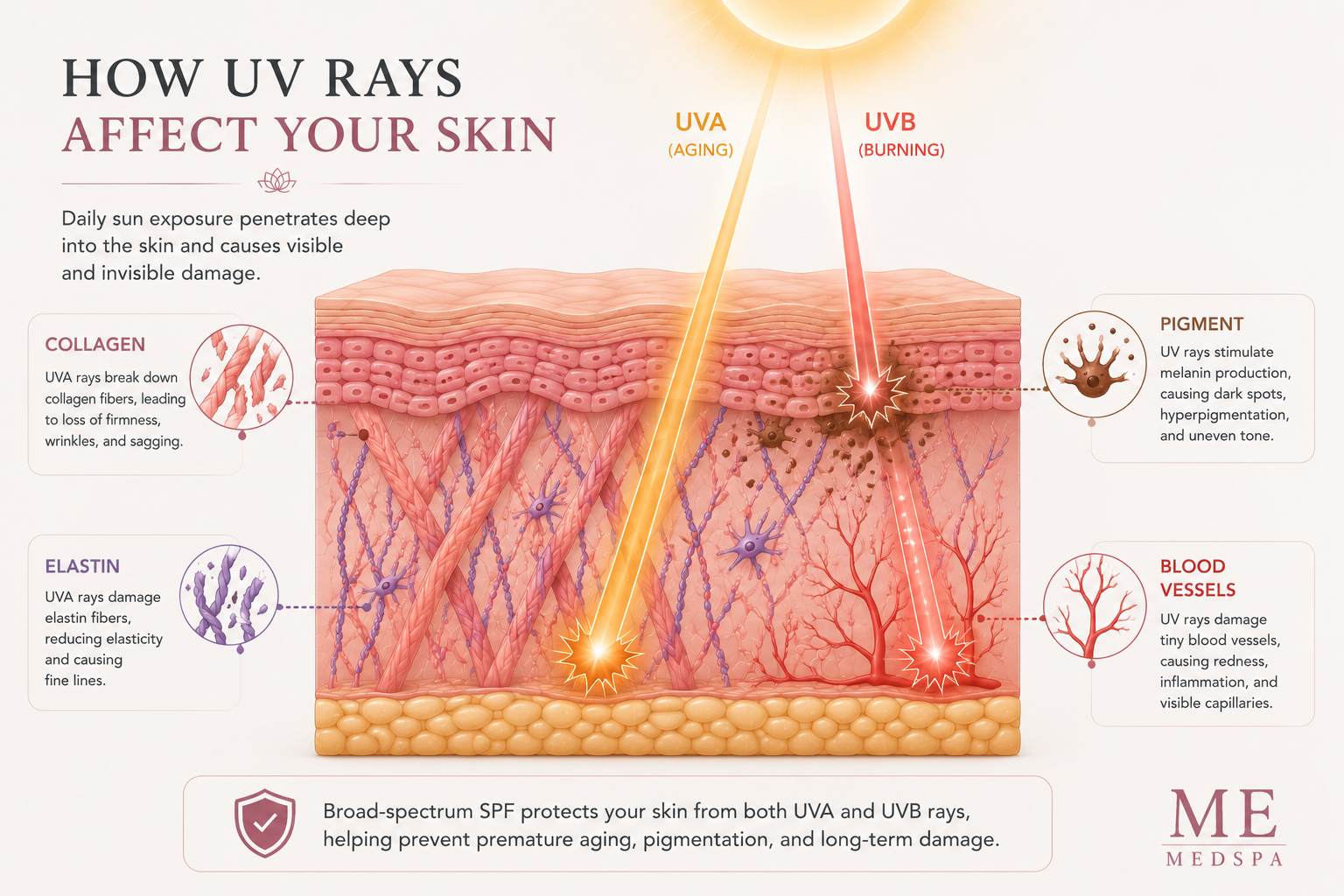
Ultraviolet radiation gradually affects:
Collagen
UV contributes to collagen breakdown, reducing structural support.
Elastin
Repeated UV exposure causes abnormal elastin changes that reduce elasticity.
Pigmentation
Melanin becomes unevenly distributed, leading to age spots and sun spots.
Blood Vessels
Small blood vessels may become more visible over time.
Common Signs of Photoaged Skin
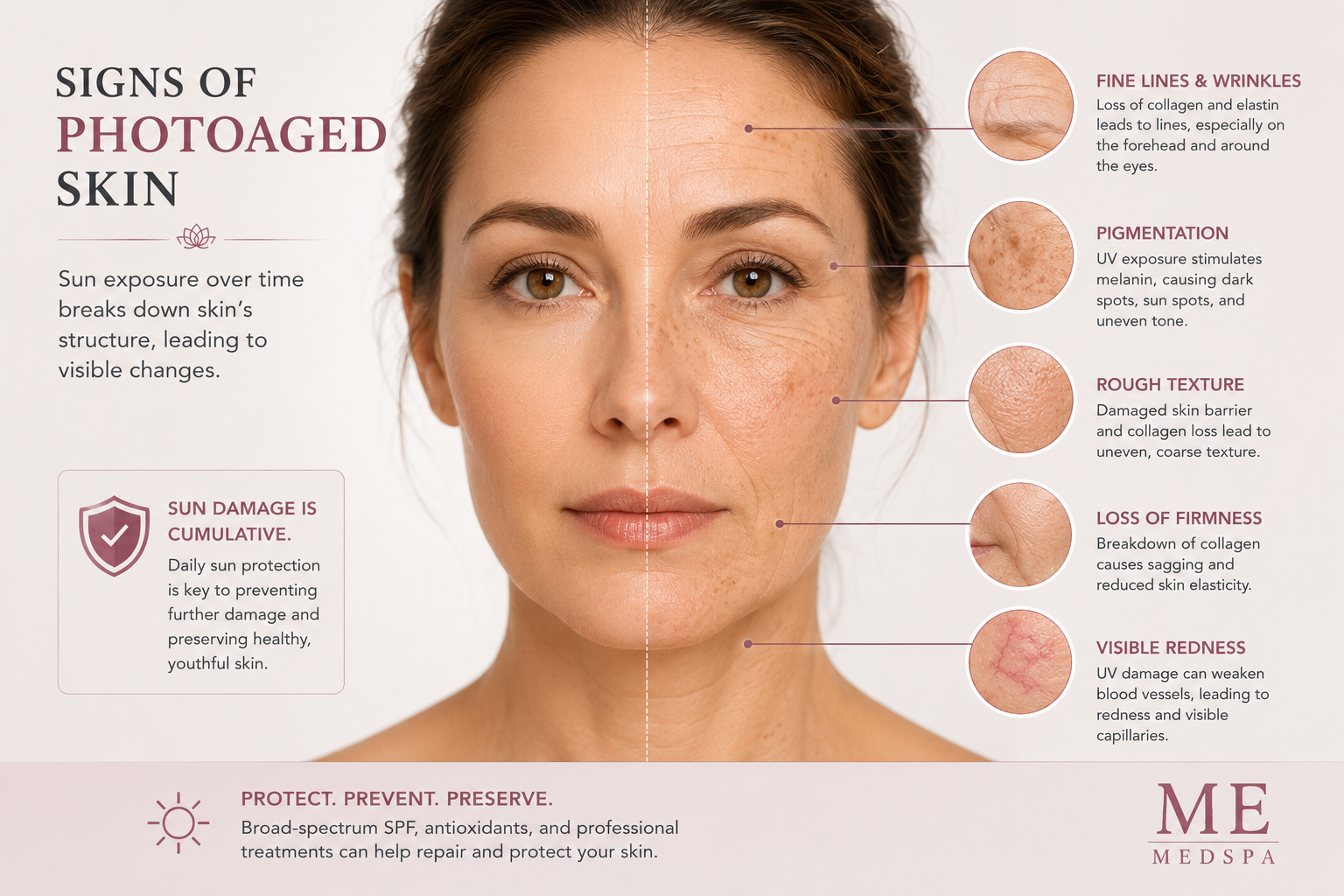
People may notice:
Fine lines
Deeper wrinkles
Uneven pigmentation
Age spots
Rough texture
Dryness
Reduced elasticity
Crepey skin
Mild skin laxity
Dull complexion
Not everyone develops the same signs because genetics, skin tone, lifestyle, and cumulative sun exposure all influence the aging process.
Who Is Most Likely to Develop Photoaging?
Risk factors include:
Frequent outdoor work
Outdoor sports
History of tanning bed use
Inconsistent sunscreen use
Fair skin
Living in sunny climates
Years of cumulative UV exposure
Even people who rarely experience sunburn can gradually develop photoaging.
Can Photoaging Be Reversed?
Photoaging cannot be completely reversed because ultraviolet damage accumulates over many years.
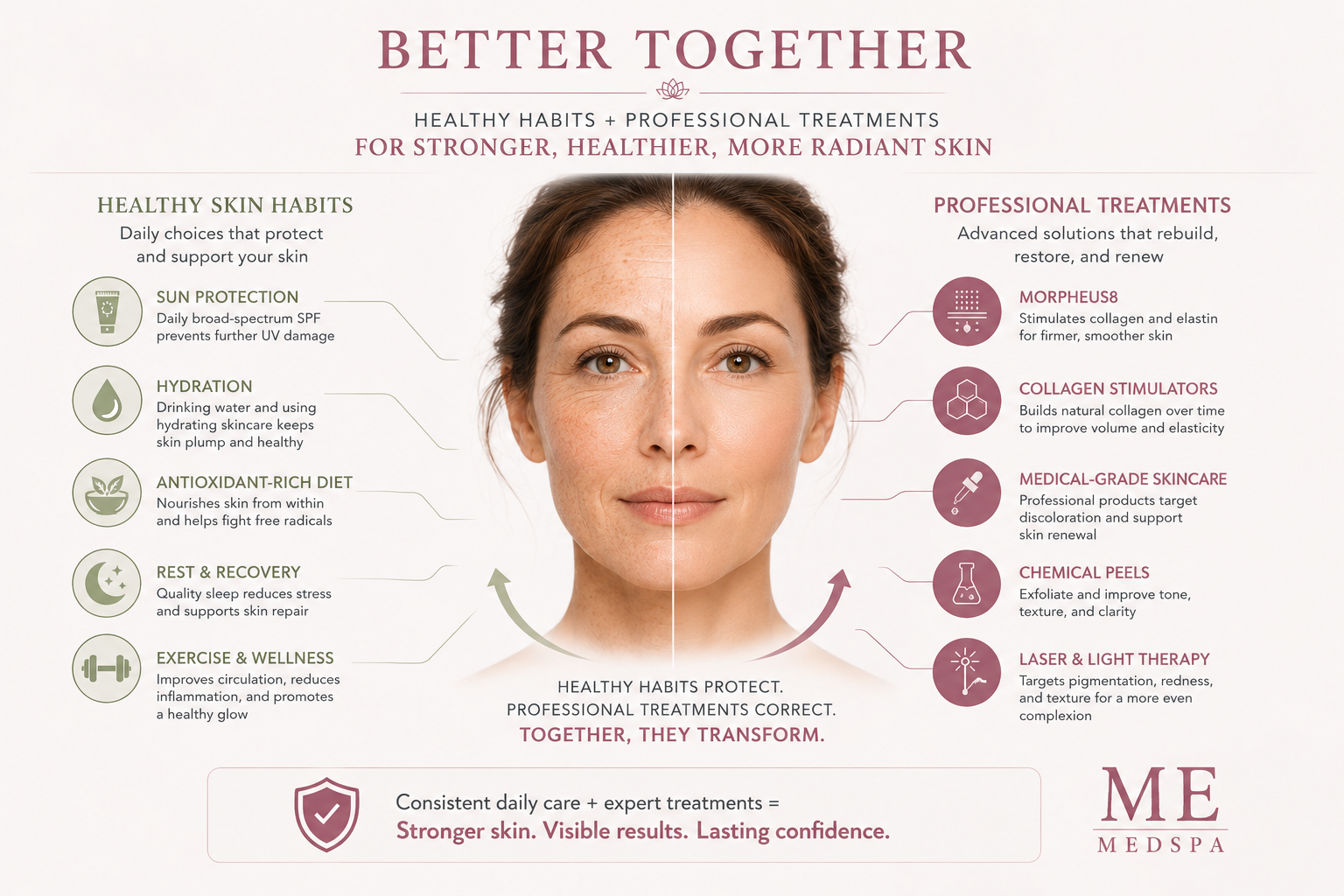
However, many people can improve the appearance of photoaged skin by combining healthy lifestyle habits, consistent skincare, daily sun protection, and appropriate professional treatments.
The best approach depends on which signs of photoaging are most noticeable.
For example:
Fine lines
Uneven texture
Brown spots
Reduced firmness
Dryness
Crepey skin
Mild skin laxity
Different concerns often require different treatment strategies.
Daily Habits That Help Reduce Additional Photoaging
Although existing sun damage cannot always be erased, protecting your skin from further UV exposure is one of the most effective ways to maintain healthier-looking skin.
Wear Sunscreen Every Day
Daily sunscreen remains the most important habit for preventing additional photoaging.
Choose:
Broad-spectrum SPF 30 or higher
Water-resistant formula when appropriate
Daily application—even on cloudy days
Remember to protect:
Face
Neck
Chest
Hands
Ears
Reapply every two hours during prolonged outdoor activities.
Wear Protective Clothing
Additional protection includes:
Wide-brimmed hats
UV-protective sunglasses
Long sleeves
UPF-rated clothing when spending extended time outdoors
These measures reduce cumulative UV exposure over the years.
Avoid Indoor Tanning
Tanning beds emit ultraviolet radiation that contributes to premature skin aging.
Avoiding indoor tanning helps reduce additional collagen and elastin damage.
Maintain a Healthy Lifestyle
Healthy skin is supported by:
Balanced nutrition
Adequate hydration
Regular exercise
Quality sleep
Stress management
Avoiding smoking
These habits support overall skin health alongside sunscreen and skincare.

Which Skincare Ingredients May Help?
Certain skincare ingredients may improve the appearance of photoaged skin over time.
Retinoids
Retinoids are commonly used to improve:
Fine lines
Uneven texture
Skin renewal
They should be introduced gradually because irritation can occur.
Vitamin C
Vitamin C is an antioxidant that may help support:
Brighter-looking skin
More even skin tone
Protection against environmental oxidative stress
Vitamin C complements—but does not replace—daily sunscreen.
Hyaluronic Acid
Hydrated skin often appears:
Smoother
Healthier
More radiant
Hyaluronic acid helps support skin hydration but does not reverse structural UV damage.
Ceramides
Ceramides strengthen the skin barrier and reduce moisture loss.
Barrier support is especially important in mature or photoaged skin.
Peptides
Peptides are commonly included in anti-aging skincare products that focus on improving the appearance of skin firmness.
Results depend on the formulation and overall skincare routine.
Professional Treatments That May Improve Photoaged Skin
Healthy habits remain the foundation of skin health, but some patients choose professional treatments to address concerns related to photoaging.
Treatment recommendations depend on:
Skin type
Degree of sun damage
Texture
Pigmentation
Firmness
Personal goals
Morpheus8
Morpheus8 combines radiofrequency energy with microneedling to support collagen remodeling.
It may be considered for concerns such as:
Fine lines
Mild skin laxity
Uneven texture
Reduced firmness
Overall skin rejuvenation
While Morpheus8 is not designed specifically to remove sun spots, it may improve aspects of skin quality affected by photoaging.
Skin Boosters
Skin Boosters focus on improving hydration and overall skin quality.
They may help photoaged skin appear:
More hydrated
More radiant
Smoother
Healthier
They complement—but do not replace—sun protection and skincare.
Salmon DNA Facial
Patients looking to improve hydration and overall skin quality may also consider a Salmon DNA Facial.
Treatment recommendations should always be individualized based on skin condition and goals.
Combination Treatment Plans
Many patients experience several signs of photoaging at once.
For example:
Pigmentation
Fine lines
Skin laxity
Dryness
Reduced elasticity
Because of this, a combination treatment plan is often more appropriate than relying on one procedure alone.

Common Myths About Photoaging
Myth 1: Only Older Adults Develop Photoaging
Photoaging begins accumulating much earlier than most people realize.
Daily UV exposure during your 20s and 30s contributes to visible changes later in life.
Myth 2: You Only Need Sunscreen at the Beach
Ultraviolet exposure occurs:
While driving
Walking outside
Running errands
Sitting near windows
Participating in outdoor activities
Daily sunscreen remains important regardless of the occasion.
Myth 3: A Tan Means Healthy Skin
A tan is a sign that the skin has responded to UV exposure by producing additional melanin.
It is not an indication that the skin has become healthier.
Myth 4: One Treatment Can Completely Reverse Photoaging
No single treatment can erase decades of UV exposure.
Healthy habits, maintenance, and realistic expectations remain important.
Myth 5: Darker Skin Cannot Develop Photoaging
People of every skin tone can experience photoaging.
Although visible signs may differ, UV exposure affects collagen, elastin, and skin health across all skin types.
When Should You Consider a Consultation?
A consultation may be appropriate if you notice:
Uneven pigmentation
Increasing wrinkles
Rough texture
Reduced skin firmness
Persistent sun damage
Multiple signs of photoaging
A personalized evaluation helps identify which concerns are related to pigmentation, collagen loss, elasticity, hydration, or other age-related changes.
Photoaging Treatment Consultations in Monterey Park
At ME MEDSPA, we believe every treatment plan should begin with understanding your skin—not just your age.
During your consultation, we may evaluate:
Sun damage
Skin texture
Pigmentation
Hydration
Firmness
Elasticity
Previous treatments
Lifestyle habits
Your aesthetic goals
Based on your evaluation, we'll discuss non-surgical options that align with your concerns while helping you maintain realistic expectations.
We proudly serve patients throughout:
Monterey Park
Alhambra
San Gabriel
Rosemead
East Los Angeles
Surrounding San Gabriel Valley communities
Related Reading
Continue exploring healthy skin aging:
Why Skin Ages After 30: Understanding Collagen Loss & How to Slow It Naturally
Age Spots vs. Sun Spots: What's the Difference and Can They Be Treated?
Crepey Skin: What Causes It and How Can You Improve Its Appearance?
Frequently Asked Questions
What is photoaging?
Photoaging refers to premature skin aging caused primarily by long-term exposure to ultraviolet (UV) radiation.
How is photoaging different from natural aging?
Natural aging occurs because of normal biological changes over time, while photoaging is largely caused by cumulative UV exposure.
Can photoaging be reversed?
Photoaging cannot be completely reversed, but healthy habits, skincare, and professional treatments may improve the appearance of photoaged skin.
What are the first signs of photoaging?
Common early signs include fine lines, uneven pigmentation, rough texture, dullness, and reduced skin elasticity.
Does sunscreen prevent photoaging?
Daily use of broad-spectrum sunscreen is one of the most effective ways to reduce additional UV-related skin aging.
Is photoaging only caused by the sun?
Most photoaging results from ultraviolet radiation from sunlight, though tanning beds also contribute.
Can Morpheus8 improve photoaged skin?
Morpheus8 may improve texture, firmness, and collagen remodeling, making it a suitable option for some patients with photoaging concerns.
Can people with darker skin develop photoaging?
Yes. All skin tones can experience photoaging, although the visible signs and pigmentation changes may vary.
Book Your Consultation
Photoaging develops gradually, but healthy habits and personalized care can help you maintain healthier-looking skin over time.
If you're noticing fine lines, uneven pigmentation, reduced firmness, or other signs of sun-related aging, a consultation can help you better understand your options.
At ME MEDSPA, we create individualized treatment plans based on your skin condition, goals, and lifestyle.
Schedule your consultation today to learn more about non-surgical options that may support healthier-looking skin.

