Why Skin Becomes Thinner With Age | ME MEDSPA
Why Does Skin Become Thinner With Age? Causes, Prevention & Treatment Options
Have you noticed that your skin seems more delicate than it used to be?
Perhaps it bruises more easily, feels more fragile, or no longer has the same firmness and resilience.
These are common concerns as we age and are often related to skin thinning.
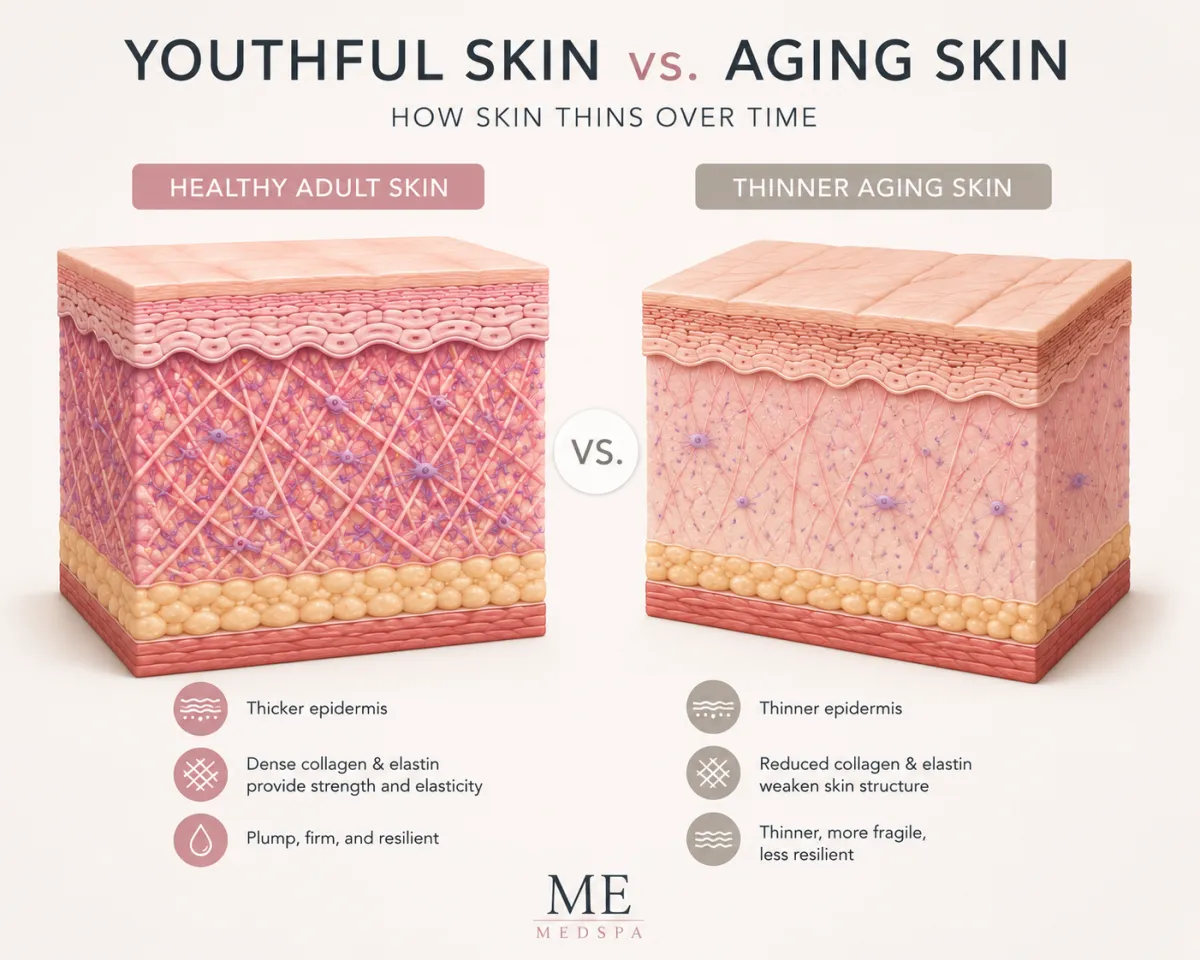
Healthy skin naturally changes over time. As collagen, elastin, and other structural components gradually decline, the skin becomes thinner, less elastic, and more susceptible to dryness and environmental damage.
Years of sun exposure, lifestyle habits, genetics, and certain medical conditions can all contribute to this process.
Although skin thinning is a normal part of aging, understanding why it happens can help you protect your skin and make informed decisions about skincare and treatment options.
In this guide, we'll explain what causes thin skin, how it differs from loose or crepey skin, and practical strategies that may help support healthier-looking skin.

What Is Thin Skin?
Thin skin refers to skin that has lost some of its natural thickness and structural support.
As the skin becomes thinner, it may appear:
More delicate
More transparent
Less firm
Easier to bruise
Drier
More fragile
This process occurs gradually and affects nearly everyone as they age.
Thin skin is especially common on:
Hands
Forearms
Lower legs
Neck
Face
Chest
Although thin skin becomes more common later in life, it is influenced by more than age alone.

Why Does Skin Become Thinner?
Several changes occur inside the skin over time.
Natural Collagen Loss
Collagen gives the skin strength and structure.
As collagen production gradually slows, the skin becomes less dense and less supportive.
If you'd like to understand collagen decline in more detail, read our guide:
Why Skin Ages After 30: Understanding Collagen Loss & How to Slow It Naturally
Reduced Elastin
Elastin helps skin stretch and return to its original position.
As elastin fibers decline, the skin loses resilience and becomes more fragile.
Thinning of the Dermis
The dermis—the deeper layer of the skin—gradually becomes thinner with age.
Because this layer contains collagen, elastin, and blood vessels, changes within the dermis contribute to:
Reduced firmness
Easier bruising
Slower healing
Increased fragility
Long-Term Sun Exposure
Years of ultraviolet exposure accelerate collagen breakdown and contribute to thinner, less resilient skin.
To learn more, read:
How Sun Damage Speeds Up Skin Aging
Lifestyle Factors
Certain habits may also influence skin health over time, including:
Smoking
Poor nutrition
Chronic stress
Inadequate sleep
Limited sun protection
Healthy daily habits support your skin's natural repair processes.

Thin Skin vs. Crepey Skin vs. Loose Skin
Although these concerns often occur together, they describe different changes.
Thin Skin
Reduced skin thickness
Increased fragility
Easier bruising
Crepey Skin
Fine, paper-like wrinkles
Thin textured appearance
Often associated with dryness
Loose Skin
Sagging
Reduced firmness
Skin laxity
Some people experience all three simultaneously.
If your primary concern is reduced skin firmness, you may also find our guide How to Tighten Sagging Skin Without Surgery helpful.

Can You Help Prevent Thin Skin?
Although natural aging cannot be stopped, healthy habits may help support skin quality over time.
Helpful habits include:
Daily sunscreen
Moisturizing consistently
Eating protein-rich foods
Staying hydrated
Avoiding smoking
Managing chronic conditions with your healthcare provider
Following a consistent skincare routine
These habits support healthy skin while complementing professional care when appropriate.

Can Thin Skin Be Improved?
Thin skin caused by natural aging cannot always be restored to its previous thickness, but its appearance, hydration, resilience, and overall quality may be improved.
The most appropriate approach depends on what is contributing to the concern.
For example, thin-looking skin may be influenced by:
Natural collagen decline
Long-term sun exposure
Dryness
Medication use
Hormonal changes
Weight loss
Certain medical conditions
Repeated use of topical corticosteroids
Because some causes are medical rather than cosmetic, it is important to understand why the skin has become thinner before starting treatment.
Professional care may focus on:
Supporting collagen remodeling
Improving hydration
Strengthening the skin barrier
Reducing additional UV damage
Improving overall texture and firmness
Non-Surgical Treatments That May Support Thin, Aging Skin
Professional treatments cannot stop natural aging, but some options may help improve skin quality in appropriately selected patients.
The treatment area matters because thin skin around the eyes or neck may require a different approach than skin on the cheeks, chest, hands, or body.
Morpheus8
Morpheus8 combines microneedling with radiofrequency energy to stimulate collagen remodeling beneath the skin.
It may be considered when thin-looking skin is accompanied by:
Mild skin laxity
Fine lines
Uneven texture
Reduced firmness
Early collagen loss
Morpheus8 is not intended to make the skin dramatically thicker overnight. Instead, improvements develop gradually as the skin remodels over time.
Treatment settings must be selected carefully, especially in areas where the skin is naturally delicate.
Skin Boosters
Dryness can make thin skin appear more fragile, dull, or finely lined.
Skin Boosters use injectable hyaluronic acid formulations to support hydration and overall skin quality.
They may help the skin appear:
Smoother
More hydrated
More radiant
Less dry
Healthier overall
Skin Boosters do not replace lost collagen, but they may complement a broader plan when dehydration is making thin skin look more noticeable.
Salmon DNA Facial
A Salmon DNA Facial may be considered as part of a treatment plan focused on hydration, texture, and overall skin quality.
Patients may explore this option when their skin appears:
Dry
Dull
Fine-textured
Less resilient
Uneven in appearance
Suitability varies, and treatment recommendations should be based on an individual assessment.
Combination Treatment Plans
Thin aging skin often involves several concerns at the same time.
A patient may have:
Collagen loss
Dehydration
Sun damage
Reduced elasticity
Mild laxity
Fine lines
Because of this, a personalized combination plan may be more appropriate than relying on one treatment alone.
A plan may include:
Daily sun protection
Barrier-supporting skincare
Hydration-focused treatment
Collagen-remodeling treatment
Gradual use of appropriate active ingredients
Ongoing maintenance
The goal should be healthier-looking skin—not aggressive treatment of already fragile tissue.

What Skincare Ingredients May Help Support Thin Skin?
A simple, consistent skincare routine may help improve hydration, support the skin barrier, and reduce further damage.
Helpful ingredients may include:
Ceramides
Hyaluronic acid
Peptides
Glycerin
Niacinamide
Antioxidants
Retinoids, when appropriate
Broad-spectrum sunscreen
Retinoids may support skin renewal and collagen-related processes, but they can also cause dryness, redness, and irritation.
Patients with very thin, sensitive, or fragile skin should introduce retinoids carefully and seek professional guidance before using stronger formulations.
Using too many active products at once may weaken the skin barrier and make the skin appear more irritated or fragile.
Suggested Morning Routine
Gentle cleanser
Hydrating or antioxidant serum
Barrier-supporting moisturizer
Broad-spectrum SPF 30 or higher
Suggested Evening Routine
Gentle cleanser
Targeted treatment product, when appropriate
Rich moisturizer
Additional barrier-supporting product if needed
Consistency is usually more important than complexity.
Why Sun Protection Is Essential
Ultraviolet exposure accelerates collagen breakdown and can make aging skin thinner, drier, and less resilient.
Daily sun protection may help reduce additional damage.
Helpful measures include:
Applying broad-spectrum SPF 30 or higher
Reapplying sunscreen during extended outdoor exposure
Wearing protective clothing
Using hats and sunglasses
Seeking shade during peak UV hours
Avoiding tanning beds
Sun protection is especially important after professional treatments because healing skin may be more sensitive to UV exposure.
Can Thin Skin Be Strengthened Naturally?
Healthy habits may support overall skin function, but they cannot completely reverse age-related thinning.
Helpful lifestyle habits include:
Eating adequate protein
Including fruits and vegetables in the diet
Staying hydrated
Avoiding smoking
Limiting excessive alcohol
Getting enough sleep
Managing stress
Staying physically active
Protecting the skin from injury and sun exposure
No supplement, food, or drink can instantly rebuild lost collagen.
A balanced approach is more realistic than relying on one “anti-aging” product or ingredient.
When Thin Skin May Require Medical Evaluation
Thin skin is often related to aging, but sometimes it may be connected to medication use or an underlying medical issue.
Consider speaking with a healthcare professional if the skin:
Becomes thin very quickly
Bruises excessively
Tears with minimal contact
Heals slowly
Develops frequent wounds
Appears inflamed or painful
Changes after starting a medication
Is associated with unexplained weight loss or other symptoms
Certain medications, including long-term corticosteroid use, may contribute to skin thinning.
Do not stop prescribed medication without speaking with the healthcare professional who prescribed it.
Cosmetic treatment should not replace appropriate medical evaluation.
How Can You Protect Fragile Skin?
Thin skin may be more vulnerable to cuts, bruises, and irritation.
Practical protective steps include:
Moisturizing regularly
Avoiding harsh scrubs
Using lukewarm rather than very hot water
Wearing protective sleeves or gloves when needed
Keeping nails trimmed
Using gentle adhesive bandages designed for fragile skin
Avoiding unnecessary friction
Protecting exposed areas from sunlight
Gentle care is especially important on the hands, forearms, lower legs, neck, and chest.
When Should You Consider a Consultation?
A consultation may be helpful if:
Your skin feels increasingly fragile
Fine lines and dryness are becoming more noticeable
You are unsure whether the concern is thin skin, crepey skin, or laxity
Your current skincare routine causes irritation
You want to explore non-surgical options
You need help building a safe treatment plan
A professional evaluation can help determine whether your main concern is hydration, collagen loss, barrier damage, laxity, or a medical issue requiring referral.
Thin-Skin and Skin-Quality Consultations in Monterey Park
At ME MEDSPA, treatment recommendations begin with understanding the condition of your skin and your individual goals.
During a consultation, the team may review:
Skin thickness and texture
Hydration
Elasticity
Sun damage
Degree of laxity
Sensitivity
Current medications
Previous aesthetic treatments
At-home skincare products
When thin or fragile skin may be related to a medical condition, medication, unexplained bruising, or poor wound healing, medical evaluation may be recommended before cosmetic treatment.
ME MEDSPA serves patients from:
Monterey Park
Alhambra
San Gabriel
Rosemead
East Los Angeles
Surrounding San Gabriel Valley communities
Related Reading
Continue learning about skin quality and healthy aging:
Frequently Asked Questions
Why does skin become thinner with age?
Skin becomes thinner as collagen, elastin, natural oils, and other structural components gradually decline. Sun exposure and certain lifestyle or medical factors may accelerate the process.
Can thin skin become thick again?
Age-related thinning cannot always be fully reversed. However, skincare, sun protection, hydration, and selected professional treatments may improve skin quality and resilience.
Why does thin skin bruise easily?
As skin becomes thinner, blood vessels have less cushioning and protection. This can make bruising more noticeable after minor bumps or pressure.
Does moisturizer help thin skin?
Moisturizer supports the skin barrier, reduces dryness, and may make thin skin feel more comfortable. It cannot replace lost collagen, but it remains an important part of daily care.
Can Morpheus8 help thin aging skin?
Morpheus8 may support collagen remodeling and improve texture or firmness in selected patients. Treatment must be customized carefully for delicate areas.
Are Skin Boosters suitable for thin skin?
Skin Boosters may help improve hydration and overall skin quality. Their suitability depends on the treatment area, skin condition, and individual goals.
Can retinol help thin skin?
Retinoids may support skin renewal and collagen-related processes, but they can also cause irritation. People with thin or sensitive skin should introduce them gradually and seek professional guidance.
When should thin skin be checked by a doctor?
Seek medical evaluation if thinning develops suddenly, bruising is excessive, the skin tears easily, wounds heal poorly, or the change appears connected to medication or other symptoms.
Book Your Consultation
Thin skin can result from natural aging, sun exposure, dryness, medication use, or other factors.
The right approach begins with identifying what is contributing to the concern.
At ME MEDSPA, we offer personalized consultations focused on your skin quality, current routine, and long-term goals.
Schedule your consultation to explore non-surgical options that may support hydration, texture, firmness, and healthier-looking skin.

