Crepey Skin: Causes, Prevention & Treatment Options | ME MEDSPA
Crepey Skin: What Causes It and How Can You Improve Its Appearance?
Have you ever noticed that your skin looks thinner, more delicate, or finely wrinkled—almost like crepe paper?
This common concern is known as crepey skin, and it often develops gradually as we age.
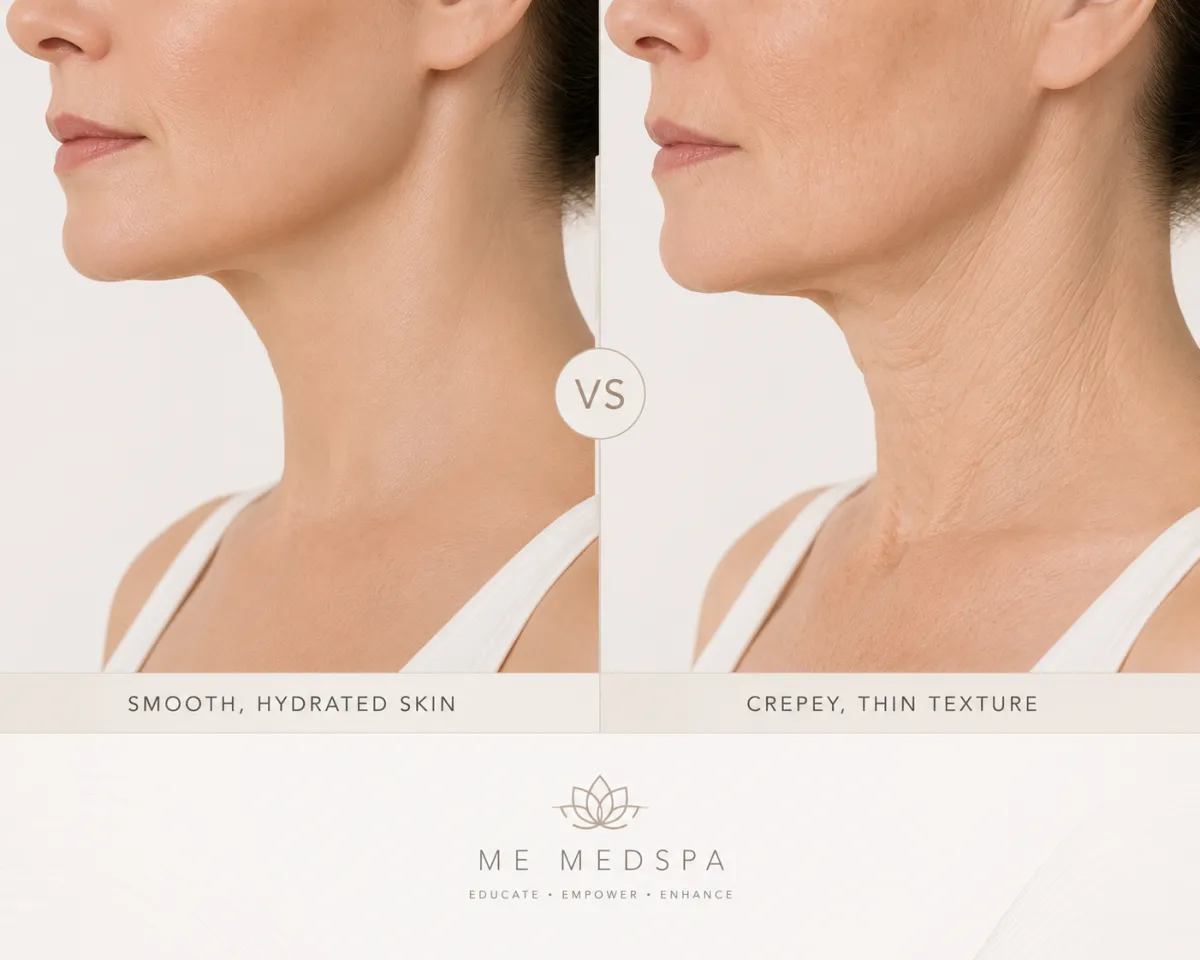
Unlike deeper wrinkles or loose skin, crepey skin is characterized by a fine, crinkled texture that may appear on areas such as the face, neck, chest, arms, and hands. It can also feel less firm and less resilient than it once did.
Several factors contribute to the development of crepey skin, including natural collagen loss, reduced elastin, long-term sun exposure, dehydration, and lifestyle habits.
While crepey skin is a normal part of aging, understanding why it develops can help you make informed decisions about skincare, sun protection, and non-surgical treatments that support healthier-looking skin.
In this guide, we'll explain what crepey skin is, what causes it, and the practical steps you can take to help improve your skin's appearance.

What Is Crepey Skin?
Crepey skin refers to skin that appears thin, finely wrinkled, and less elastic.
Rather than forming a few deep wrinkles, crepey skin develops many small, shallow lines that create a delicate, paper-like texture.
It most commonly appears in areas where the skin is naturally thinner or frequently exposed to sunlight, including:
Around the eyes
Neck
Chest (décolletage)
Upper arms
Hands
Above the knees
Although it becomes more common with age, crepey skin can also be influenced by environmental and lifestyle factors.

What Causes Crepey Skin?
Several factors work together over time to create the appearance of crepey skin.
Natural Collagen Loss
As we age, collagen production gradually declines.
With less collagen to support the skin's structure, skin may become thinner and less firm.
If you'd like to understand this process in more detail, read our guide Why Skin Ages After 30: Understanding Collagen Loss & How to Slow It Naturally.
Reduced Elastin
Elastin allows your skin to stretch and return to its original shape.
As elastin fibers decline, skin becomes less resilient and more prone to fine wrinkling.
Long-Term Sun Exposure
Years of UV exposure accelerate collagen and elastin breakdown, making crepey skin more noticeable.
If you're interested in learning how UV damage contributes to premature aging, read How Sun Damage Speeds Up Skin Aging (And What You Can Do to Protect Your Skin).
Dehydration
Dry skin can temporarily make fine lines and crepey texture appear more noticeable.
Although hydration alone cannot restore lost collagen, keeping the skin well hydrated supports overall skin health and appearance.
Lifestyle Habits
Smoking, poor nutrition, inadequate sleep, and limited sun protection may all contribute to changes in skin quality over time.
Healthy daily habits support your skin's natural repair processes.

How Is Crepey Skin Different from Wrinkles or Loose Skin?
Although these concerns are often discussed together, they are not exactly the same.
Crepey skin is defined by a thin, finely wrinkled texture.
Wrinkles are deeper lines or folds that often develop from facial movement and aging.
Loose skin (skin laxity) refers to reduced firmness and sagging caused by declining collagen and elastin.
Some people experience all three concerns at the same time, while others notice one more than the others.
If you've noticed your skin feels less firm in addition to developing a crepey texture, you may also find our guide How to Tighten Sagging Skin Without Surgery helpful.

Can You Help Prevent Crepey Skin?
Although crepey skin cannot always be prevented, healthy daily habits may help support healthier-looking skin as you age.
Helpful habits include:
Applying broad-spectrum sunscreen every day
Moisturizing consistently
Staying hydrated
Following a balanced diet
Avoiding smoking
Protecting exposed skin from excessive UV exposure
Following a consistent skincare routine
These habits work together to support skin health and may complement professional treatment options.

Non-Surgical Treatments That May Improve the Appearance of Crepey Skin
Healthy skincare habits can support your skin, but they may not fully correct crepey texture caused by collagen loss, reduced elasticity, or long-term sun exposure.
Some patients choose non-surgical treatments to improve skin quality, hydration, firmness, and texture.
The right option depends on:
Where the crepey skin appears
How thin or lax the skin is
The degree of sun damage
Your skin type
Your treatment goals
Your medical history
A professional consultation is important because not every treatment is appropriate for every area of the body.
Morpheus8
Morpheus8 combines microneedling with radiofrequency energy to stimulate collagen remodeling beneath the skin.
It may be considered for areas where crepey texture appears alongside mild skin laxity, uneven texture, or reduced firmness.
Potential treatment areas may include:
Face
Jawline
Neck
Décolletage
Selected body areas
Results develop gradually as the skin’s natural remodeling process occurs.
Morpheus8 does not remove all wrinkles or permanently stop skin aging, but it may help improve overall texture and firmness in appropriately selected patients.
Skin Boosters
Dryness can make crepey skin look more noticeable.
Skin Boosters use injectable hyaluronic acid formulations to improve hydration and overall skin quality.
They may help the skin appear:
Smoother
More hydrated
More radiant
Less dull
Healthier overall
Skin Boosters are not a substitute for collagen-remodeling treatments when significant laxity is present. However, they may complement a broader treatment plan when dehydration and fine surface texture are major concerns.
Salmon DNA Facial
A Salmon DNA Facial may be considered for patients interested in improving hydration, texture, and overall skin quality.
This treatment may be included in a personalized rejuvenation plan for skin that appears:
Dry
Dull
Thin
Uneven in texture
Less resilient
Expected results vary, and a consultation is needed to determine whether the treatment is appropriate for your skin and goals.
Combination Treatment Plans
Crepey skin often involves more than one underlying concern.
For example, a patient may have:
Collagen loss
Reduced elasticity
Sun damage
Dehydration
Mild laxity
Because of this, some patients may benefit from a combination approach rather than relying on one treatment alone.
A personalized plan may focus on:
Improving hydration
Supporting collagen remodeling
Protecting against additional UV damage
Strengthening the at-home skincare routine
Addressing pigmentation or texture when appropriate
The safest and most effective approach depends on the area being treated and the condition of the skin.

Can Skincare Products Improve Crepey Skin?
Skincare products may improve hydration and make fine texture appear less noticeable, but topical products cannot fully replace lost collagen or elastin.
Helpful ingredients may include:
Hyaluronic acid
Ceramides
Peptides
Antioxidants
Retinoids, when appropriate
Broad-spectrum sunscreen
Retinoids may support skin renewal and collagen-related processes, but they can also cause dryness or irritation when introduced too quickly.
Patients with sensitive skin, very thin skin, or skin conditions should seek professional guidance before adding strong active ingredients.
Consistency is usually more important than using a large number of products.
A simple routine may include:
Morning
Gentle cleanser
Hydrating or antioxidant serum
Moisturizer
Broad-spectrum SPF 30 or higher
Evening
Gentle cleanser
Targeted treatment product, when appropriate
Moisturizer
Which Areas Are Most Difficult to Treat?
Crepey skin can appear almost anywhere, but certain areas require extra caution because the skin is naturally thin.
These include:
Around the eyes
Neck
Upper chest
Inner arms
Hands
Above the knees
The best treatment for one area may not be suitable for another.
For example, treatment settings used on the body may differ from those used around the eyes or neck.
This is another reason why an individualized evaluation is important before beginning treatment.
When Should You Consider a Professional Consultation?
You may want to schedule a consultation if:
Crepey texture continues despite consistent moisturizing
Your skin also appears loose or less firm
Fine lines are becoming more noticeable
Sun damage is affecting skin tone and texture
You are unsure which products or treatments are safe for the area
You want to combine professional treatments with an at-home routine
A consultation can help identify whether the primary concern is dehydration, collagen loss, skin laxity, sun damage, or a combination of factors.
Crepey Skin Treatments in Monterey Park
At ME MEDSPA, treatment recommendations begin with a personalized assessment.
During your consultation, our team may evaluate:
Skin thickness
Hydration
Elasticity
Degree of laxity
Sun damage
Treatment area
Previous aesthetic procedures
Your desired outcome
Based on this evaluation, we can discuss non-surgical options that may help improve the appearance of crepey skin while keeping expectations realistic.
We proudly serve patients from:
Monterey Park
Alhambra
San Gabriel
Rosemead
East Los Angeles
Surrounding San Gabriel Valley communities
Related Reading
Continue learning about skin texture, firmness, and healthy aging:
Why Skin Ages After 30: Understanding Collagen Loss & How to Slow It Naturally
Crow’s Feet: Causes, Prevention & Best Treatments in Monterey Park
Frequently Asked Questions
What does crepey skin look like?
Crepey skin appears thin, finely wrinkled, and slightly loose. Its texture is often compared to crepe paper.
What is the main cause of crepey skin?
Crepey skin usually develops from a combination of natural collagen loss, reduced elastin, long-term sun exposure, dryness, and aging.
Can moisturizer get rid of crepey skin?
Moisturizer can improve dryness and temporarily make fine texture look smoother, but it cannot fully restore lost collagen or elastin.
Does drinking water fix crepey skin?
Adequate hydration supports normal skin function, but drinking water alone cannot reverse structural changes caused by aging or sun damage.
Can Morpheus8 help crepey skin?
Morpheus8 may help improve texture and firmness by supporting collagen remodeling. Suitability depends on the treatment area, skin condition, and individual goals.
Are Skin Boosters helpful for crepey skin?
Skin Boosters may improve hydration and overall skin quality. They may be most useful when dryness and fine surface texture are major concerns.
Can crepey skin be completely reversed?
Crepey skin cannot always be completely reversed. However, skincare, sun protection, and professional treatments may improve its appearance.
How can I prevent crepey skin from getting worse?
Daily sunscreen, consistent moisturizing, avoiding smoking, maintaining healthy lifestyle habits, and protecting exposed skin from excessive UV exposure may help reduce additional damage.
Book Your Consultation
Crepey skin is a common concern, but the best solution depends on why the texture has developed and where it appears.
Some patients need more hydration, while others may benefit from treatments that support collagen remodeling and firmness.
At ME MEDSPA, we create personalized treatment plans based on your skin, concerns, and aesthetic goals.
Schedule your consultation today to learn which non-surgical options may help improve the appearance of thin, crepey, or less resilient skin.

