Skin Elasticity: Causes of Loose Skin & How to Support Firmer Skin | ME MEDSPA
Skin Elasticity: Why Your Skin Loses Firmness (And How to Support It Naturally)
Have you ever looked in the mirror and noticed that your skin doesn't feel as firm or resilient as it once did?
Many people associate aging with wrinkles alone, but one of the earliest changes often involves skin elasticity—your skin's ability to stretch and return to its original shape.
Healthy skin naturally contains collagen and elastin, two proteins that work together to provide strength, structure, and flexibility. As we grow older, our bodies gradually produce less of these essential building blocks.
Environmental factors such as sun exposure, smoking, and lifestyle habits can accelerate this process, causing the skin to lose firmness more quickly.
Although losing skin elasticity is a normal part of aging, understanding why it happens can help you make informed choices about skincare, sun protection, and non-surgical treatments that support healthier-looking skin.
In this guide, we'll explain what skin elasticity is, why it changes over time, the factors that influence skin firmness, and practical ways to support your skin as you age.

What Is Skin Elasticity?
Skin elasticity refers to your skin's ability to stretch and then return to its original position.
Think of it like a new rubber band.
When it's healthy, it stretches easily and snaps back into place. As it ages, that flexibility gradually decreases.
This natural resilience depends primarily on two structural proteins:
Collagen, which provides strength and support.
Elastin, which allows the skin to stretch and recover.
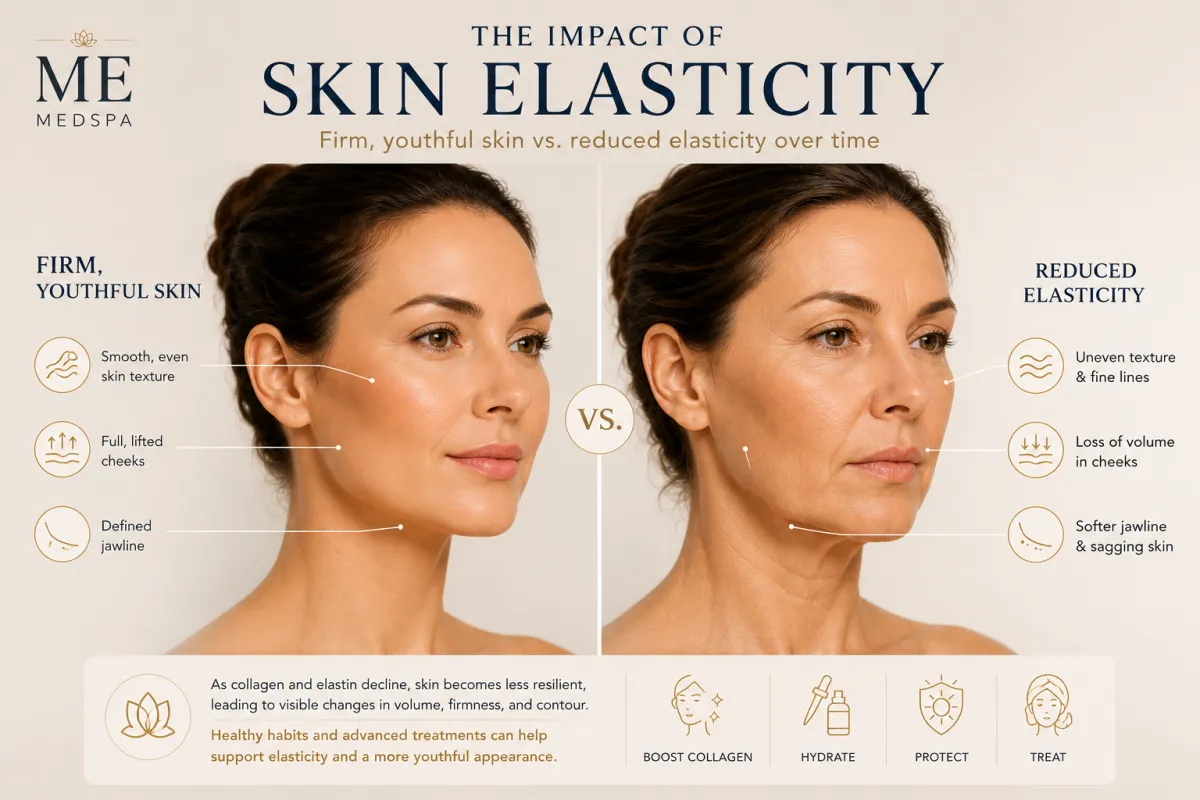
When these proteins decline, skin may begin to appear:
Less firm
Looser
Thinner
More prone to fine lines
Less resilient after facial movement
Reduced elasticity affects more than appearance—it also changes how skin responds to daily movement and environmental stress.

Why Does Skin Lose Elasticity?
Loss of elasticity happens gradually over many years.
Several factors contribute to this natural process.
Aging
Beginning in adulthood, collagen and elastin production slowly declines.
This makes skin less able to maintain its firmness and bounce.
If you'd like to understand this process in more detail, read our guide Why Skin Ages After 30: Understanding Collagen Loss & How to Slow It Naturally.
Sun Exposure
Ultraviolet (UV) radiation damages collagen and elastin over time.
Repeated sun exposure accelerates photoaging and contributes to reduced skin firmness.
Learn more in our article How Sun Damage Speeds Up Skin Aging (And What You Can Do to Protect Your Skin).
Lifestyle Habits
Smoking, poor nutrition, chronic stress, inadequate sleep, and dehydration may all affect skin health.
Healthy lifestyle choices help support the skin's natural repair processes.
Genetics
Every person's skin ages differently.
Genetics influence how quickly collagen declines and how visible signs of aging develop.

Early Signs That Your Skin Is Losing Elasticity
The changes often happen gradually.
Many people first notice small differences before significant sagging develops.
Common early signs include:
Skin feels less firm.
Fine lines remain visible longer.
Makeup settles into lines more easily.
Jawline appears less defined.
Cheeks begin losing youthful fullness.
Skin takes longer to "bounce back" when gently pinched.
Neck skin begins appearing looser.
These changes don't necessarily happen all at once, and they vary from person to person.
Recognizing these early signs allows you to develop healthy skincare habits and seek professional guidance if desired.

Can You Naturally Support Skin Elasticity?
Although aging cannot be stopped, there are several habits that may help support healthy skin over time.
These include:
Wearing broad-spectrum sunscreen every day
Staying hydrated
Eating a balanced diet rich in fruits and vegetables
Avoiding smoking
Getting adequate sleep
Following a consistent skincare routine
Managing stress
Staying physically active
These healthy habits support overall skin wellness and complement professional treatments when appropriate

Non-Surgical Treatments That May Help Support Skin Firmness
While healthy lifestyle habits provide the foundation for long-term skin health, some people choose to complement their routine with non-surgical aesthetic treatments.
The right treatment depends on factors such as your skin condition, goals, and the underlying causes of reduced skin elasticity.
Rather than replacing healthy skincare habits, these treatments are designed to support overall skin quality and collagen production as part of a personalized treatment plan.
Morpheus8
Morpheus8 combines radiofrequency energy with microneedling to stimulate collagen remodeling beneath the skin.
Many patients consider Morpheus8 when they begin noticing:
Mild skin laxity
Fine lines
Reduced skin firmness
Uneven skin texture
By encouraging collagen remodeling over time, Morpheus8 focuses on improving overall skin quality rather than simply treating individual wrinkles.
Skin Boosters
Healthy skin isn't only about firmness—hydration also plays an important role.
Skin Boosters deliver hyaluronic acid into the skin to improve hydration and overall skin quality.
Although hydration alone cannot restore lost elasticity, well-hydrated skin often appears smoother, healthier, and more radiant.
Salmon DNA Facial
Patients looking to improve overall skin quality may also consider regenerative treatments such as Salmon DNA Facial.
These treatments focus on supporting healthier-looking skin through improved hydration and skin quality as part of a comprehensive skincare plan.
Personalized Treatment Plans
No single treatment is appropriate for everyone.
During a consultation, your provider may evaluate factors such as:
Skin quality
Degree of skin laxity
Sun damage
Lifestyle
Age
Personal goals
This individualized approach helps ensure recommendations are based on your specific concerns rather than following the same treatment plan for every patient.

When Should You Consider a Consultation?
Many people wonder whether reduced skin firmness is simply a normal part of aging or whether treatment may be beneficial.
A consultation may be worth considering if you've noticed:
Mild skin laxity around the cheeks or jawline
Fine lines becoming more noticeable
Reduced skin firmness
Uneven skin texture
Changes despite maintaining a healthy skincare routine
A professional evaluation can help determine whether lifestyle changes, skincare, or non-surgical treatments may be appropriate for your goals.
Skin Firmness Treatments in Monterey Park
At ME MEDSPA, we understand that every person's skin ages differently.
Some patients are primarily concerned about maintaining healthy skin, while others want to address early signs of collagen loss or reduced elasticity.
During your consultation, we'll evaluate your skin, discuss your concerns, and recommend a personalized treatment plan based on your individual goals.
We proudly serve patients throughout:
Monterey Park
Alhambra
San Gabriel
Rosemead
East Los Angeles
Surrounding San Gabriel Valley communities
Related Reading
Continue learning about healthy skin aging:
Why Skin Ages After 30: Understanding Collagen Loss & How to Slow It Naturally
How Sun Damage Speeds Up Skin Aging (And What You Can Do to Protect Your Skin)
Crow's Feet: Causes, Prevention & Best Treatments in Monterey Park
Smile Lines vs. Nasolabial Folds: Why They Get Deeper With Age & What You Can Do
Exosomes vs. PRP: Which Skin Rejuvenation Treatment Is Right for You?
Frequently Asked Questions
What is skin elasticity?
Skin elasticity is your skin's ability to stretch and return to its original shape. It depends largely on healthy collagen and elastin fibers.
Why does skin lose elasticity?
Natural aging, sun exposure, genetics, smoking, and certain lifestyle factors all contribute to the gradual decline of collagen and elastin, which reduces skin firmness over time.
Can you improve skin elasticity naturally?
While aging cannot be stopped, healthy habits such as daily sunscreen use, proper hydration, a balanced diet, adequate sleep, and avoiding smoking can help support overall skin health.
Does drinking more water improve skin elasticity?
Staying hydrated supports healthy skin function and appearance. However, hydration alone cannot replace collagen or elastin that naturally decline with age.
Is loose skin the same as reduced skin elasticity?
Not exactly. Reduced elasticity often develops gradually and can contribute to loose skin, but other factors such as weight changes and natural aging also play a role.
Can Morpheus8 help with skin firmness?
Morpheus8 is commonly used to stimulate collagen remodeling and improve overall skin quality. Whether it is appropriate depends on your skin condition and treatment goals.
At what age does skin begin losing elasticity?
Collagen production gradually declines beginning in adulthood, although visible changes vary widely depending on genetics, sun exposure, and lifestyle factors.
Book Your Consultation
Maintaining healthy skin isn't about stopping the aging process—it's about understanding how your skin changes over time and choosing the right approach to support it.
If you've noticed reduced skin firmness, early skin laxity, or other signs of aging, a personalized consultation can help you better understand your options.
At ME MEDSPA, we create individualized treatment plans designed around your skin, your goals, and your lifestyle.
Schedule your consultation today to learn more about non-surgical options that may help support healthier-looking, firmer skin.

