Why Skin Loses Volume With Age | ME MEDSPA
Why Does Skin Lose Volume With Age? Causes, Signs & Non-Surgical Treatment Options
Have you ever looked in the mirror and felt like your face appears more tired or less full than it used to?
Many people assume wrinkles are the biggest sign of aging, but another important change happens beneath the surface: facial volume loss.
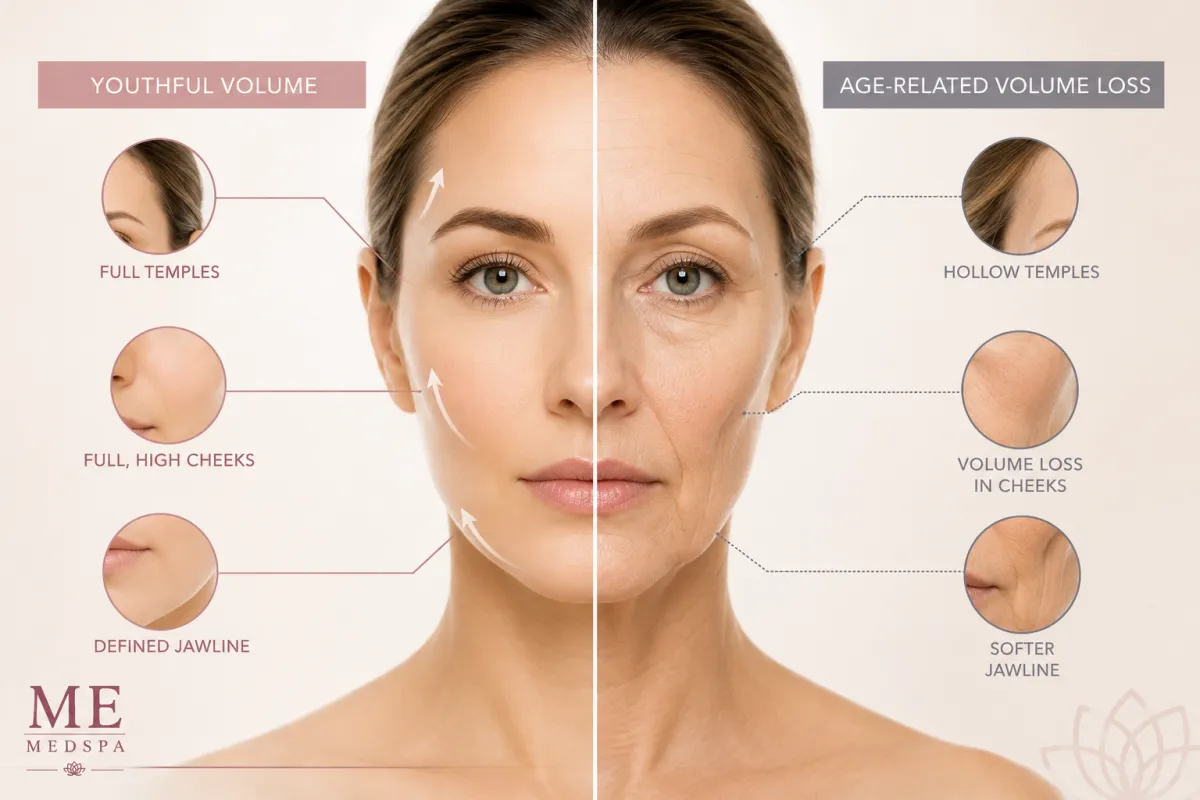
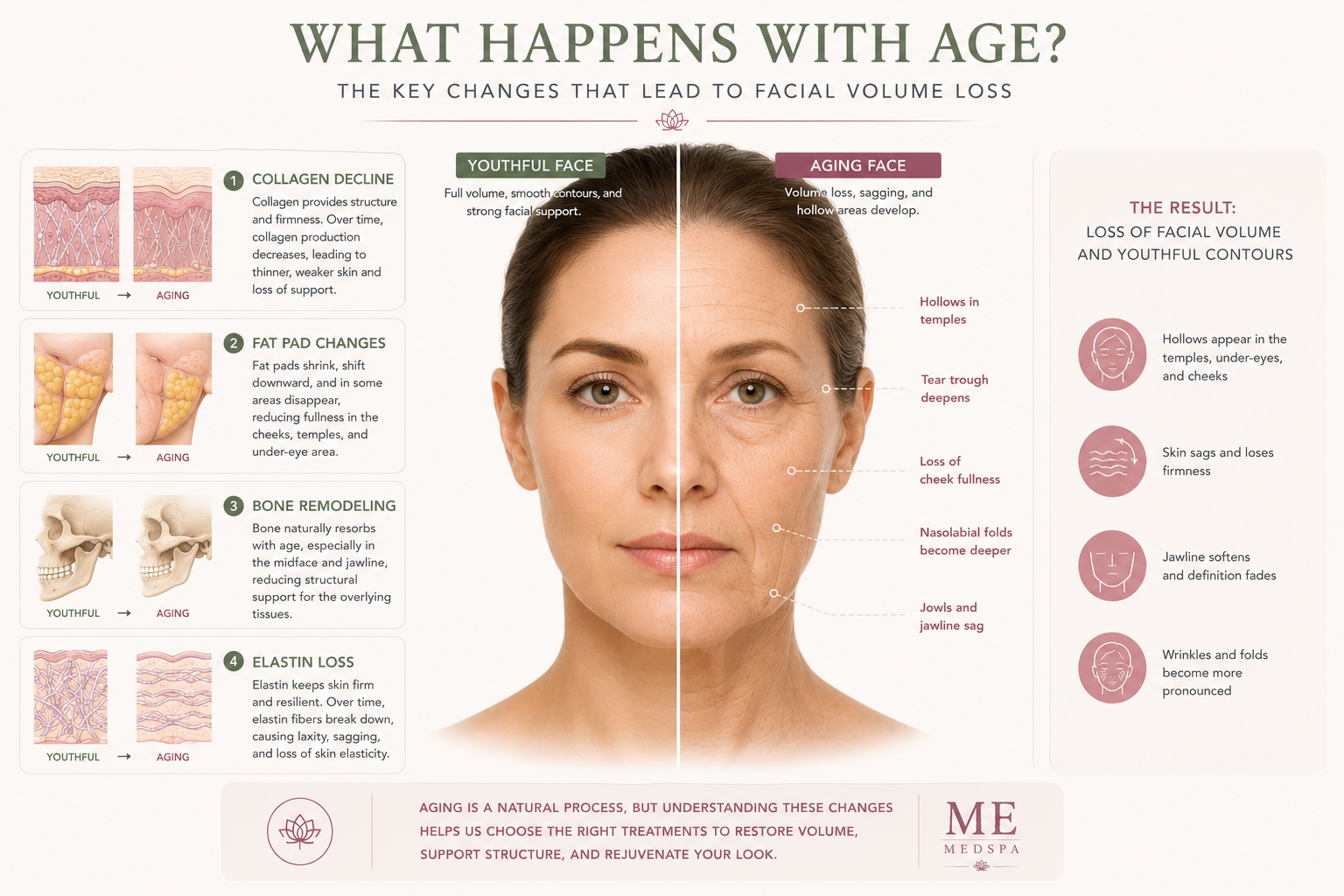
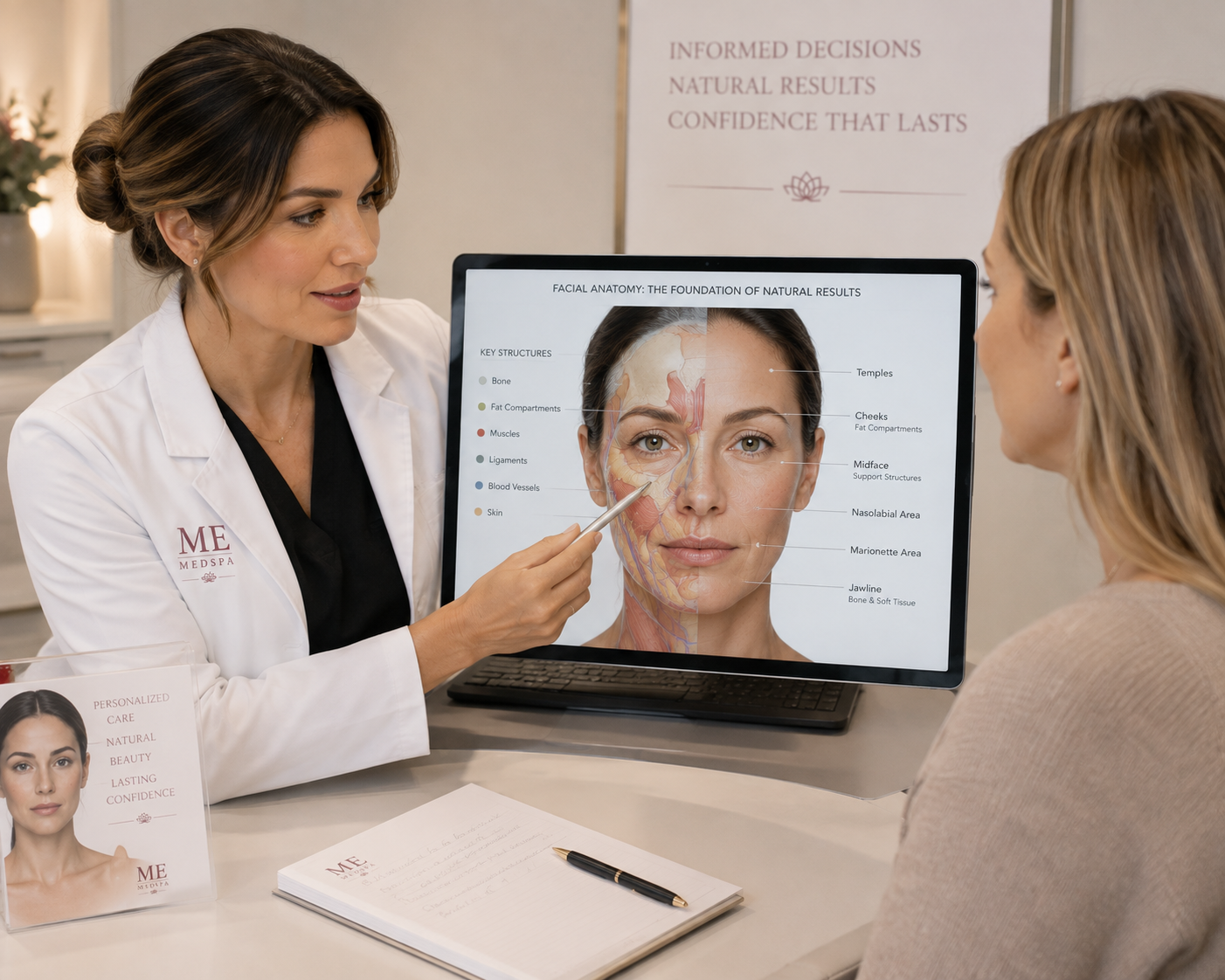
As we age, the face naturally changes in several ways. Collagen and elastin gradually decline, facial fat pads shift and shrink, and even the underlying facial bones slowly remodel over time. Together, these changes can make the face appear less supported, leading to hollow cheeks, sunken temples, deeper folds, and reduced facial definition.
While facial volume loss is a normal part of aging, understanding why it happens can help you make informed decisions about prevention, skincare, and non-surgical treatment options.
In this guide, we'll explain what facial volume loss is, why it occurs, the signs to look for, and how personalized treatment plans may help support a refreshed, natural-looking appearance.
What Is Facial Volume Loss?
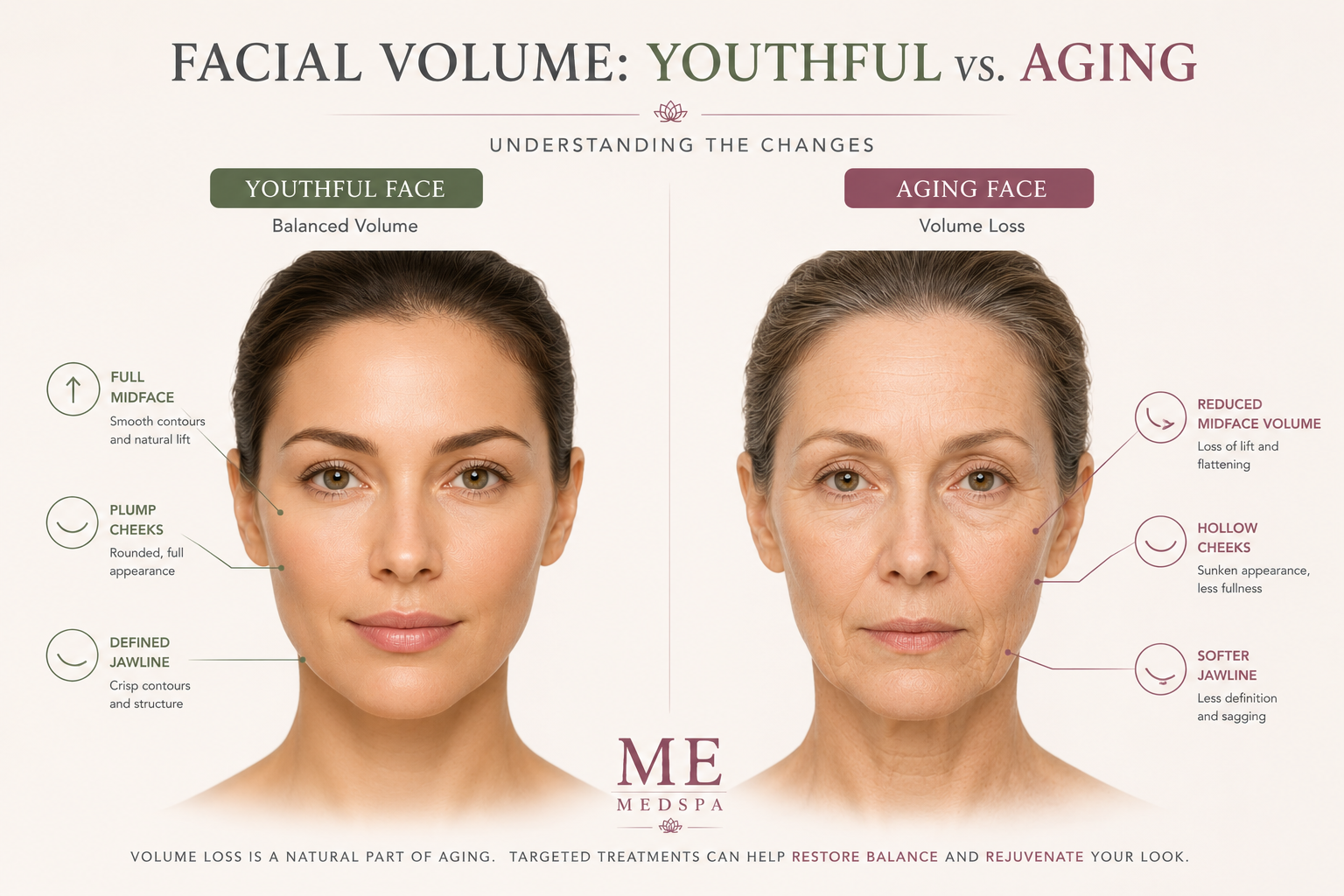
Facial volume loss refers to the gradual reduction or redistribution of the tissues that help give the face its youthful shape and contours.
These changes may involve:
Facial fat pads
Skin
Collagen
Elastin
Bone structure
As these tissues change over time, the face may appear:
Less full
More hollow
More tired
Less defined
More angular in some areas
Unlike wrinkles, which are lines in the skin, facial volume loss changes the overall shape of the face.
What Causes Facial Volume Loss?
Several natural aging processes contribute to facial volume changes.
Natural Collagen Loss
Collagen provides structural support for the skin.
As collagen declines, the skin becomes less firm and less able to support underlying tissues.
If you'd like to understand collagen decline in greater detail, read:
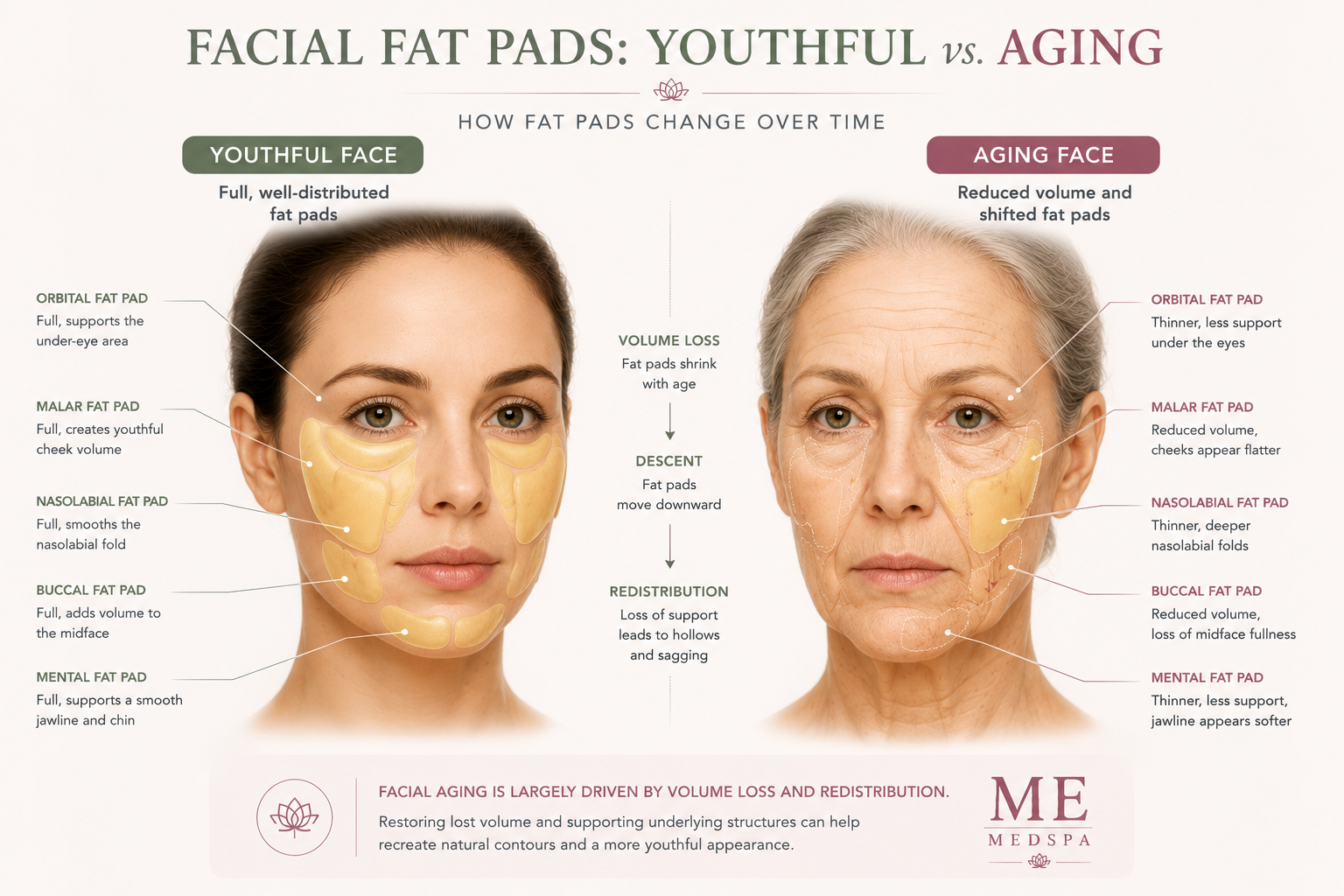
Changes in Facial Fat Pads
The face contains multiple fat compartments that provide softness and contour.
With age, these fat pads may:
Become smaller
Shift downward
Redistribute
This contributes to:
Hollow cheeks
More noticeable smile lines
Reduced midface fullness
Bone Remodeling
Many people are surprised to learn that facial bones also change with age.
Gradual remodeling of the facial skeleton can reduce structural support for the overlying tissues, contributing to changes in facial shape and contour.
Reduced Elastin
As elastin declines, the skin becomes less able to spring back after movement.
Lifestyle Factors
Certain habits may accelerate visible facial aging, including:
Smoking
Chronic sun exposure
Poor nutrition
Inadequate sleep
Significant weight fluctuations
Healthy lifestyle habits support overall skin health but cannot completely prevent age-related volume changes.
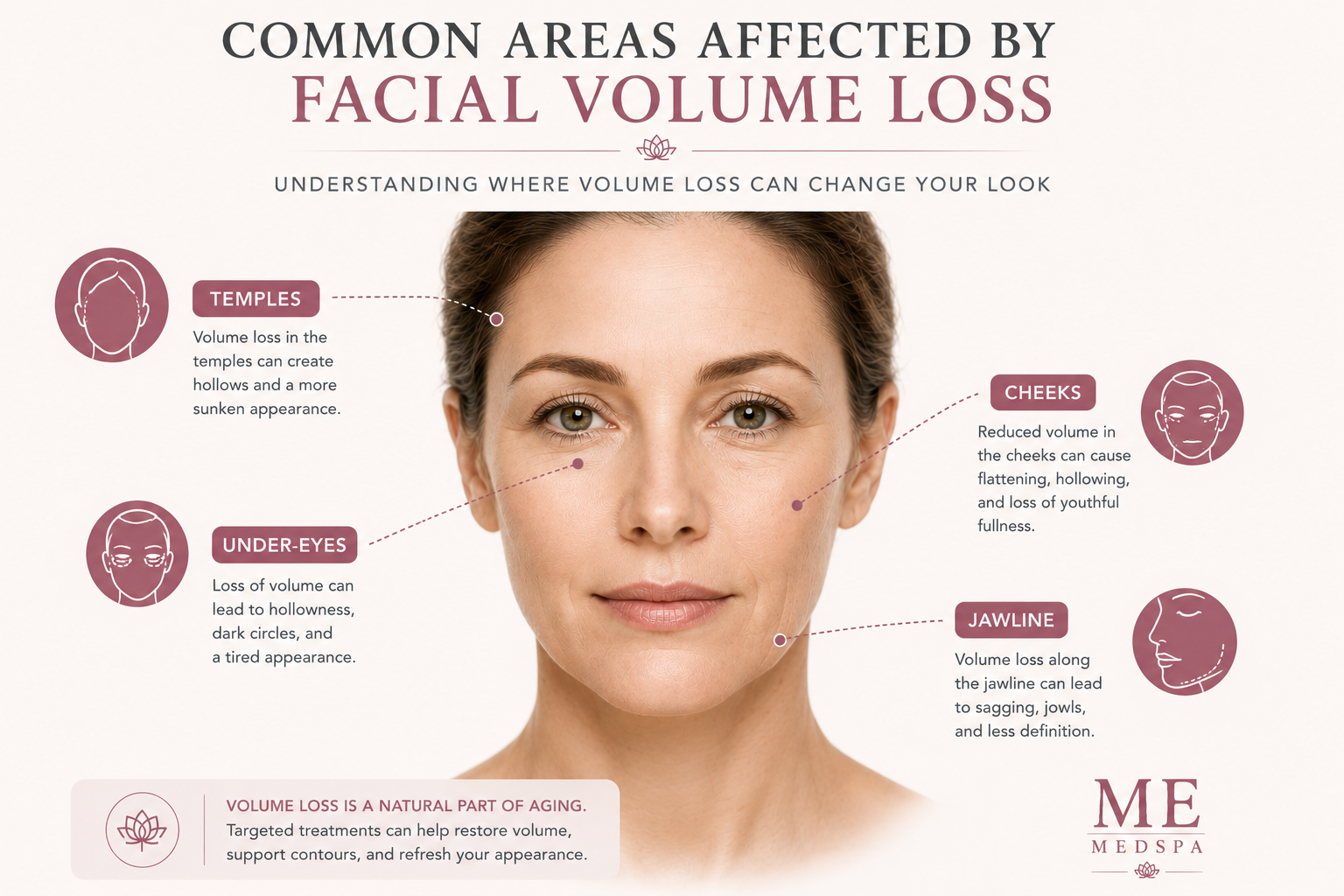
Common Signs of Facial Volume Loss
Facial volume loss may appear gradually and affect different areas of the face.
Common signs include:
Hollow cheeks
Sunken temples
Deeper nasolabial folds
More noticeable marionette lines
Reduced jawline definition
Under-eye hollowness
A tired appearance
Less facial balance
Not everyone experiences these changes at the same rate because genetics, lifestyle, and anatomy all influence facial aging.
Is Facial Volume Loss Different From Sagging Skin?
Yes.
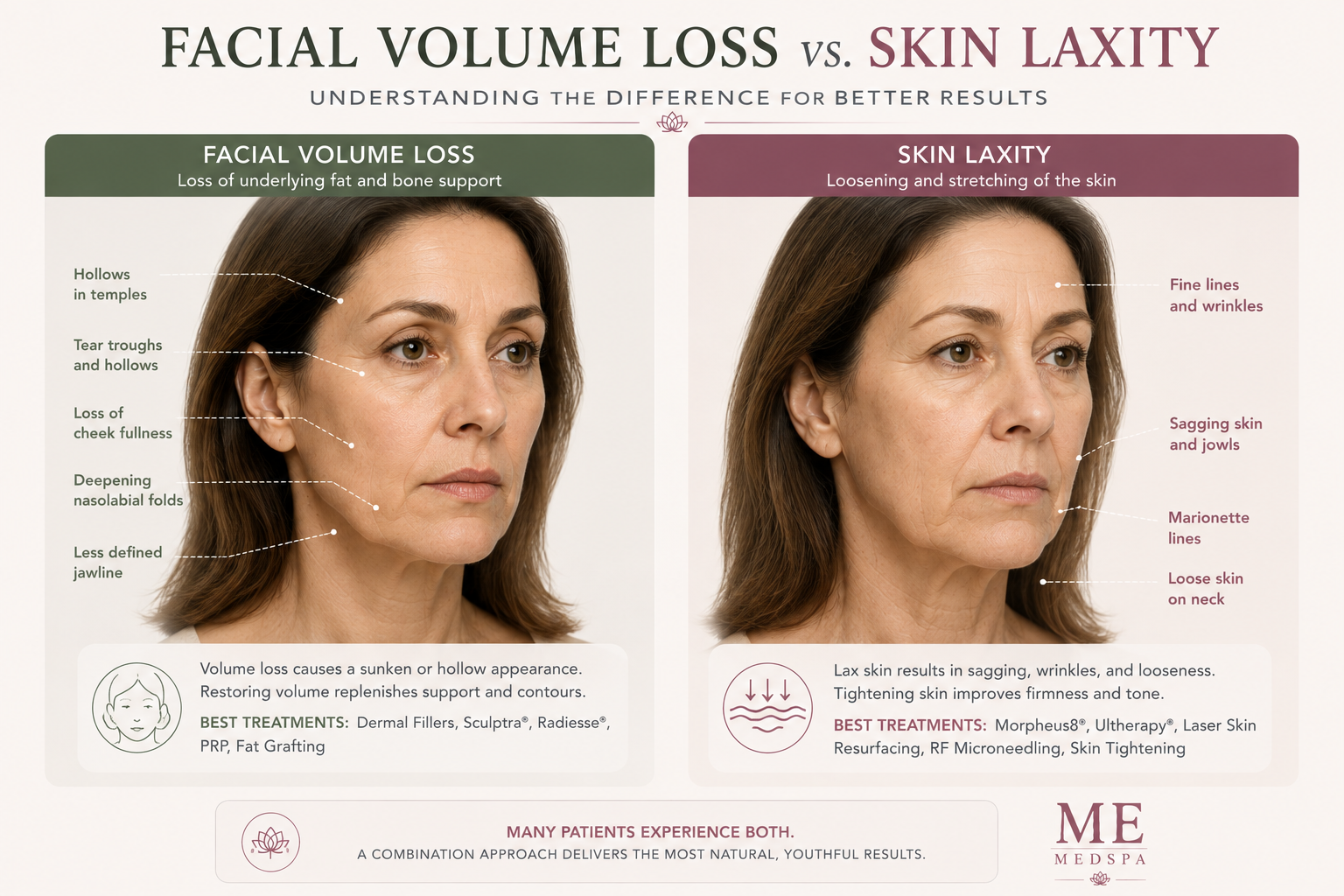
Although the two often occur together, they are not the same.
Facial volume loss changes the underlying support and contours of the face.
Skin laxity refers to reduced firmness and sagging of the skin itself.
Many patients experience both concerns simultaneously.
If your primary concern is loose skin, you may also enjoy reading:
Can You Help Slow Facial Volume Loss?
While natural aging cannot be stopped, healthy habits may help support overall skin quality and slow additional environmental damage.
Helpful habits include:
Daily sunscreen
Consistent skincare
Eating a balanced diet
Avoiding smoking
Maintaining a stable weight
Getting enough sleep
Staying physically active
These habits support healthy skin but cannot completely prevent age-related changes in facial fat or bone structure.

Can Facial Volume Loss Be Improved?
Facial volume loss is a natural part of aging, but many people can improve the appearance of lost facial fullness through a personalized treatment plan.
The best approach depends on what is causing the visible changes.
For some patients, the primary concern is:
Loss of facial fat
Reduced skin firmness
Collagen decline
Skin laxity
Hollow cheeks
Sun-related skin aging
Many people experience several of these changes at the same time.
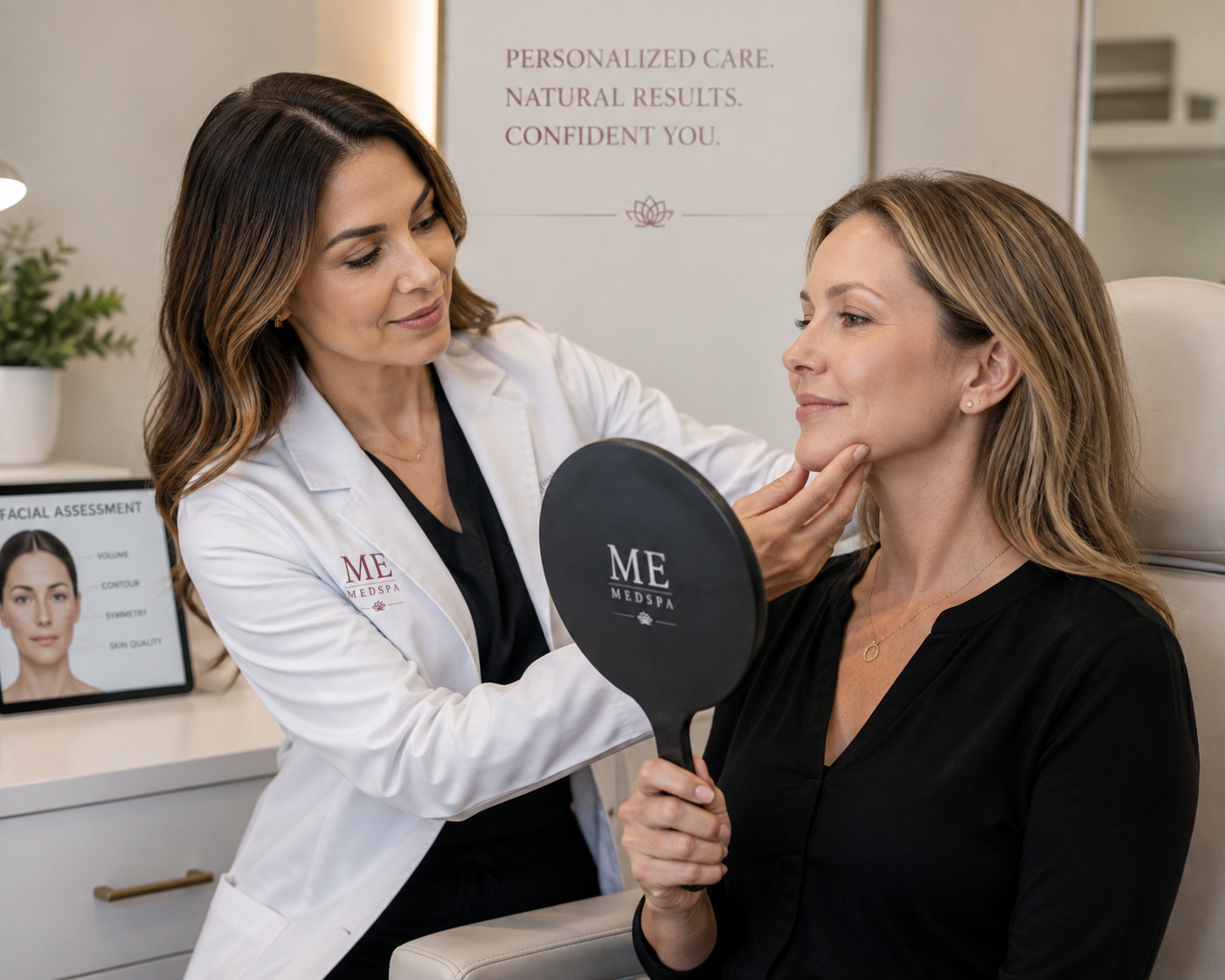
Because facial aging affects multiple layers—not just the skin—a comprehensive evaluation helps determine which concerns should be addressed first.
Non-Surgical Treatment Options for Facial Volume Loss
Professional treatment recommendations depend on your anatomy, skin quality, and treatment goals.
No single treatment is ideal for every patient.
Morpheus8
Morpheus8 combines radiofrequency energy with microneedling to stimulate collagen remodeling beneath the skin.
While Morpheus8 does not replace lost facial fat, it may improve skin quality by supporting:
Mild skin laxity
Fine lines
Skin texture
Collagen remodeling
Overall firmness
For patients whose facial volume loss is accompanied by loose skin, Morpheus8 may be one component of a comprehensive treatment plan.
Skin Boosters
Skin Boosters focus on hydration rather than replacing facial volume.
Improved hydration may help skin appear:
More radiant
Better hydrated
Smoother
Healthier
While Skin Boosters do not restore facial fat or bone support, they may complement treatments aimed at improving overall skin quality.
Salmon DNA Facial
Patients interested in improving hydration, texture, and overall skin quality may also consider a Salmon DNA Facial.
Although this treatment is not designed to replace lost facial volume, it may be included as part of a personalized skin rejuvenation plan.
Injectable Volume-Restoring Treatments
Depending on the services offered at ME MEDSPA, some patients may be candidates for injectable treatments designed to restore facial volume.
These may include:
Hyaluronic acid dermal fillers
Collagen-stimulating injectables (biostimulators)
Other volume-restoring techniques
These treatments are designed to address areas such as:
Hollow cheeks
Sunken temples
Facial contour loss
Midface volume reduction
Combination Treatment Plans
Facial aging rarely has a single cause.
A patient may experience:
Volume loss
Reduced elasticity
Skin laxity
Fine lines
Uneven pigmentation
Sun damage
Because of this, a combination treatment plan is often more appropriate than relying on one procedure alone.
Your provider may recommend addressing:
Skin quality
Hydration
Facial support
Texture
Sun-related changes
The goal is natural facial balance rather than an overfilled appearance.
Daily Habits That Support Healthy Facial Aging
While healthy habits cannot completely prevent facial volume loss, they help support long-term skin health.
Helpful habits include:
Daily broad-spectrum sunscreen
Balanced nutrition
Adequate protein intake
Staying hydrated
Avoiding smoking
Regular exercise
Quality sleep
Consistent skincare
These habits help protect your skin while complementing professional treatments.
Common Myths About Facial Volume Loss
Myth 1: Wrinkles Are the Only Sign of Aging
Many patients notice facial volume loss before wrinkles become severe.
Changes beneath the skin often contribute to an older appearance.
Myth 2: Drinking More Water Restores Facial Volume
Hydration supports healthy skin but cannot replace lost facial fat or bone support.
Myth 3: Losing Weight Always Makes the Face Look Younger
Significant weight loss may reduce facial fullness and make age-related volume loss more noticeable in some people.
Myth 4: One Treatment Can Correct Every Sign of Aging
Different concerns require different approaches.
Volume loss, wrinkles, pigmentation, and skin laxity are separate issues that may require different treatment strategies.
Myth 5: Everyone Loses Facial Volume the Same Way
Genetics, facial anatomy, lifestyle, and sun exposure all influence how the face changes over time.
When Should You Consider a Consultation?
A consultation may be appropriate if you've noticed:
Hollow cheeks
Sunken temples
Under-eye hollowness
Loss of jawline definition
A tired appearance
Changes that skincare alone cannot address
A personalized evaluation helps distinguish between:
Volume loss
Skin laxity
Collagen decline
Skin thinning
Dehydration
Other age-related changes
Facial Rejuvenation Consultations in Monterey Park
At ME MEDSPA, we understand that facial aging affects every patient differently.
During your consultation, we may evaluate:
Facial volume
Skin firmness
Elasticity
Hydration
Skin quality
Facial symmetry
Previous treatments
Your aesthetic goals
Based on this assessment, we'll recommend a personalized treatment plan designed to achieve balanced, natural-looking results.
We proudly serve patients throughout:
Monterey Park
Alhambra
San Gabriel
Rosemead
East Los Angeles
Surrounding San Gabriel Valley communities
Related Reading
Continue exploring healthy facial aging:
Why Skin Ages After 30: Understanding Collagen Loss & How to Slow It Naturally
Collagen vs. Elastin: What's the Difference and Why Do Both Matter for Healthy Skin?
Crepey Skin: What Causes It and How Can You Improve Its Appearance?
What Is Photoaging? How Sun Exposure Changes Your Skin Over Time
Frequently Asked Questions
What causes facial volume loss?
Facial volume loss occurs due to natural changes in collagen, facial fat pads, bone structure, and skin elasticity that happen with aging.
At what age does facial volume loss begin?
Subtle changes may begin in adulthood, but visible facial volume loss often becomes more noticeable during the 40s and 50s. The timing varies based on genetics, lifestyle, and environmental factors.
Can facial volume loss be prevented?
Natural aging cannot be prevented, but daily sun protection, healthy lifestyle habits, and appropriate skincare may help reduce additional environmental damage.
Does losing weight cause facial volume loss?
Significant weight loss can reduce facial fullness in some people, making age-related volume changes more noticeable.
Can Morpheus8 restore facial volume?
Morpheus8 is designed to support collagen remodeling and improve skin firmness and texture. It is not intended to replace lost facial fat or restore facial volume.
Are Skin Boosters the same as dermal fillers?
No. Skin Boosters primarily improve hydration and skin quality, while dermal fillers are designed to restore or enhance facial volume.
Is facial volume loss the same as loose skin?
No. Facial volume loss affects the underlying support of the face, while loose skin refers to reduced firmness and sagging of the skin itself.
Can non-surgical treatments provide natural-looking results?
When treatment is personalized and appropriately planned, many non-surgical options are designed to achieve balanced, natural-looking facial rejuvenation.
Book Your Consultation
Facial volume loss is a normal part of aging, but understanding why it happens is the first step toward choosing the right treatment approach.
Whether your primary concern is hollow cheeks, reduced facial definition, or overall facial aging, a personalized consultation can help identify the factors contributing to these changes.
At ME MEDSPA, we create individualized treatment plans that focus on your facial anatomy, skin quality, and long-term aesthetic goals.
Schedule your consultation today to learn about non-surgical options that may help you achieve a refreshed,
natural-looking appearance

