
How to Tighten Sagging Skin Without Surgery | ME MEDSPA
How to Tighten Sagging Skin Without Surgery: Causes, Prevention & Treatment Options
Have you noticed your jawline isn't as defined as it used to be? Does your skin feel looser around your cheeks or neck, even though you take good care of it?
You're not alone.
As we age, our skin naturally loses collagen, elastin, and structural support. These changes can lead to skin laxity, making the face appear less firm and more tired over time.
Many people assume surgery is the only option once skin begins to sag.
Fortunately, that's no longer the case.
Advances in aesthetic medicine have made it possible for many patients to improve skin firmness and support collagen production without undergoing surgery or lengthy recovery periods.
However, not every treatment works the same way, and not everyone with loose skin needs the same approach.
Understanding why your skin is sagging is the first step toward choosing a treatment that aligns with your goals.
In this guide, we'll explain what causes skin laxity, why it becomes more noticeable with age, everyday habits that can affect skin firmness, and the non-surgical treatment options commonly recommended to help improve the appearance of sagging skin.
What Is Skin Laxity?
Skin laxity is the gradual loss of firmness and elasticity that occurs as the skin ages.
Unlike fine lines or expression wrinkles, skin laxity affects the overall structure and support of the face.
Many people first notice sagging in areas such as:
The jawline
Cheeks
Neck
Lower face
Around the mouth
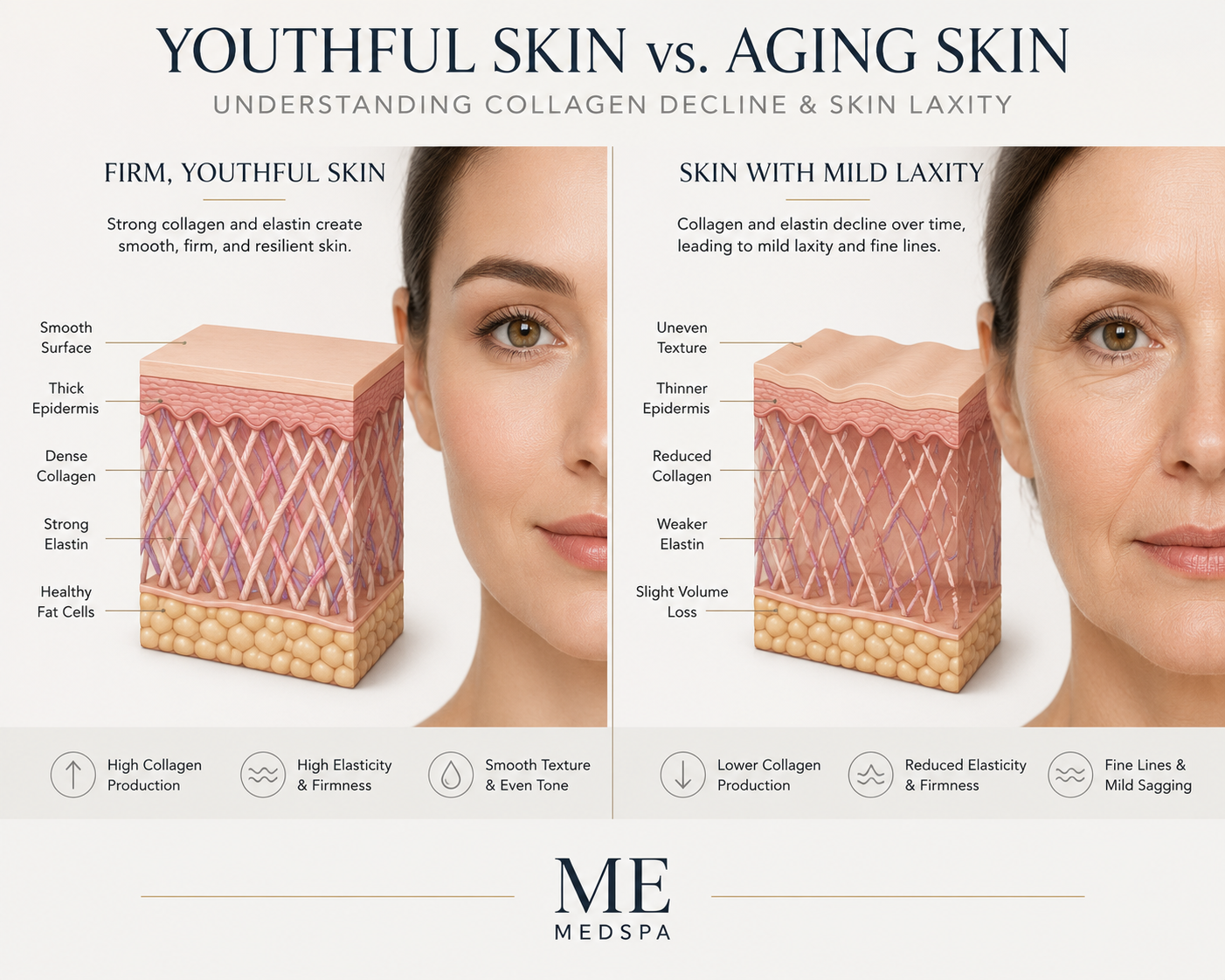
Healthy skin contains collagen and elastin, two proteins that help keep the skin firm and resilient.
As production of these proteins naturally declines, the skin becomes less able to resist gravity and everyday facial movement.
The result is skin that appears looser, softer, or less defined.
If you've recently noticed multiple signs of facial aging—not just sagging skin—our guide Signs of Aging Skin: When Should You Start Anti-Aging Treatments? explains several common changes that occur as collagen production slows.
Why Does Skin Start to Sag?
Skin aging is influenced by many different factors working together.
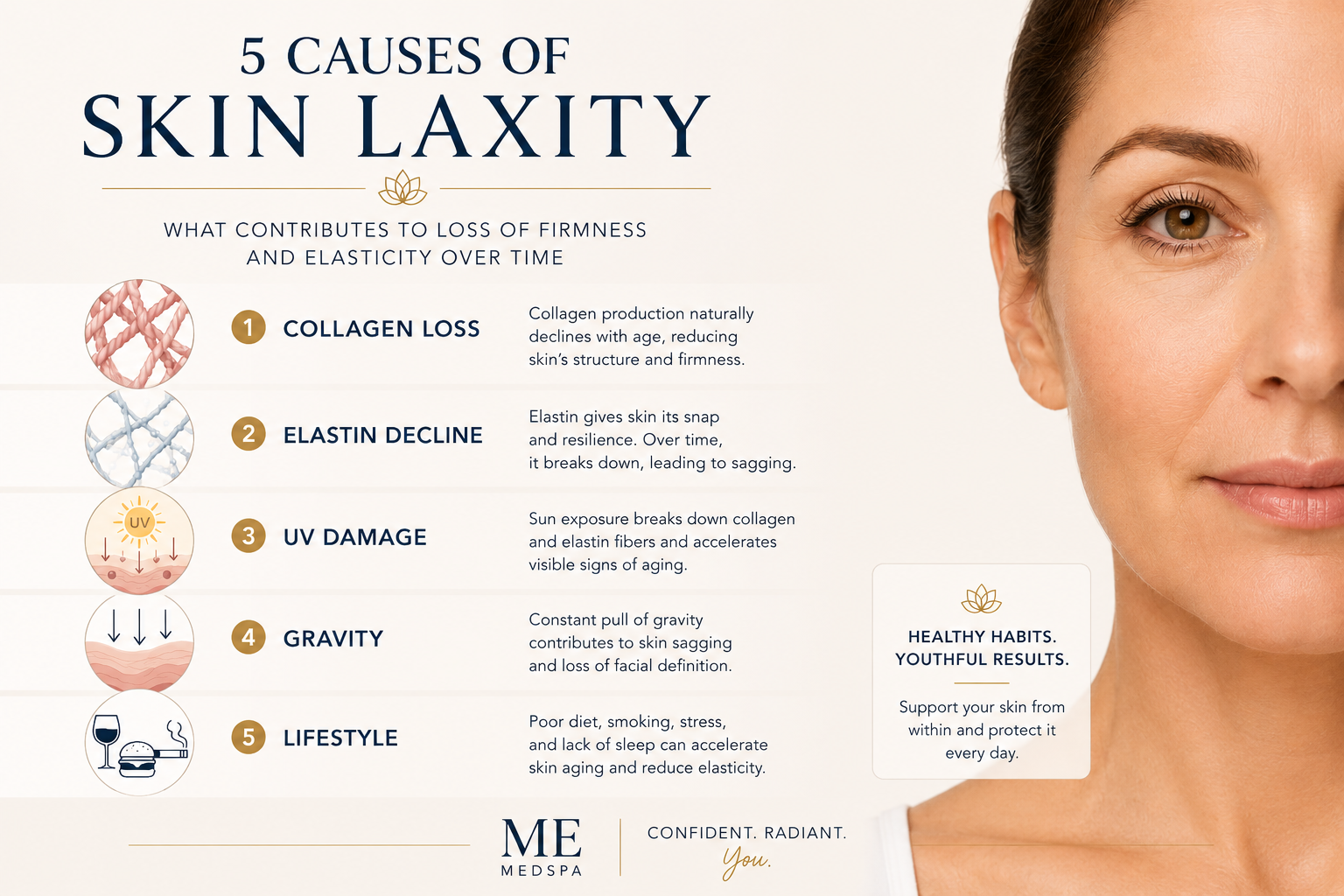
Natural Collagen Loss
Beginning in your late 20s and early 30s, collagen production gradually slows.
Over time, the skin loses some of its natural support, making sagging more noticeable.
If you'd like to understand collagen in greater detail, read our guide:
Why Skin Ages After 30: Understanding Collagen Loss & How to Slow It Naturally
Elastin Changes
Elastin helps skin stretch and return to its original shape.
As elastin changes with age, skin becomes less resilient after facial movement.
Gravity
Gravity doesn't suddenly cause sagging.
Instead, its effects become more visible as collagen and elastin gradually decline.
Sun Damage
Years of UV exposure contribute to collagen breakdown and accelerate visible skin aging.
Daily sunscreen remains one of the most effective ways to protect your skin.
Lifestyle Habits
Smoking, poor nutrition, chronic stress, dehydration, and inadequate sleep can all contribute to premature skin aging.
Although these habits don't cause sagging overnight, they can influence how quickly visible changes develop.
The Difference Between Loose Skin and Wrinkles
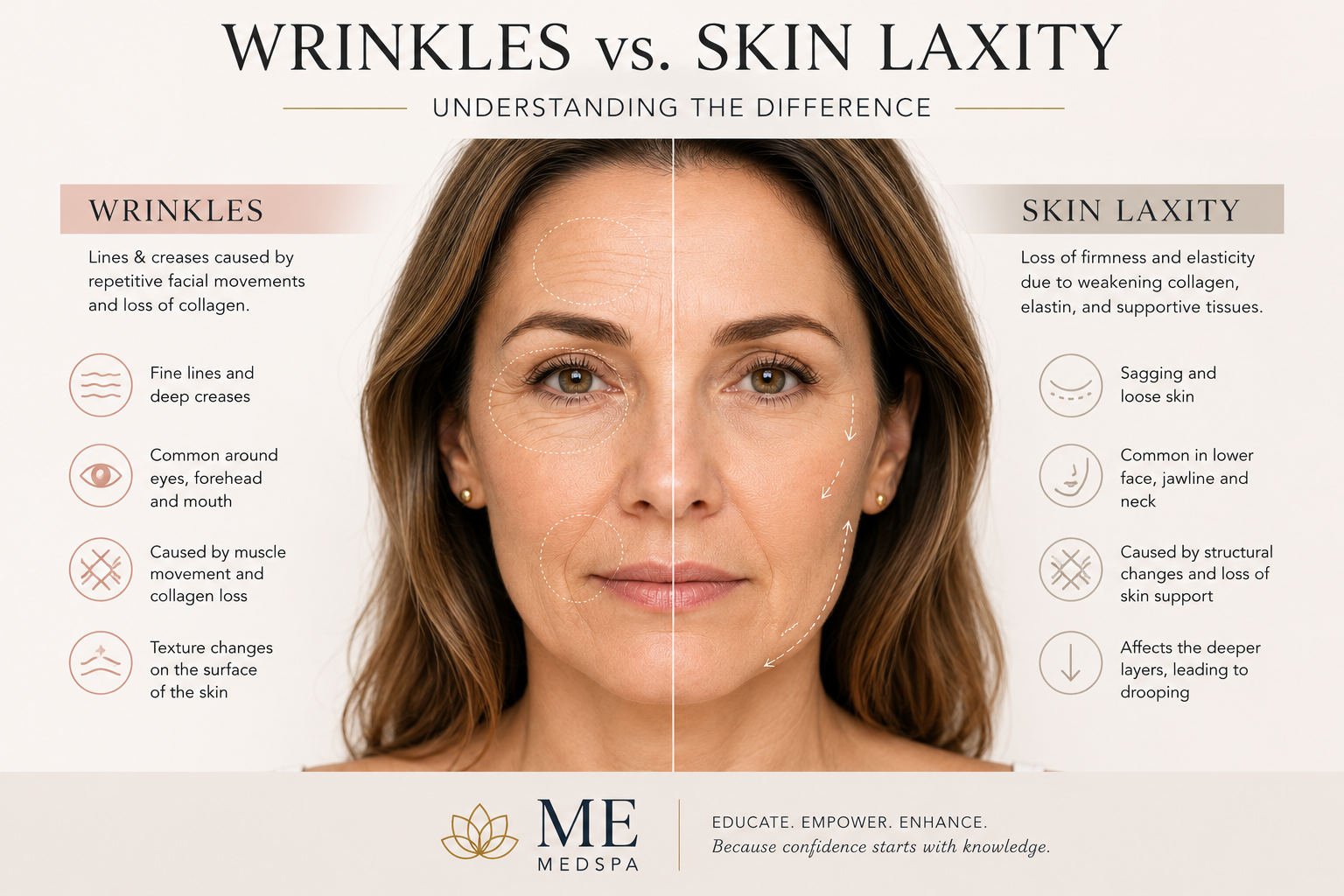
People often use the terms "wrinkles" and "sagging skin" interchangeably, but they describe different aspects of facial aging.
Wrinkles are lines or creases that develop because of repeated facial movement, collagen loss, and changes in skin texture.
Loose skin, on the other hand, refers to a loss of firmness and structural support.
It's possible to have:
Wrinkles without significant sagging
Sagging without many wrinkles
Both concerns at the same time
Understanding this distinction is important because the most appropriate treatment depends on what is actually changing.
For example, someone concerned primarily about crow's feet may benefit from a different treatment approach than someone whose main concern is skin laxity along the jawline.
If you've recently read our article on Crow's Feet: Causes, Prevention & Best Treatments, you'll notice that wrinkles around the eyes are largely driven by repeated muscle movement, while skin laxity is more closely related to collagen, elastin, and structural support.
Can You Prevent Sagging Skin?
While no one can completely stop the natural aging process, there are practical steps you can take to help maintain healthier, firmer-looking skin as you age.
The goal isn't to eliminate every visible sign of aging. Instead, it's to support your skin's long-term health and reduce factors that contribute to premature collagen loss.
Protect Your Skin From UV Damage
Daily sun protection remains one of the most effective ways to help preserve collagen and elastin.
Ultraviolet (UV) rays gradually break down these structural proteins, contributing to wrinkles, uneven skin texture, and skin laxity.
The American Academy of Dermatology (AAD) recommends using a broad-spectrum sunscreen with SPF 30 or higher every day, even when it's cloudy.
Maintain a Healthy Lifestyle
Healthy habits support healthy skin.
These include:
Eating a balanced diet rich in protein and antioxidants
Staying hydrated
Getting adequate sleep
Exercising regularly
Avoiding smoking
While these habits won't reverse significant skin laxity, they can help support overall skin quality.
Follow a Consistent Skincare Routine
Ingredients such as retinoids, peptides, antioxidants, and hyaluronic acid may help improve skin texture and hydration.
Although skincare alone cannot tighten moderate or severe loose skin, it remains an important part of a comprehensive anti-aging routine.
Consider Early Preventative Care
One of the biggest misconceptions about anti-aging is that you should wait until skin becomes significantly loose before taking action.
In reality, many patients begin supporting collagen production in their 30s or 40s before skin laxity becomes advanced.
If you're interested in learning more, our guide Preventative Anti-Aging Treatments in Monterey Park explains why many people begin treatment earlier than they expect.

Best Non-Surgical Treatments for Skin Tightening
If you're already noticing loose skin around your jawline, cheeks, or neck, lifestyle changes alone may not provide the level of improvement you're hoping for.
Fortunately, modern aesthetic medicine offers several non-surgical options that may help improve skin firmness depending on your individual concerns.
Morpheus8
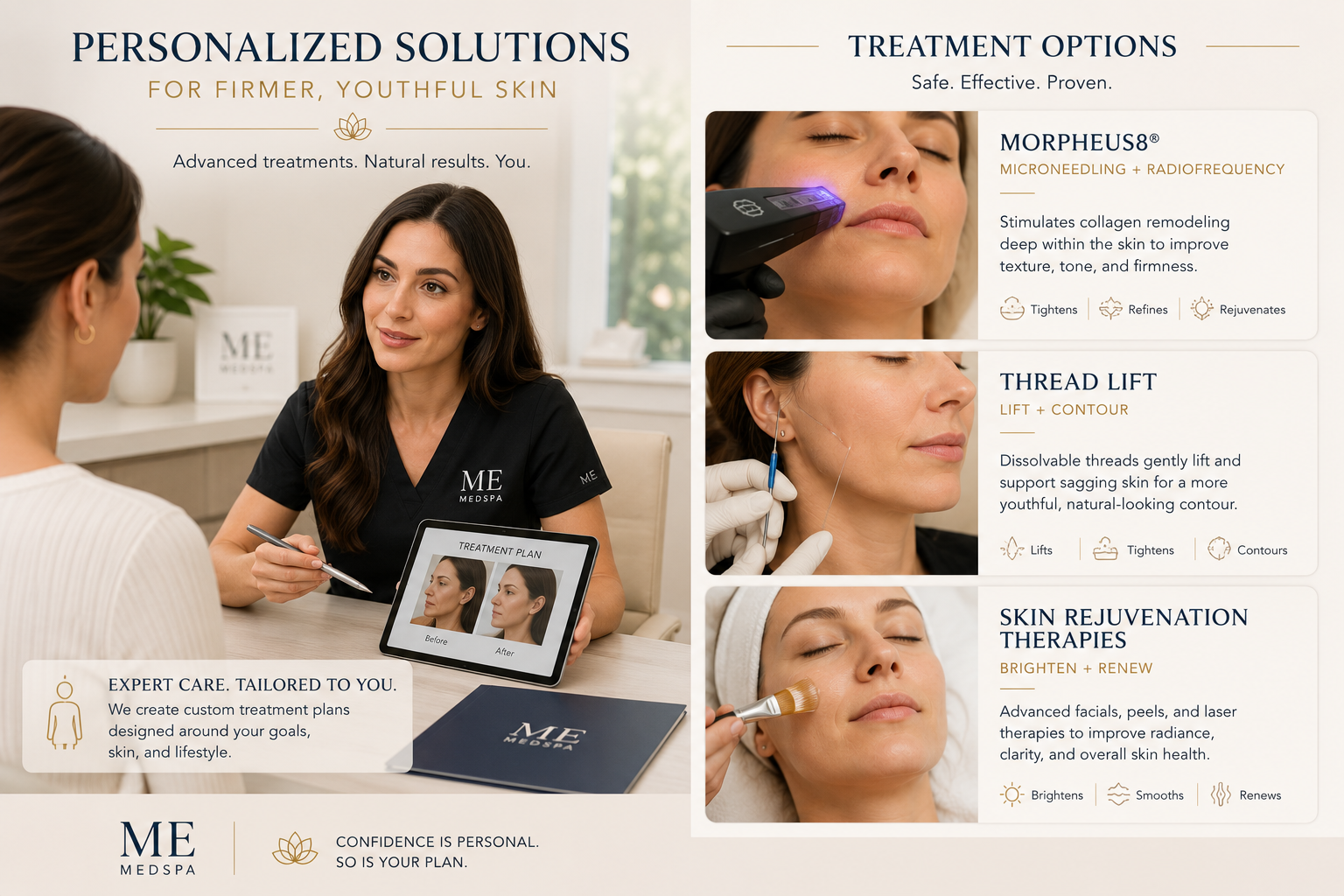
Morpheus8 combines microneedling with radiofrequency energy to stimulate collagen remodeling beneath the skin.
It is commonly recommended for concerns such as:
Mild to moderate skin laxity
Uneven skin texture
Fine lines
Acne scars
Overall skin rejuvenation
Rather than changing your facial features, Morpheus8 focuses on supporting healthier skin from within.
Thread Lift
For patients experiencing more noticeable skin laxity, a Thread Lift may provide additional support by lifting selected areas while encouraging collagen production over time.
Thread Lifts are often considered by patients seeking a non-surgical alternative to traditional facelift surgery.
Hydro HA Injectable Facial
Skin hydration also plays an important role in maintaining healthy-looking skin.
Hydro HA Injectable Facial treatments help improve hydration and skin quality, making them an excellent complement to other collagen-supporting procedures.
Although hydration alone won't lift loose skin, healthier skin often appears smoother and more refreshed.
Salmon DNA Facial
Salmon DNA Facial treatments focus on improving overall skin health, hydration, and repair.
Many patients include this treatment as part of a comprehensive skin rejuvenation plan
Combination Treatments
One of the most common misconceptions is that there is one "best" treatment for sagging skin.
In reality, many patients benefit from a personalized combination of treatments designed to address:
Skin texture
Hydration
Collagen support
Skin laxity
Overall facial aging
This is why a professional consultation is often the most valuable first step.
When Should You Consider Professional Treatment?
There isn't a specific age when everyone should begin skin tightening treatments.
Instead, consider scheduling a consultation if you notice:
Loss of jawline definition
Loose skin around the cheeks
Mild neck laxity
Skin that no longer feels as firm
Changes that aren't improving with skincare alone
A consultation doesn't mean you have to begin treatment immediately.
Sometimes the most valuable outcome is simply understanding what's happening beneath the surface and learning what options may be appropriate now—or later
Skin Tightening Treatments in Monterey Park
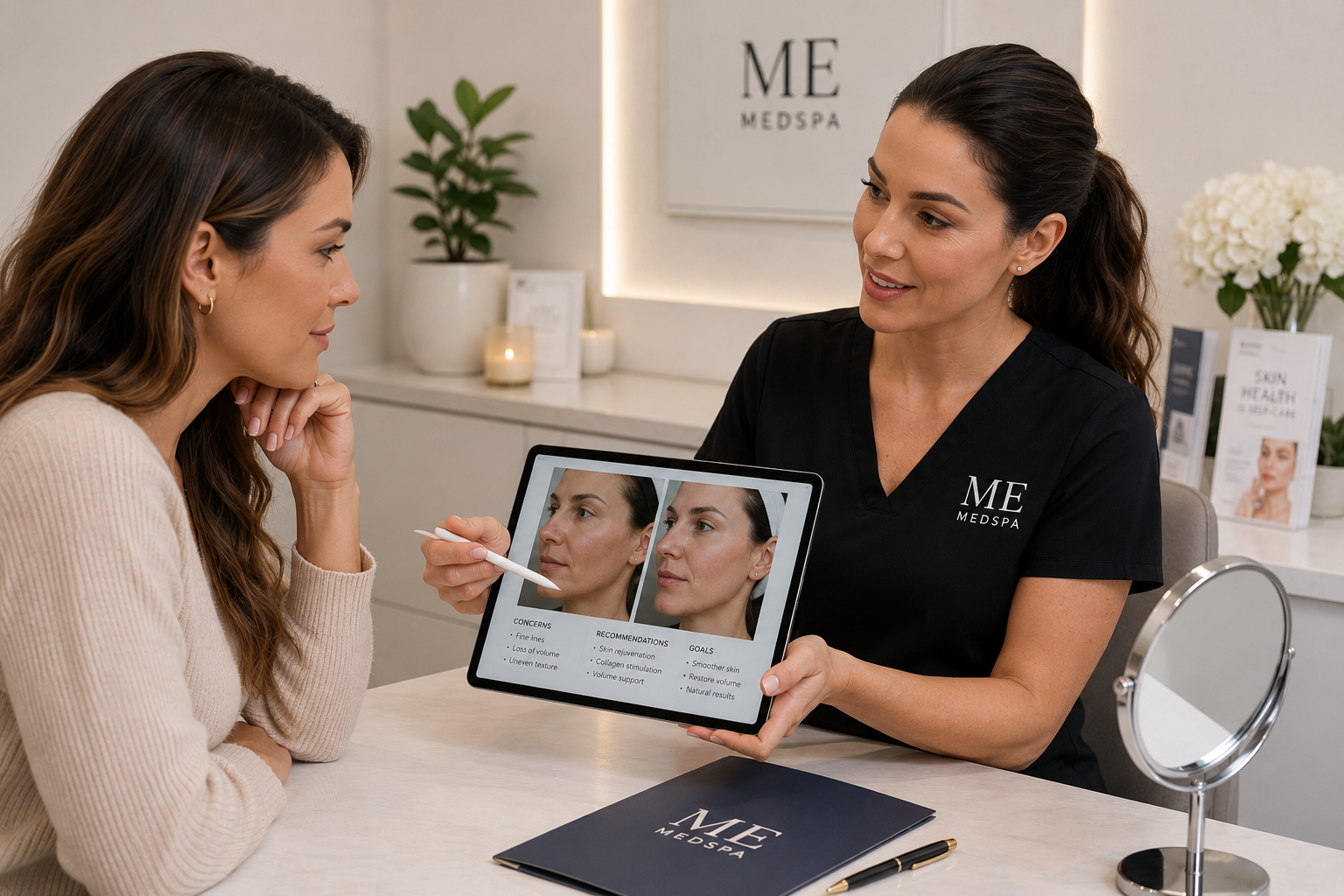
At ME MEDSPA, we understand that every patient's skin ages differently.
That's why we don't recommend the same treatment for everyone.
Instead, we begin with a personalized consultation to evaluate:
Skin quality
Degree of skin laxity
Facial anatomy
Personal goals
Lifestyle
From there, we'll discuss treatment options that align with your concerns while prioritizing natural-looking results.
We proudly serve patients from:
Monterey Park
Alhambra
San Gabriel
Rosemead
East Los Angeles
Related Reading
Continue learning with these anti-aging guides:
Why Skin Ages After 30: Understanding Collagen Loss & How to Slow It Naturally
Crow's Feet: Causes, Prevention & Best Treatments in Monterey Park
Smile Lines vs Nasolabial Folds: Why They Get Deeper With Age & What You Can Do
Exosomes vs PRP: Which Skin Rejuvenation Treatment Is Right for You?
Signs of Aging Skin: When Should You Start Anti-Aging Treatments?
Frequently Asked Questions
What causes sagging skin?
Sagging skin is primarily caused by natural collagen and elastin loss, aging, sun exposure, genetics, and lifestyle factors.
Can sagging skin be tightened without surgery?
Many people with mild to moderate skin laxity may benefit from non-surgical treatments that support collagen production and improve skin firmness. The most appropriate option depends on the individual.
Is Morpheus8 good for loose skin?
Morpheus8 is commonly used to improve skin texture and stimulate collagen remodeling. Whether it's appropriate depends on your skin concerns and goals.
At what age does skin start to sag?
Collagen production gradually declines beginning in your late 20s, but noticeable skin laxity often becomes more apparent during your 30s and 40s. Genetics and lifestyle also play important roles.
Can skincare products tighten loose skin?
Skincare products may improve hydration and skin texture, but they generally cannot significantly tighten moderate or advanced skin laxity on their own.
Are Thread Lifts better than surgery?
Thread Lifts and facelift surgery address different concerns. A consultation helps determine which approach is most appropriate based on your anatomy and treatment goals.
Can I combine different anti-aging treatments?
Yes. Many patients benefit from personalized treatment plans that combine procedures to address skin quality, collagen support, hydration, and skin laxity.
Book Your Consultation
Loose skin is a natural part of aging, but that doesn't mean you have to navigate your options alone.
At ME MEDSPA, we take the time to understand your concerns, evaluate your skin, and recommend treatments that support healthy, natural-looking results.
If you've noticed changes in your jawline, cheeks, or neck—or you're simply interested in learning more about non-surgical skin tightening—we invite you to schedule a personalized consultation.
Together, we'll create a treatment plan tailored to your skin and your goals.

