Collagen vs Elastin: Understanding Healthy Skin | ME MEDSPA
Collagen vs. Elastin: What's the Difference and Why Do Both Matter for Healthy Skin?
When people talk about youthful-looking skin, two words come up repeatedly: collagen and elastin.
They're often mentioned together, but they're not the same thing.
Although both proteins help keep skin healthy, they perform very different jobs.
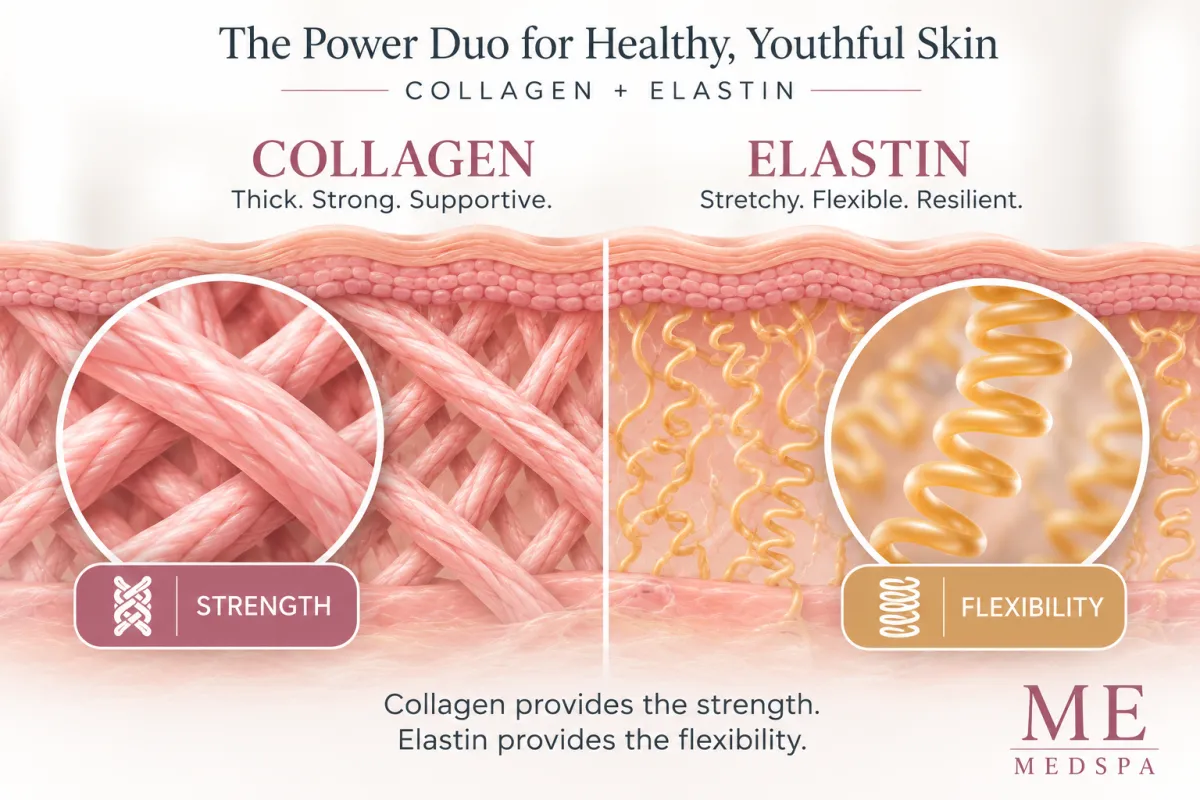
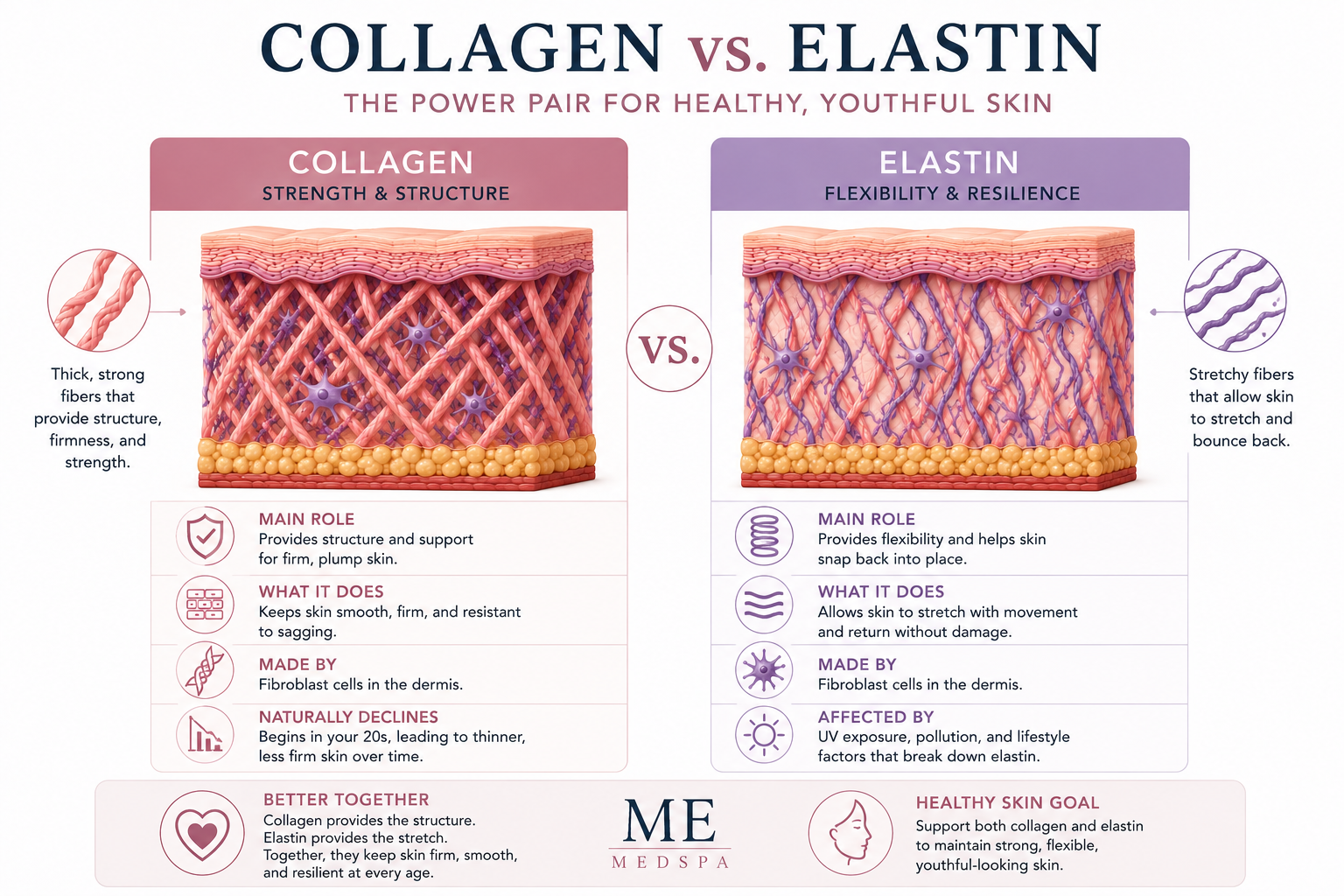
Collagen provides the structural framework that gives skin its strength and firmness.
Elastin gives skin the flexibility to stretch and return to its original shape after facial expressions or movement.
As we age, production of both proteins gradually declines.
Years of sun exposure, lifestyle habits, genetics, and environmental factors may accelerate this process, contributing to wrinkles, reduced elasticity, thinner skin, and skin laxity.
Understanding the difference between collagen and elastin can help you better understand why your skin changes over time and how healthy habits and professional treatments may support overall skin quality.
In this guide, we'll explain what collagen and elastin are, how they work together, why they decline with age, and common ways to support healthy skin.
What Is Collagen?
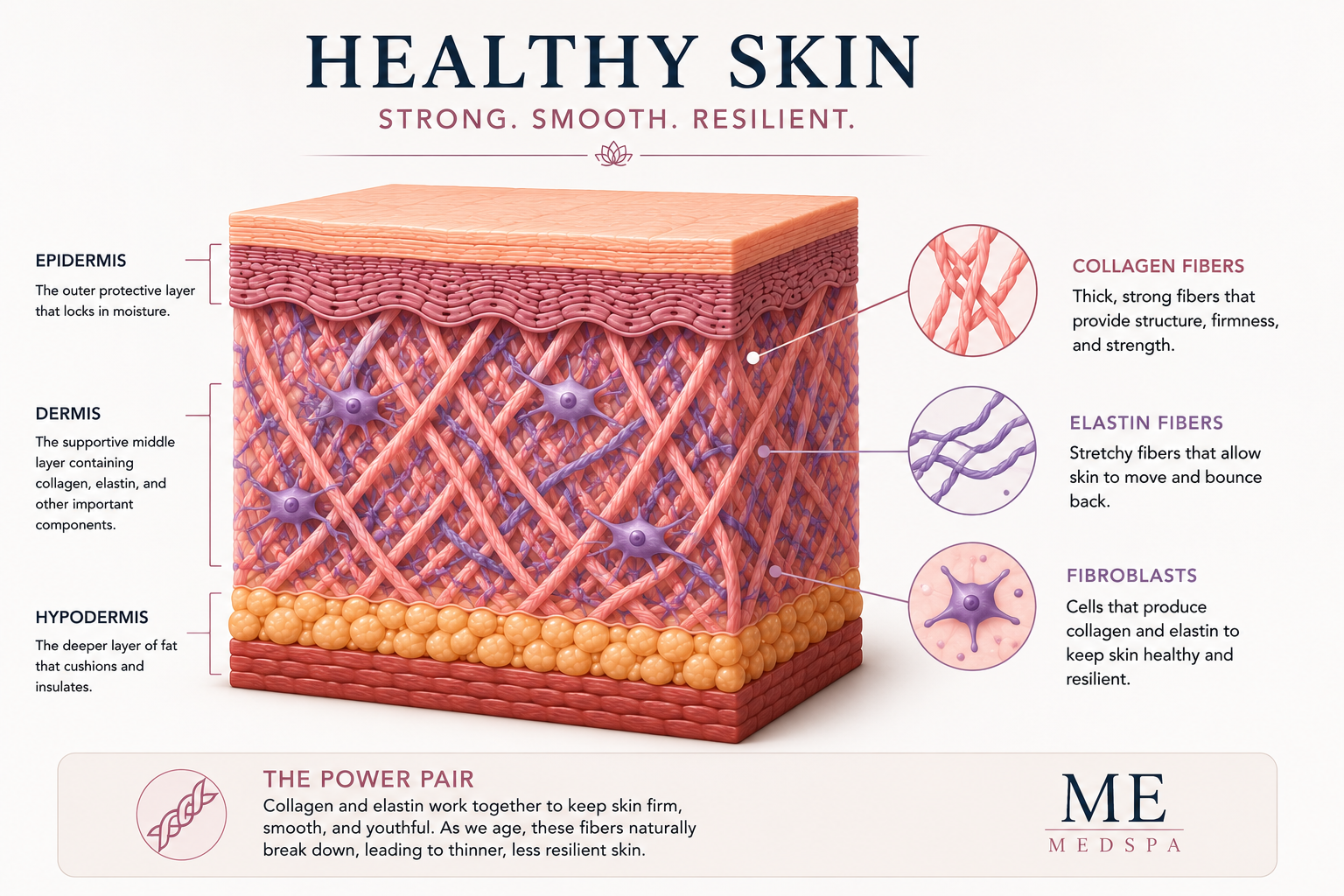
Collagen is the most abundant structural protein in the human body.
Within the skin, it provides strength, support, and firmness.
You can think of collagen as the framework that helps your skin maintain its shape.
Healthy collagen contributes to:
Firmness
Structural support
Smooth texture
Resistance to sagging
Beginning in adulthood, collagen production gradually slows.
If you'd like to understand this process in greater detail, read our guide:
Why Skin Ages After 30: Understanding Collagen Loss & How to Slow It Naturally
What Is Elastin?
Elastin is another important structural protein found within the skin.
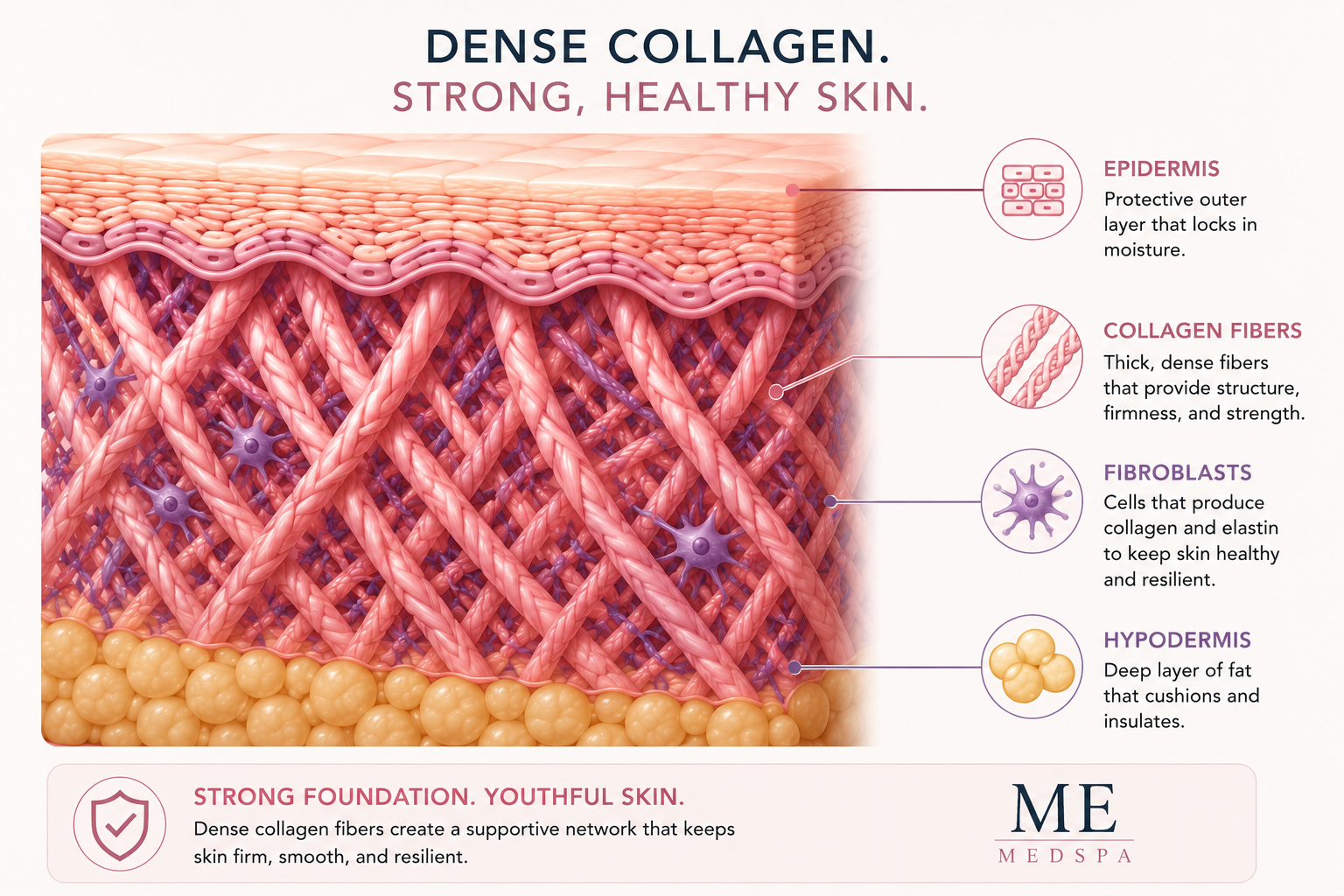
While collagen provides strength, elastin provides flexibility.
Imagine stretching a rubber band.
Its ability to return to its original shape is similar to how elastin helps skin recover after smiling, laughing, or making facial expressions.
Healthy elastin supports:
Skin elasticity
Flexibility
Bounce
Recovery after movement
As elastin fibers decline with age, the skin gradually loses its ability to spring back into place.
This contributes to reduced firmness and increased skin laxity.
If you'd like to learn more about skin elasticity, read:
Skin Elasticity: Why Your Skin Loses Firmness
How Do Collagen and Elastin Work Together?
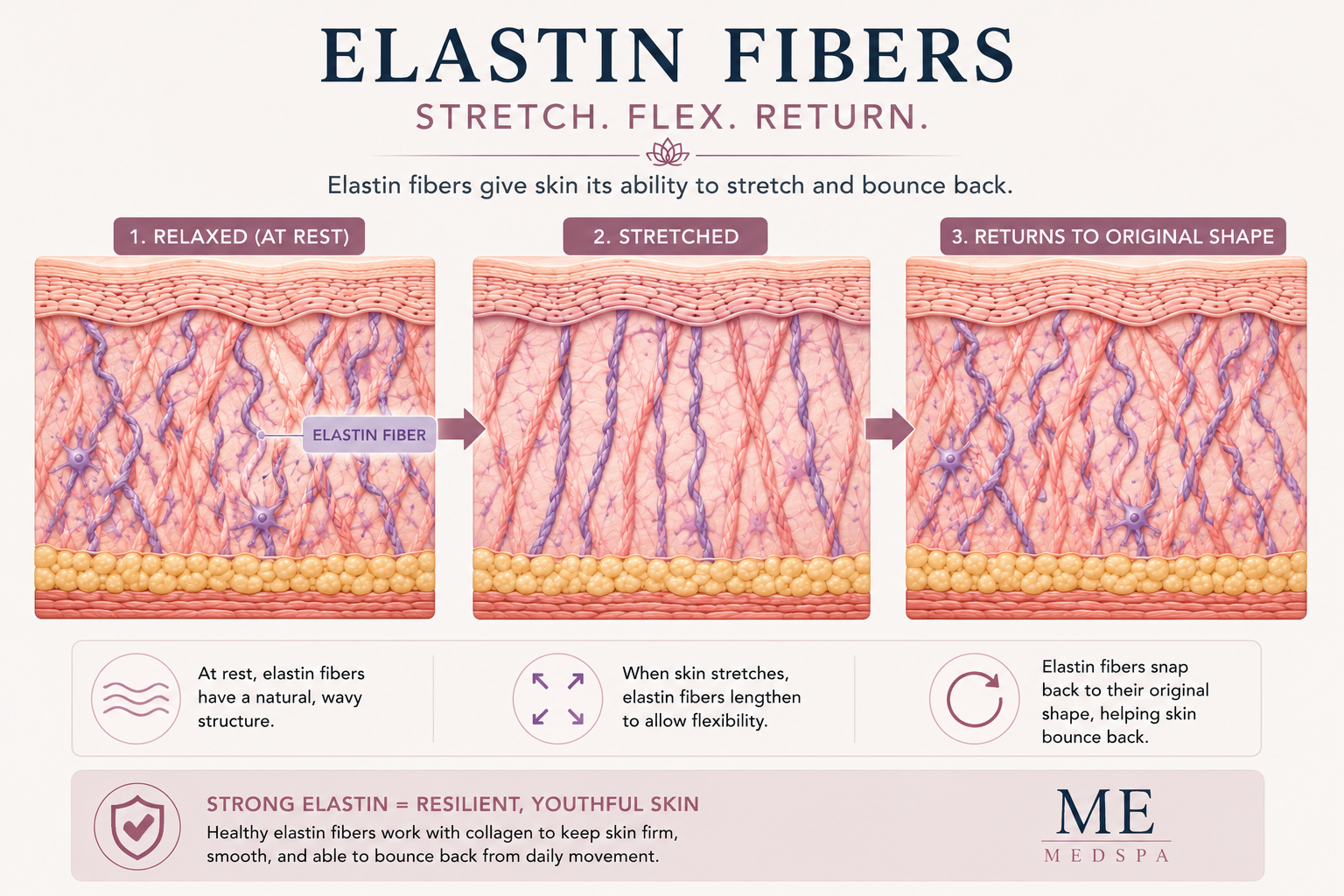
Rather than competing, collagen and elastin complement one another.
A useful way to think about them is:
Collagen provides strength.
Elastin provides flexibility.
Healthy skin depends on both proteins working together.
When collagen declines:
Skin becomes less firm.
Wrinkles become more noticeable.
Skin may become thinner.
When elastin declines:
Skin stretches more easily.
Skin returns to position more slowly.
Sagging becomes more noticeable.
Because both proteins decline gradually, many people notice several visible changes occurring around the same time.
Why Do Collagen and Elastin Decline?
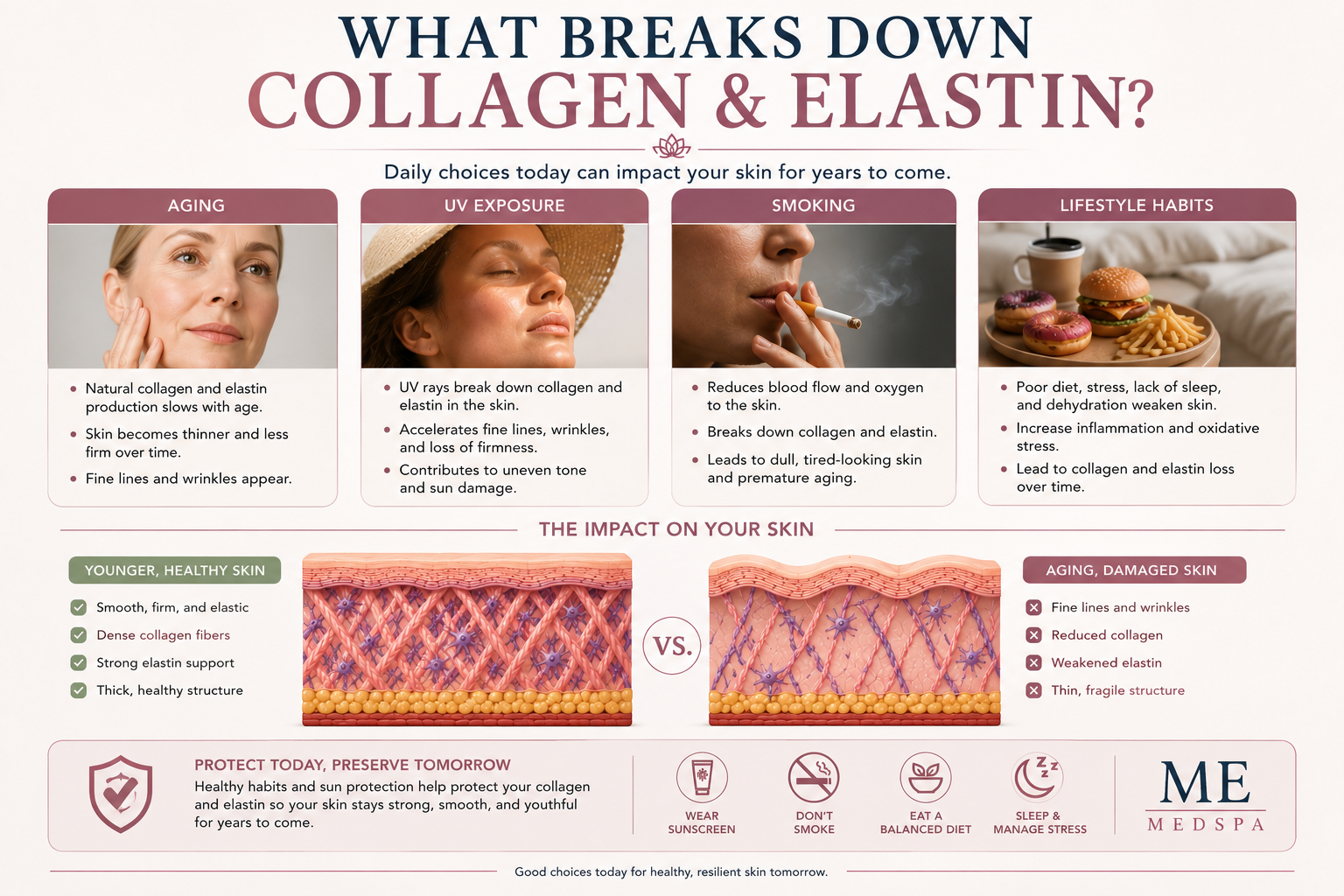
Several factors contribute to declining collagen and elastin production.
Natural Aging
Production gradually slows as we grow older.
Sun Exposure
Ultraviolet radiation damages both collagen and elastin.
How Sun Damage Speeds Up Skin Aging
Smoking
Smoking contributes to oxidative stress and reduces healthy circulation.
Poor Lifestyle Habits
Lack of sleep, poor nutrition, dehydration, and chronic stress may influence skin health.
Genetics
Genetics also influence how quickly visible changes appear.
No two people age exactly the same way.
Which Is More Important?
Neither.
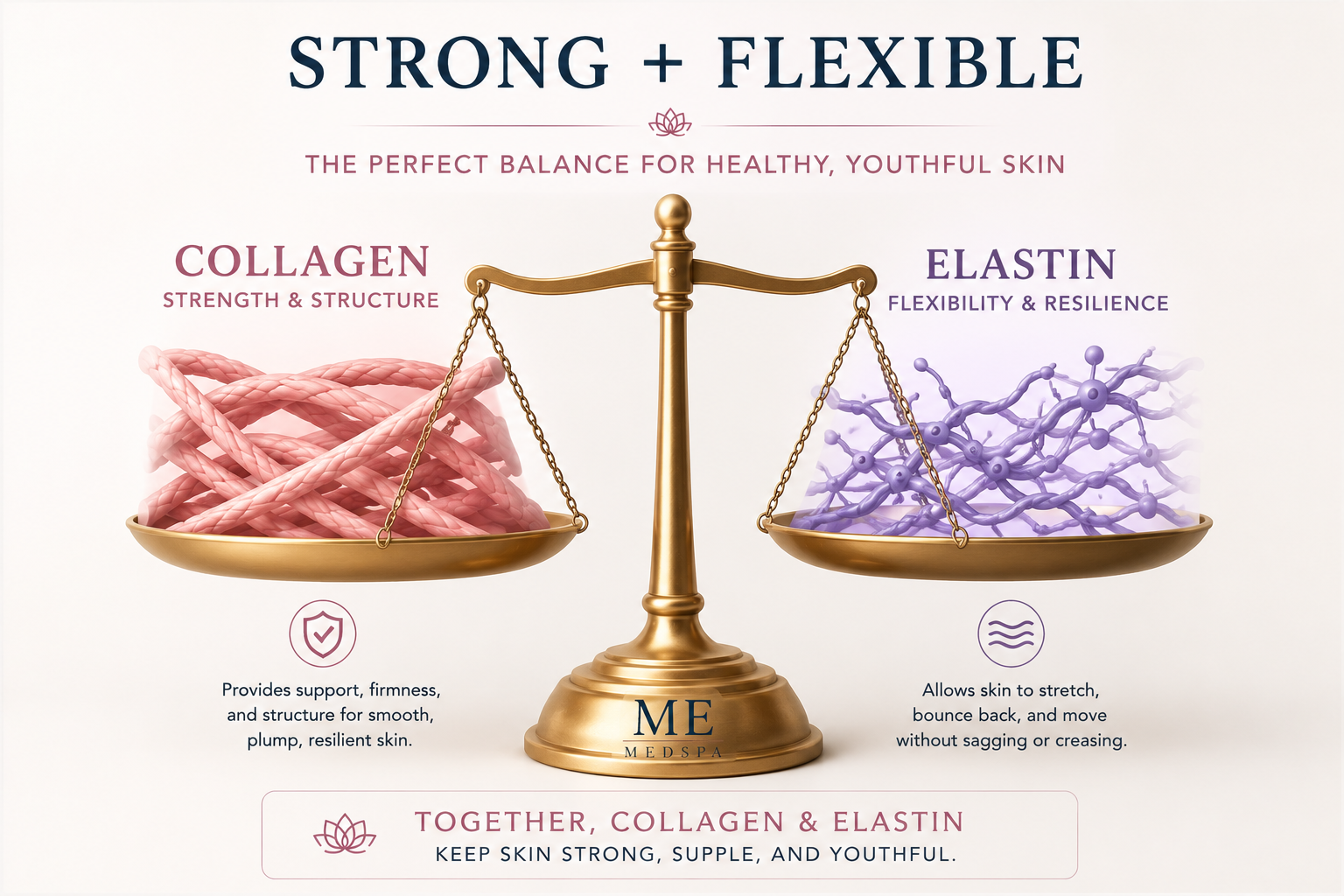
Healthy skin depends on both proteins.
Collagen without elastin would create skin that is firm but lacks flexibility.
Elastin without collagen would create skin that stretches easily but lacks structural support.
Healthy skin relies on the balance between these two essential proteins.
Can You Rebuild Collagen and Elastin?
Your body continues producing collagen and elastin throughout adulthood, but production and repair become less efficient with age.
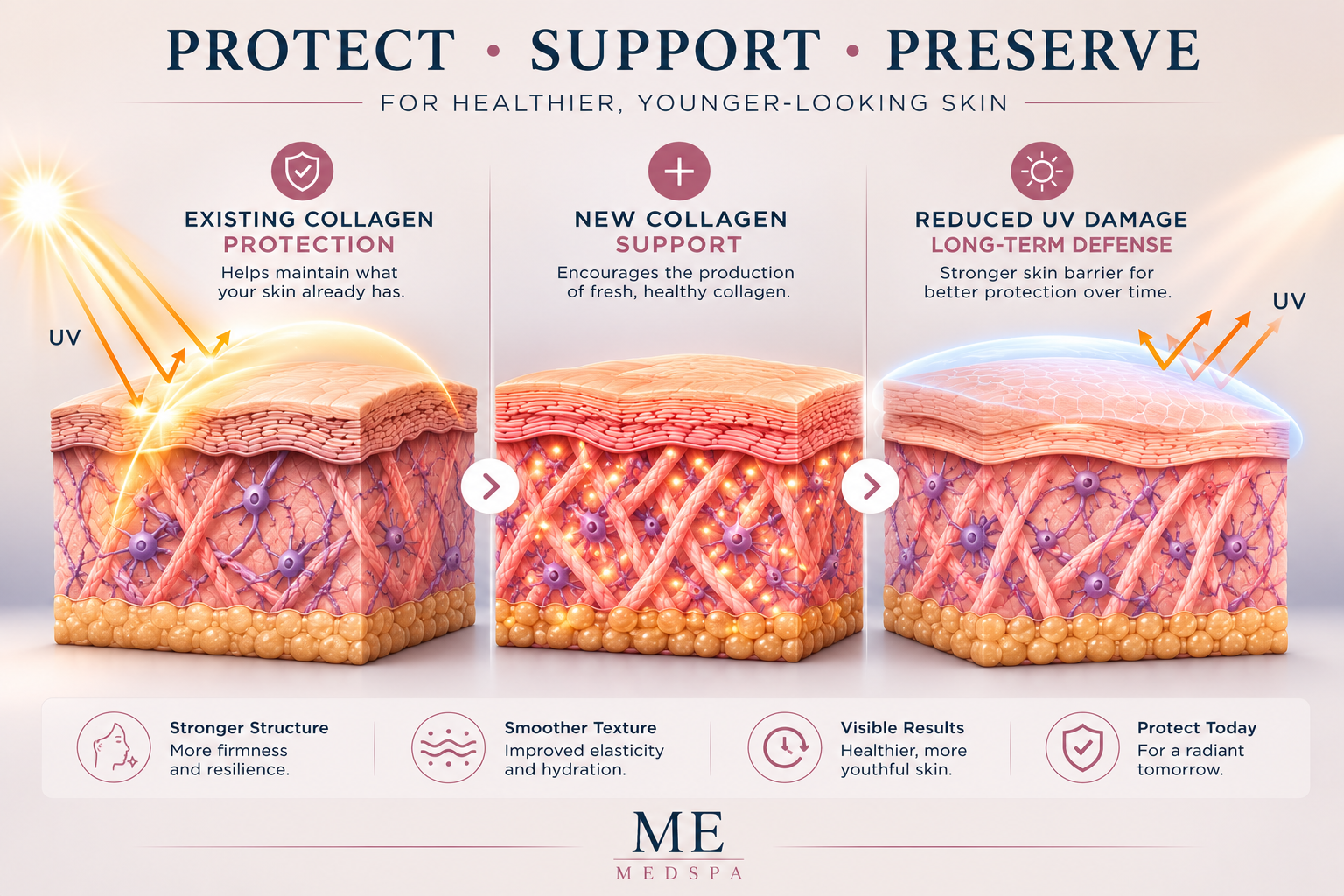
You cannot permanently restore your skin to the exact condition it had when you were younger. However, you may be able to support collagen production, protect existing structural proteins, and improve the appearance of skin texture and firmness.
The most effective approach usually combines:
Daily sun protection
Consistent skincare
Healthy lifestyle habits
Appropriate professional treatments
Realistic expectations
Ongoing maintenance
It is also important to understand that collagen and elastin do not respond identically.
Collagen production may be supported through certain skincare ingredients and collagen-remodeling procedures. Mature elastin fibers are more difficult to restore, which makes protecting existing elastin from UV damage especially important.
No cream, supplement, or aesthetic procedure can completely stop normal skin aging.
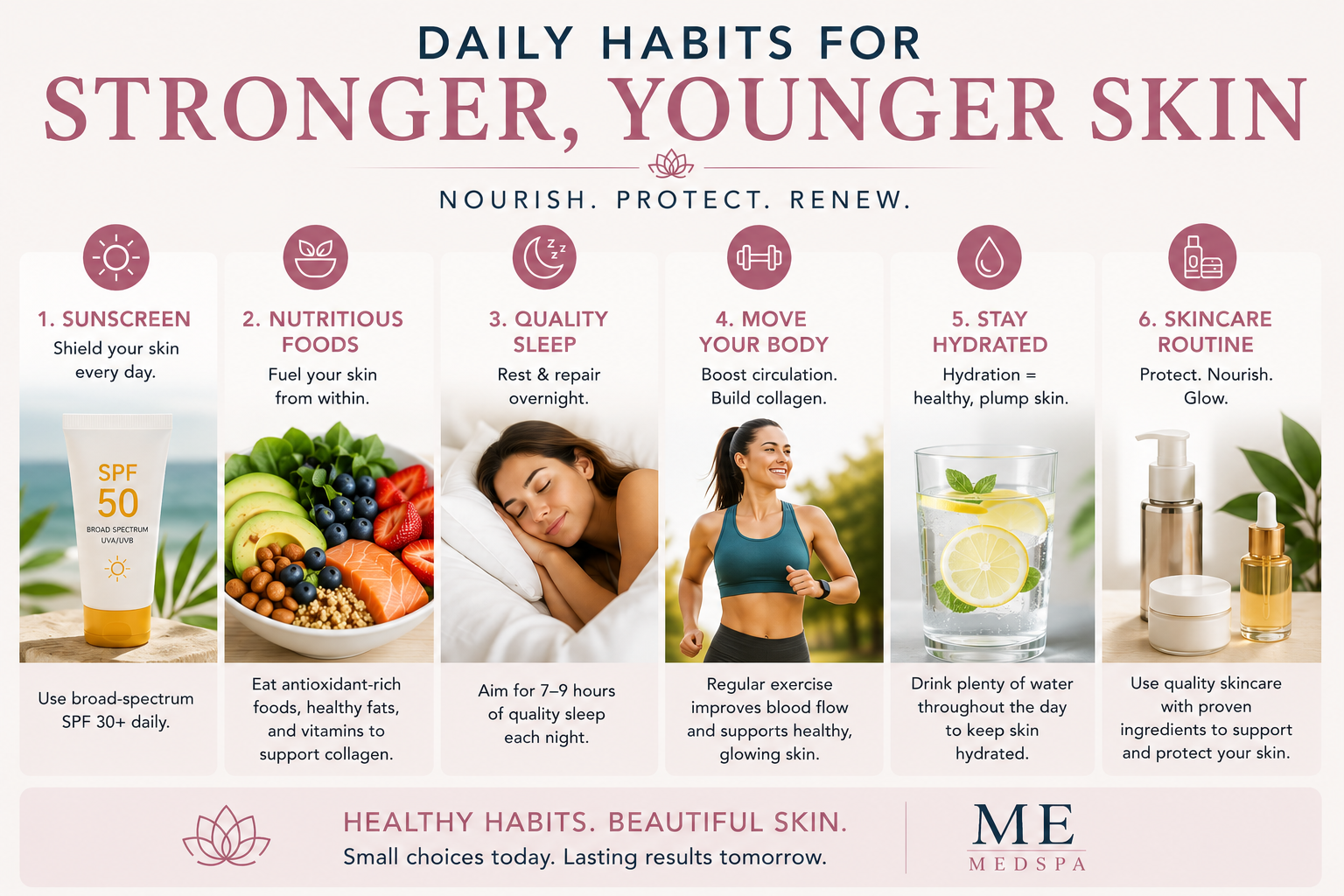
Daily Habits That Help Protect Collagen and Elastin
Professional treatments may support skin quality, but daily habits remain the foundation of long-term skin health.
Apply Sunscreen Every Day
Ultraviolet exposure contributes to the breakdown of collagen and abnormal changes in elastin.
Use a broad-spectrum, water-resistant sunscreen with SPF 30 or higher on exposed skin.
Remember commonly missed areas such as:
Ears
Neck
Upper chest
Hands
Forearms
Reapply during prolonged outdoor exposure, after swimming, or after heavy perspiration.
Sun protection is especially important after aesthetic treatments because healing skin may be more sensitive to UV exposure.
Avoid Smoking
Smoking exposes the skin to oxidative stress and can reduce healthy circulation.
Over time, smoking may contribute to:
Earlier wrinkle formation
Dull-looking skin
Reduced firmness
Slower recovery
More noticeable lines around the mouth
Avoiding tobacco supports both overall health and skin wellness.
Eat a Balanced Diet
Your body requires amino acids, vitamins, minerals, and other nutrients to support normal tissue maintenance.
A balanced diet may include:
Lean protein
Fish
Eggs
Beans
Fruits
Vegetables
Whole grains
Healthy fats
Vitamin C is especially important for normal collagen synthesis, but no single food can reverse skin aging.
Prioritize Sleep
Sleep supports normal repair and recovery throughout the body.
Ongoing poor sleep may affect:
Skin hydration
Barrier function
Recovery from irritation
Overall skin appearance
Most adults benefit from maintaining a consistent sleep schedule, though individual needs vary.
Manage Stress
Long-term stress can affect sleep, eating habits, inflammation, and skincare consistency.
Helpful stress-management habits may include:
Walking
Exercise
Breathing exercises
Time outdoors with sun protection
Hobbies
Mindfulness
Professional mental-health support when appropriate
Maintain a Consistent Skincare Routine
A simple routine used consistently is often more helpful than frequently changing products.
A foundational routine may include:
Morning
Gentle cleanser
Antioxidant or hydrating serum
Moisturizer
Broad-spectrum SPF 30 or higher
Evening
Gentle cleanser
Targeted active ingredient when appropriate
Moisturizer
Introduce stronger ingredients slowly to reduce irritation.
Which Skincare Ingredients Support Collagen and Skin Quality?
Skincare cannot rebuild every structural change associated with aging, but selected ingredients may support healthier-looking skin.
Retinoids
Retinoids are vitamin A derivatives commonly used to support skin renewal and improve the appearance of fine lines and uneven texture.
They may also support collagen-related processes over time.
However, retinoids can cause:
Dryness
Peeling
Redness
Irritation
Increased sensitivity
Patients with sensitive or fragile skin should introduce them gradually.
Retinoids may not be appropriate during pregnancy. Patients who are pregnant, breastfeeding, or trying to conceive should consult a qualified healthcare professional before use.
Vitamin C
Topical vitamin C acts as an antioxidant and plays a role in normal collagen synthesis.
A stable, appropriately formulated product may help support:
More even-looking skin
Antioxidant protection
Brighter appearance
Overall skin quality
Vitamin C does not replace sunscreen.
Peptides
Peptide-containing products are often marketed as supporting firmer-looking skin.
Formulations vary considerably, so results depend on the product and its supporting ingredients.
Hyaluronic Acid
Hyaluronic acid supports hydration by attracting and retaining moisture.
It does not directly replace collagen or elastin, but hydrated skin often appears smoother and more resilient.
Ceramides
Ceramides help support the skin barrier.
A stronger skin barrier may reduce dryness, sensitivity, and moisture loss—especially in mature or frequently treated skin.
Can Collagen Supplements Improve the Skin?
Collagen supplements have become popular, but they should not be presented as a guaranteed anti-aging solution.
Some people report improvements in hydration or skin appearance after consistently taking hydrolyzed collagen peptides. Results vary, and supplement quality, dose, diet, age, and overall health may influence outcomes.
Important considerations include:
Supplements do not travel directly to one facial wrinkle.
The digestive system breaks collagen into smaller components.
Products vary in quality and testing.
Improvements, when they occur, are usually gradual.
Supplements do not replace sunscreen or professional care.
Patients with allergies, dietary restrictions, kidney concerns, pregnancy, or medical conditions should consult a healthcare professional before beginning a supplement.
Do not assume that “natural” automatically means risk-free.

Non-Surgical Treatments That May Support Collagen Remodeling
Some aesthetic procedures are designed to create a controlled treatment response that supports collagen remodeling.
The most appropriate procedure depends on:
Skin thickness
Treatment area
Degree of laxity
Texture concerns
Skin tone
Medical history
Previous treatments
Desired results
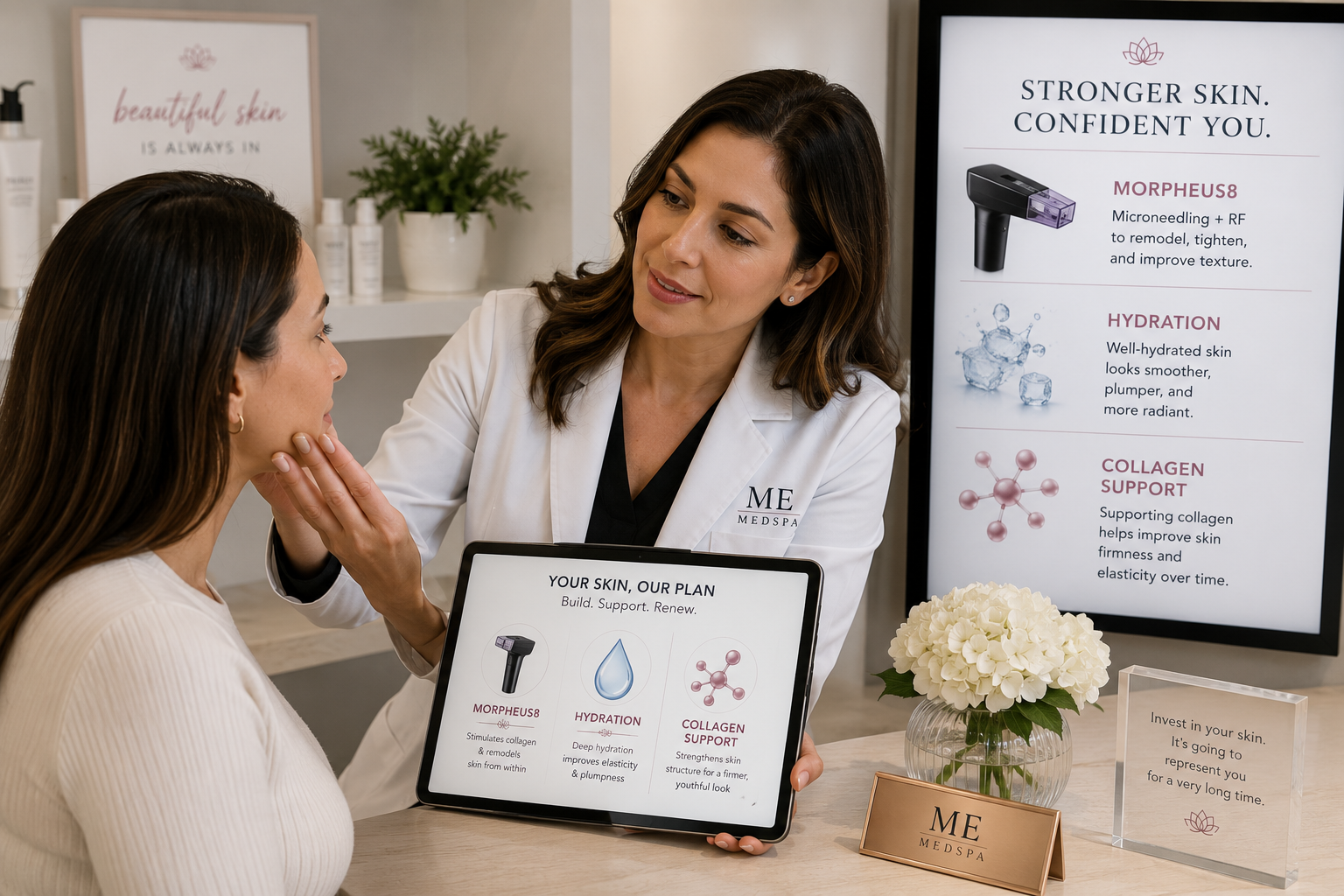
Morpheus8
Morpheus8 combines microneedling with radiofrequency energy.
The treatment is commonly considered for concerns involving:
Reduced firmness
Mild skin laxity
Fine lines
Uneven texture
Certain acne scars
Overall collagen support
Morpheus8 does not directly “inject collagen” into the skin.
Instead, it creates controlled treatment zones intended to encourage the skin’s natural remodeling response.
Results generally develop gradually rather than appearing immediately.
Skin Boosters
Skin Boosters focus mainly on hydration and overall skin quality.
They may help the skin appear:
More hydrated
Smoother
More radiant
Less dull
Healthier overall
Skin Boosters do not replace elastin or structurally rebuild every age-related change. They may complement collagen-focused procedures when dehydration and fine surface texture are also concerns..
Salmon DNA Facial
A Salmon DNA Facial may be discussed as part of a skin-quality plan focused on hydration, texture, and rejuvenation.
It should not be described as permanently restoring collagen or elastin.
Suitability and expected outcomes depend on the product, treatment protocol, skin condition, and individual goals.
PRP
Platelet-rich plasma uses components prepared from a patient’s own blood.
In aesthetic settings, PRP may be combined with procedures such as microneedling as part of a skin-rejuvenation plan.
Research and treatment protocols vary, so outcomes should not be guaranteed.
Combination Plans
Some patients have several concerns at once, such as:
Reduced firmness
Dryness
Fine lines
Uneven texture
Mild laxity
Sun damage
A combination plan may address different concerns through different methods.
More treatment is not automatically better. The safest plan is based on a thoughtful assessment rather than stacking procedures without a clear purpose.
Common Myths About Collagen and Elastin
Myth 1: Collagen and Elastin Are the Same
They work together, but their roles differ.
Collagen provides strength and structural support. Elastin allows the skin to stretch and return toward its original shape.
Myth 2: Collagen Cream Replaces Lost Collagen
Topical collagen products may moisturize the skin, but collagen molecules generally do not simply pass through the skin and rebuild the dermis.
A product may still improve hydration and temporarily smooth surface texture without replacing structural collagen.
Myth 3: Drinking More Water Rebuilds Collagen
Hydration supports normal skin function and may improve the appearance of dryness.
Water cannot directly replace collagen or elastin that has declined with age.
Myth 4: One Treatment Permanently Stops Aging
No procedure permanently stops collagen loss, sun damage, facial movement, or natural aging.
Maintenance and daily care remain important.
Myth 5: More Aggressive Treatment Produces Better Results
Overtreating the skin may increase the risk of irritation, prolonged inflammation, pigmentation changes, or unwanted outcomes.
Treatment intensity should be matched to the patient’s skin and goals.
Myth 6: Everyone Loses Collagen at the Same Rate
Genetics, hormones, sun exposure, smoking, nutrition, skincare, and other factors influence visible aging.
Two people of the same age may have very different skin concerns.
When Should You Consider a Professional Consultation?
Consider a consultation when you notice:
Reduced facial firmness
Skin that no longer “bounces back” as easily
Fine lines remaining visible at rest
Mild sagging around the cheeks or jawline
Increasingly thin or crepey texture
Changes that skincare alone does not address
Uncertainty about which treatment fits your concern
A consultation can help separate concerns involving:
Collagen decline
Reduced elasticity
Dehydration
Skin laxity
Facial movement
Pigmentation
Texture
Structural facial aging
That distinction matters because each concern may require a different approach.
Collagen and Skin-Quality Consultations in Monterey Park
At ME MEDSPA, treatment recommendations should begin with understanding the patient’s skin rather than selecting a procedure based only on a trend.
During a personalized consultation, the team may evaluate:
Skin firmness
Elasticity
Texture
Hydration
Sun damage
Degree of laxity
Treatment history
At-home skincare
Personal goals
ME MEDSPA serves patients throughout:
Monterey Park
Alhambra
San Gabriel
Rosemead
East Los Angeles
Surrounding San Gabriel Valley communities
The goal is not to promise ageless skin. It is to create an informed plan focused on healthy, balanced, natural-looking results.
Related Reading
Add these published articles using their exact live URLs:
Why Skin Ages After 30: Understanding Collagen Loss & How to Slow It Naturally
Crepey Skin: What Causes It and How Can You Improve Its Appearance?
Do not include the unpublished Exosomes vs PRP article until it is live.
Frequently Asked Questions
What is the main difference between collagen and elastin?
Collagen gives the skin strength and structural support, while elastin helps it stretch and return toward its original shape.
Which causes sagging: collagen loss or elastin loss?
Both may contribute. Collagen loss reduces structural support, while changes in elastin reduce the skin’s ability to recover after stretching and movement.
Can collagen and elastin be restored naturally?
Healthy habits can support normal skin function and help protect existing proteins. However, natural aging cannot be completely reversed, and mature elastin is especially difficult to restore.
Does sunscreen protect collagen and elastin?
Daily broad-spectrum sunscreen helps reduce UV-related damage to collagen and elastin and is one of the most important steps for preventing premature photoaging.
Do collagen creams rebuild collagen?
Topical collagen products may improve hydration, but they do not simply replace the structural collagen found in deeper layers of the skin.
Do collagen supplements work?
Some people may experience gradual improvements in hydration or skin appearance, but results vary. Supplements do not replace sun protection, skincare, or professional treatment.
Can Morpheus8 stimulate collagen?
Morpheus8 is used to support collagen remodeling through radiofrequency microneedling. Suitability depends on the treatment area, skin condition, and individual goals.
Can you rebuild elastin?
Protecting existing elastin from UV damage is important. Restoring mature elastin is more challenging than supporting collagen remodeling, and no treatment can guarantee complete replacement.
Schedule Your Consultation
Collagen and elastin work together, but they do different jobs—and changes in either protein can influence how your skin looks and feels.
Understanding whether your main concern involves firmness, elasticity, hydration, texture, or laxity is the first step toward choosing an appropriate plan.
At ME MEDSPA, we provide personalized consultations for patients interested in maintaining healthier-looking skin and exploring non-surgical aesthetic options.
Schedule your consultation to discuss your concerns, current skincare routine, and long-term skin goals.

