
Smile Lines vs Nasolabial Folds: Causes & Treatments | Me Medspa
Smile Lines vs Nasolabial Folds: Why They Get Deeper With Age & What You Can Do
Have you ever looked at an older photo of yourself and noticed that the lines running from your nose toward the corners of your mouth weren't as noticeable before?
Maybe you only see them when you smile.
Or perhaps the folds have started to remain visible even when your face is completely relaxed.
These lines are commonly called smile lines or laugh lines, but the anatomical term you'll often hear in aesthetic medicine is nasolabial folds.
And here's something important: smiling isn't the only reason they appear.
Nasolabial folds are normal facial features. However, changes in collagen, skin elasticity, facial fat, and deeper facial support can make them more prominent with age. Medical reviews of facial aging describe changes across the skin, fat compartments, ligaments, and bone—not just the skin's surface—as contributors to deeper nasolabial folds.
That's why simply buying a stronger wrinkle cream doesn't always produce the change someone expects.
The right approach depends on why your smile lines are becoming deeper in the first place.
For some people, improving skin quality may be the priority. Others may benefit from collagen-supporting or skin-tightening treatments. In certain cases, facial volume and structural changes may need to be considered by an appropriately qualified provider.
In this guide, we'll explain the difference between smile lines and nasolabial folds, why these creases become more noticeable after 30, which daily habits can accelerate facial aging, and how modern non-surgical treatments may help support a smoother, naturally refreshed appearance.
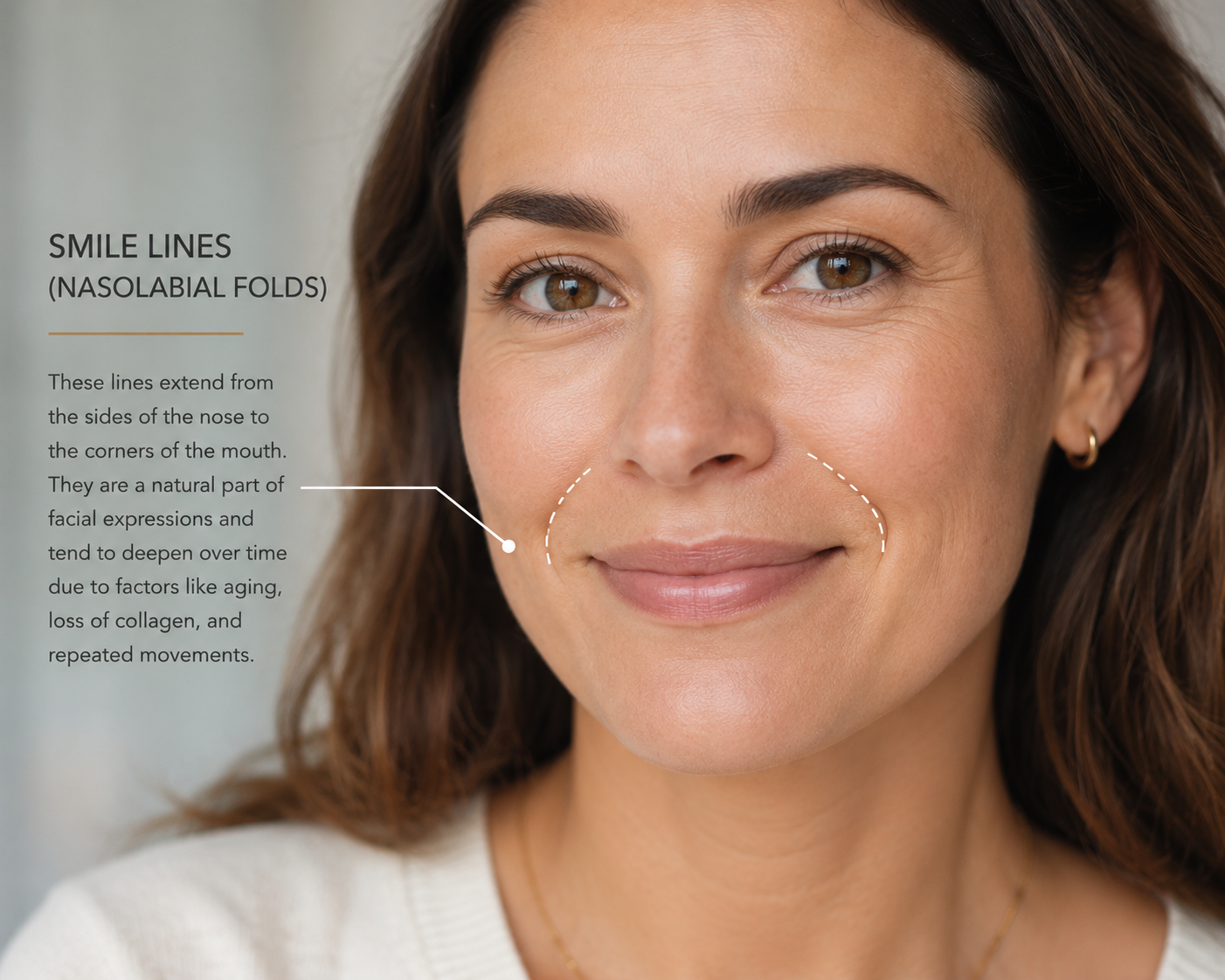
Are Smile Lines and Nasolabial Folds the Same Thing?
In everyday conversation, the terms smile lines, laugh lines, and nasolabial folds are often used to describe the same area.
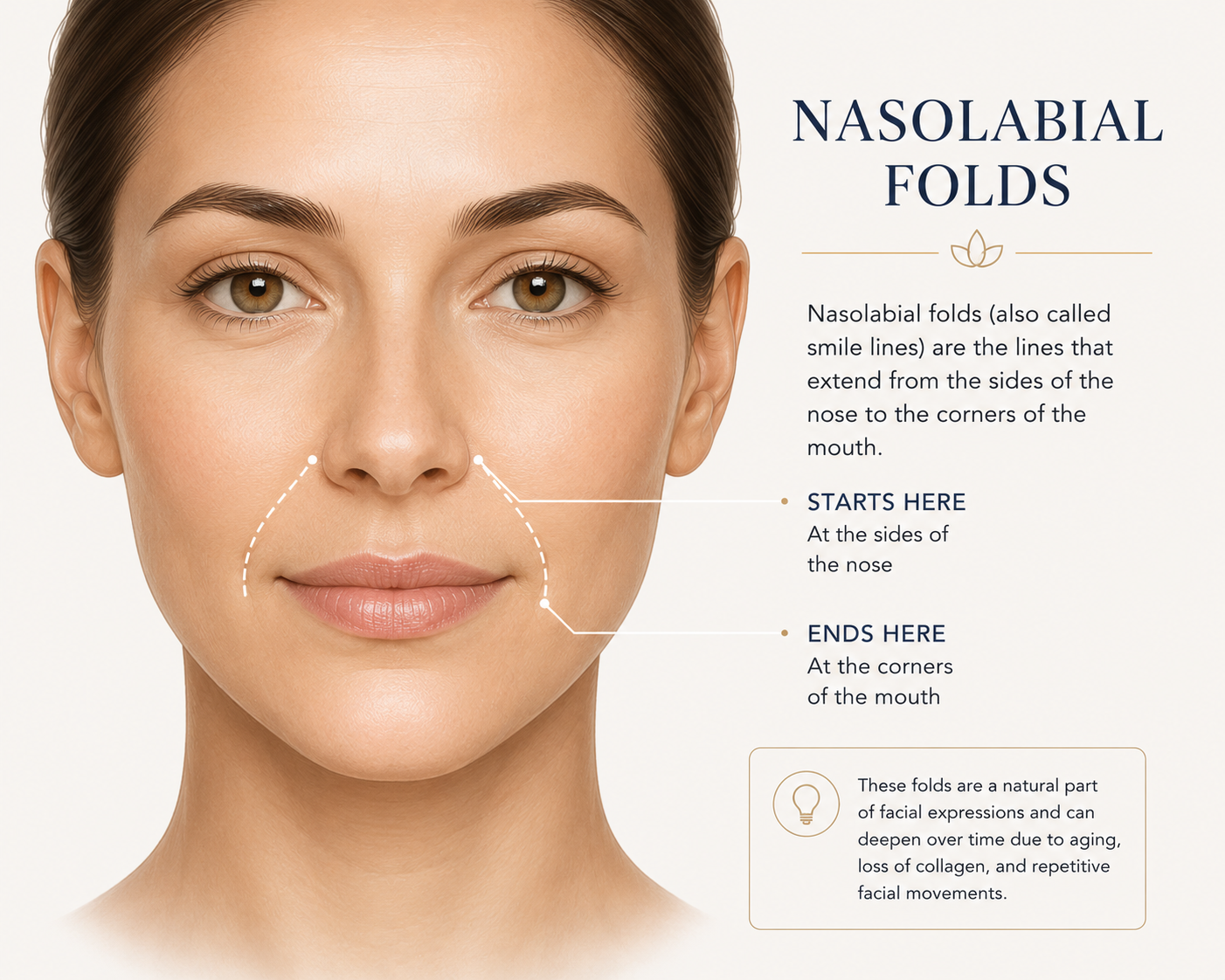
Nasolabial folds are the creases that extend from the sides of the nose toward the corners of the mouth. They are normal facial structures and are present to some degree in nearly everyone.
When you're younger, these folds may be subtle and become noticeable mainly when you smile.
As the face changes with age, however, the creases can gradually become deeper and remain visible while your facial muscles are relaxed.
This is where understanding the difference between a wrinkle and a facial fold becomes important.
A fine wrinkle may primarily involve changes within the skin.
A deeper nasolabial fold can be influenced by multiple layers of the face, including:
Skin quality
Collagen and elastin changes
Facial fat distribution
Cheek support
Ligament changes
Underlying facial structure
Research on midfacial aging describes nasolabial-fold deepening as a complex process involving skin, fat compartments, connective support, and bone structure.
That's one reason a treatment that works beautifully for forehead lines may not be the right treatment for deeper smile lines.
For example, forehead wrinkles are often strongly influenced by repetitive muscle movement.
If that's one of your concerns, read our Forehead Wrinkles in Your 30s? Best Treatments in Monterey Park guide.
Nasolabial folds require a different assessment because the provider needs to look at the entire midface, not just the crease itself.
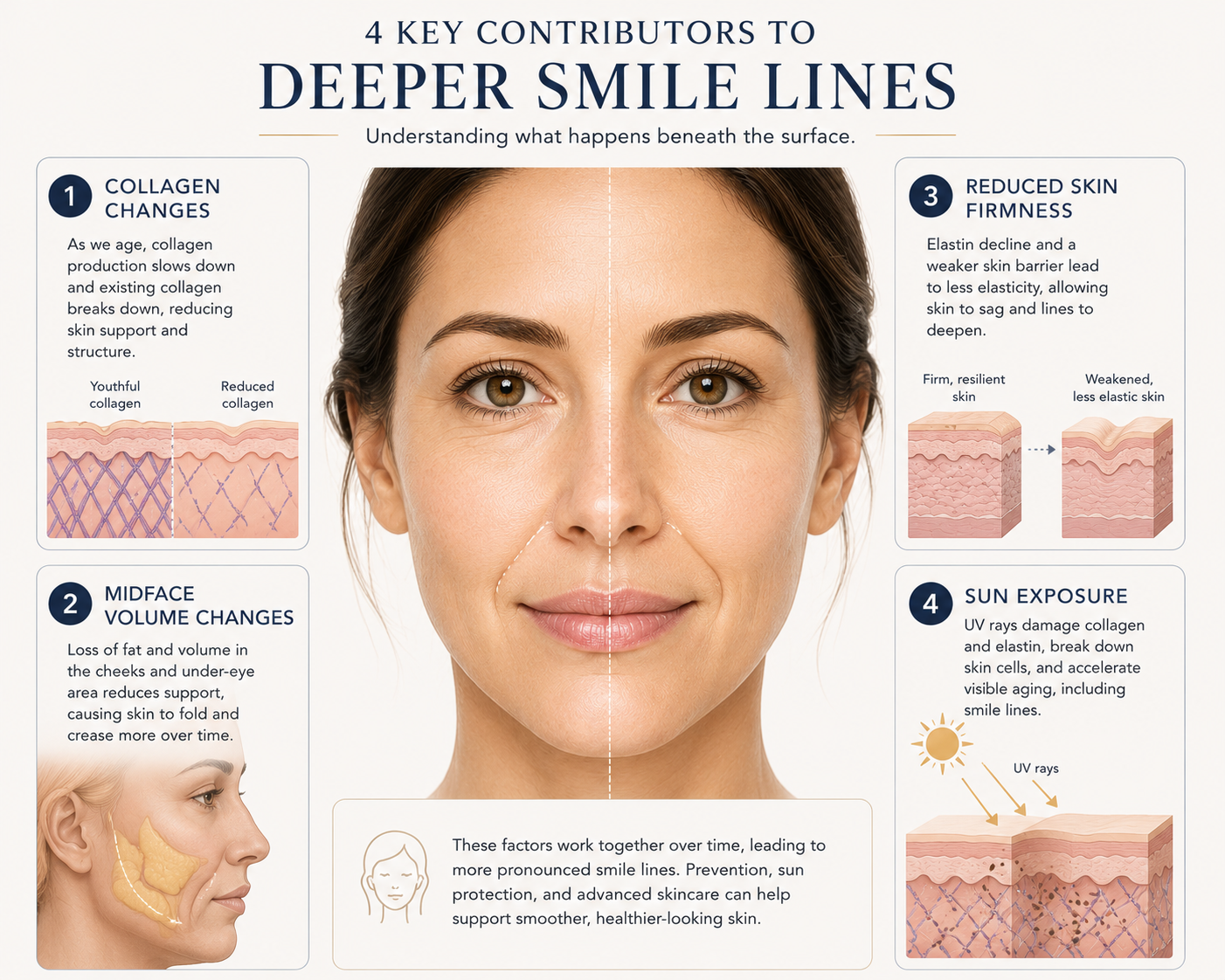
Why Do Smile Lines Become Deeper With Age?
One of the biggest mistakes people make when researching smile lines is assuming there is a single cause.
There isn't.
Facial aging happens across multiple layers, and the combination of these changes can gradually make nasolabial folds appear deeper.
Collagen and Elastin Changes
Collagen helps provide structural support to the skin, while elastin contributes to its ability to stretch and return toward its original shape.
As skin ages, collagen and elastic structures change. The National Institute on Aging notes that loss of collagen and elastic fibers contributes to wrinkles and more fragile-looking skin.
When skin has less structural support, creases created by facial movement may become more noticeable.
This is why smile lines sometimes seem to appear "suddenly" in your 30s.
The changes didn't necessarily happen overnight.
Instead, gradual collagen loss and other facial-aging changes may reach a point where the difference becomes easier to see in the mirror or in photographs.
To understand this process more deeply, read our Why Does Skin Age After 30? Understanding Collagen Loss & How to Slow It Naturally guide.
Changes in Facial Volume
Your face doesn't age only at the skin level.
The distribution and position of facial fat also change over time. Research into facial aging has documented age-related changes in facial fat compartments and deeper supporting structures that can contribute to a more noticeable nasolabial fold.
Imagine the cheek area as part of the support system for the middle of the face.
As that support changes, the transition between the cheek and mouth area may become more pronounced.
This is important because someone may look at the fold and think:
"I just need to treat this line."
But an aesthetic assessment may reveal that the visible crease is only part of a broader pattern of midface aging.
A thoughtful provider should evaluate facial balance rather than automatically recommending the same treatment for every patient.
Skin Laxity and Midface Aging
Skin laxity can also contribute to deeper-looking facial folds.
As collagen quality changes and deeper facial structures age, the skin may not feel as firm as it once did. Studies of facial aging describe reduced elasticity, thinner and drier skin, and changes in the extracellular matrix as part of this process.
You may notice:
Less firmness in the cheeks
A softer jawline
More visible facial folds
Changes in skin texture
Fine lines that remain at rest
This is why many anti-aging plans focus on skin quality and collagen support, not only individual wrinkles.
If you're beginning to notice several of these changes at once, our Signs of Aging Skin: When Should You Start Anti-Aging Treatments? guide can help you understand common early aging concerns.
Sun Exposure and Lifestyle
Natural aging isn't the only factor affecting your skin.
Ultraviolet radiation can accelerate visible skin aging and collagen damage. The American Academy of Dermatology's guidance on premature skin aging emphasizes daily sun protection and identifies tanning and smoking among factors that can speed visible aging.
Other habits may also affect how healthy your skin appears, including:
Smoking
Poor sleep
Inconsistent skincare
Low dietary quality
Chronic sun exposure
These habits don't create every nasolabial fold.
Remember: nasolabial folds are normal facial features.
However, factors that accelerate skin aging may make facial lines and folds appear more prominent earlier.
Do You Get Nasolabial Folds From Smiling Too Much?
No—and you shouldn't be afraid to smile.
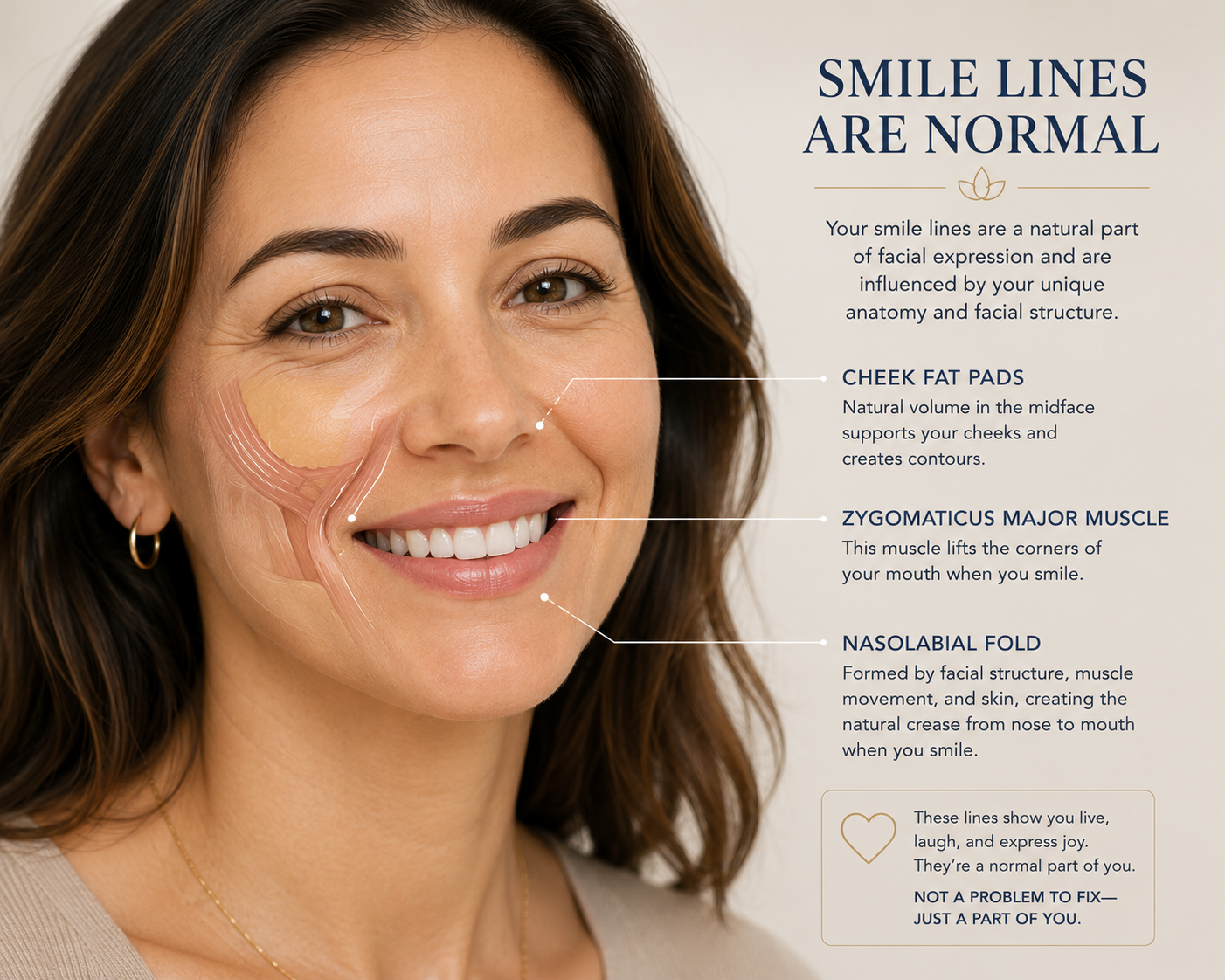
Facial expressions can make nasolabial folds more visible because several facial muscles are involved in smiling and movement around the mouth and cheeks.
But smiling is not the sole cause of deeper nasolabial folds.
The prominence of these folds can also be influenced by:
Genetics
Facial anatomy
Skin elasticity
Collagen changes
Facial volume distribution
Sun exposure
Age-related structural changes
This is an important distinction.
With crow's feet and some forehead lines, repeated muscle contraction is a major part of the wrinkle pattern. That's one reason neuromodulator treatments such as Botox are commonly discussed for dynamic upper-face wrinkles. Cleveland Clinic distinguishes these movement-related wrinkles from lower-face volume concerns such as smile lines.
Nasolabial folds are more complex.
That means you shouldn't assume that a treatment used for forehead wrinkles will automatically be the best option for smile lines.
At Me Medspa, the goal of an aesthetic consultation should be to understand what's contributing to the concern before discussing a treatment plan.
The question isn't simply:
"How do we erase this line?"
A better question is:
"Why is this fold becoming more noticeable, and which approach fits this patient's facial anatomy and goals?"
That's how natural-looking anti-aging treatment planning should begin.
Can You Prevent Smile Lines Naturally?
You can't completely prevent nasolabial folds because they are a normal part of facial anatomy. Everyone has these folds to some degree, and they naturally become more noticeable as the face changes with age.
However, protecting your skin and supporting healthy aging may help slow some of the changes that make smile lines appear deeper.
Protect Your Skin From UV Damage
Daily sun protection is one of the most important steps you can take for long-term skin health.
Ultraviolet radiation contributes to premature skin aging, including wrinkles and sagging. The American Academy of Dermatology recommends broad-spectrum, water-resistant sunscreen with an SPF of 30 or higher as part of sun protection.
Make sunscreen part of your morning routine rather than something you use only at the beach.
Maintain a Consistent Skincare Routine
A complicated 12-step routine isn't always necessary.
For many people, consistency matters more than constantly changing products.
A basic anti-aging skincare routine may include:
Gentle cleansing
Moisturizing
Daily sunscreen
Carefully selected active ingredients based on your skin needs
The American Academy of Dermatology's anti-aging skincare guidance recommends starting with sunscreen and moisturizer, then focusing on the aging concern that matters most to you.
Avoid Smoking
Smoking can accelerate visible skin aging and is associated with deeper nasolabial folds.
If healthier-looking skin is one of your goals, avoiding smoking supports your skin as well as your overall health.
Support Your Skin Through Healthy Habits
Adequate sleep, balanced nutrition, hydration, and regular movement can support overall wellness and healthier-looking skin.
These habits won't erase a deep facial fold.
However, professional aesthetic treatments should complement healthy skin habits—not replace them.

Best Non-Surgical Treatments for Smile Lines and Aging Skin
This is where treatment planning becomes especially important.
There is no single "best treatment" for every nasolabial fold.
A person with changes in skin texture may need a different approach from someone whose main concern is skin laxity or facial volume.
Nasolabial folds can become more prominent with age, and treatment options vary according to the cause and the person's goals.
At Me Medspa, a personalized consultation should focus on the cause of the visible concern, not simply the name of the wrinkle.
Morpheus8
When reduced skin firmness and skin quality contribute to an aged appearance, collagen-focused treatments may be considered.
Morpheus8 combines microneedling with radiofrequency technology and is commonly used in aesthetic practices to address concerns involving skin texture and firmness.
Rather than treating a smile line as an isolated crease, the goal may be to improve the quality of the surrounding skin.
This type of approach may be more relevant for patients who are also noticing:
Reduced skin firmness
Uneven texture
Mild skin laxity
Other visible signs of aging
Learn more about our Morpheus8 skin tightening treatment in Monterey Park and how it may fit into a personalized skin rejuvenation plan.
Skin Boosters
Sometimes the concern isn't only the depth of a facial fold.
The surrounding skin may also appear dry, dull, or less smooth.
Skin Boosters focus on improving hydration and overall skin quality. They should not be presented as a way to structurally "erase" a deep nasolabial fold, but they may be considered when hydration and skin texture are part of the patient's broader anti-aging goals.
If improving skin hydration and radiance is one of your priorities, read our Skin Boosters in Monterey Park guide.
Salmon DNA Facial
Patients interested in skin rejuvenation may also ask about Salmon DNA Facial treatments.
This treatment belongs in the skin-quality conversation rather than being positioned as a direct correction for every deep facial fold.
That's an important distinction.
A responsible anti-aging plan should never imply that every treatment fixes every concern.
For someone focused on hydration, skin appearance, and overall rejuvenation, a Salmon DNA Facial may be discussed as part of a broader personalized plan.
PRP
PRP is another treatment commonly discussed in regenerative aesthetics.
Because treatment goals vary, PRP should be evaluated based on the patient's skin concerns and the area being treated.
When a Different Treatment Approach May Be Needed
This is one of the most important sections in this article.
A deeper nasolabial fold may involve changes in facial volume and support—not only surface-level skin quality.
Dermal fillers are among the cosmetic treatments used to smooth lines and may be used around the nose and mouth; Cleveland Clinic also specifically lists reducing nasolabial folds among potential filler uses.
However, do not automatically assume filler is the right treatment for you.
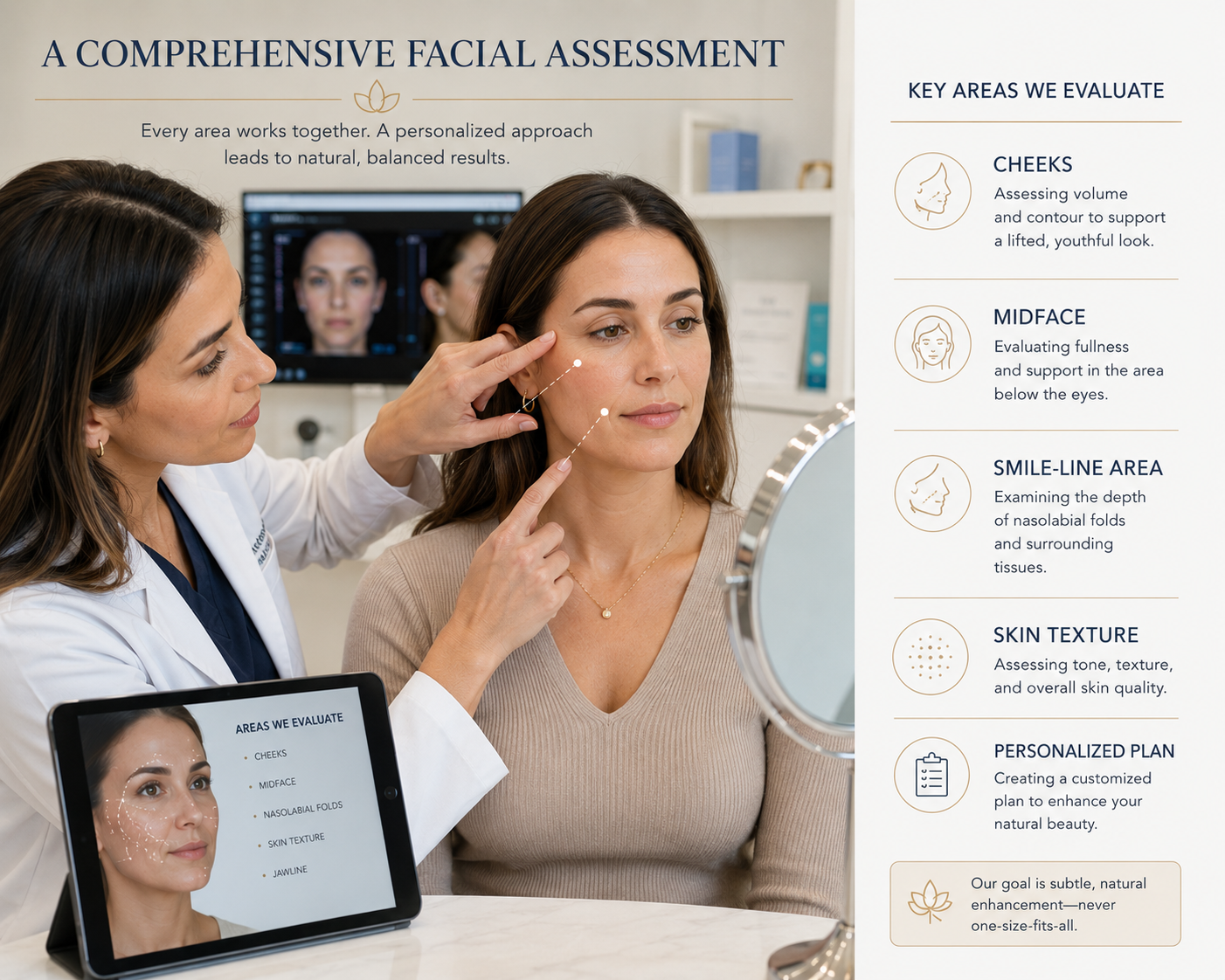
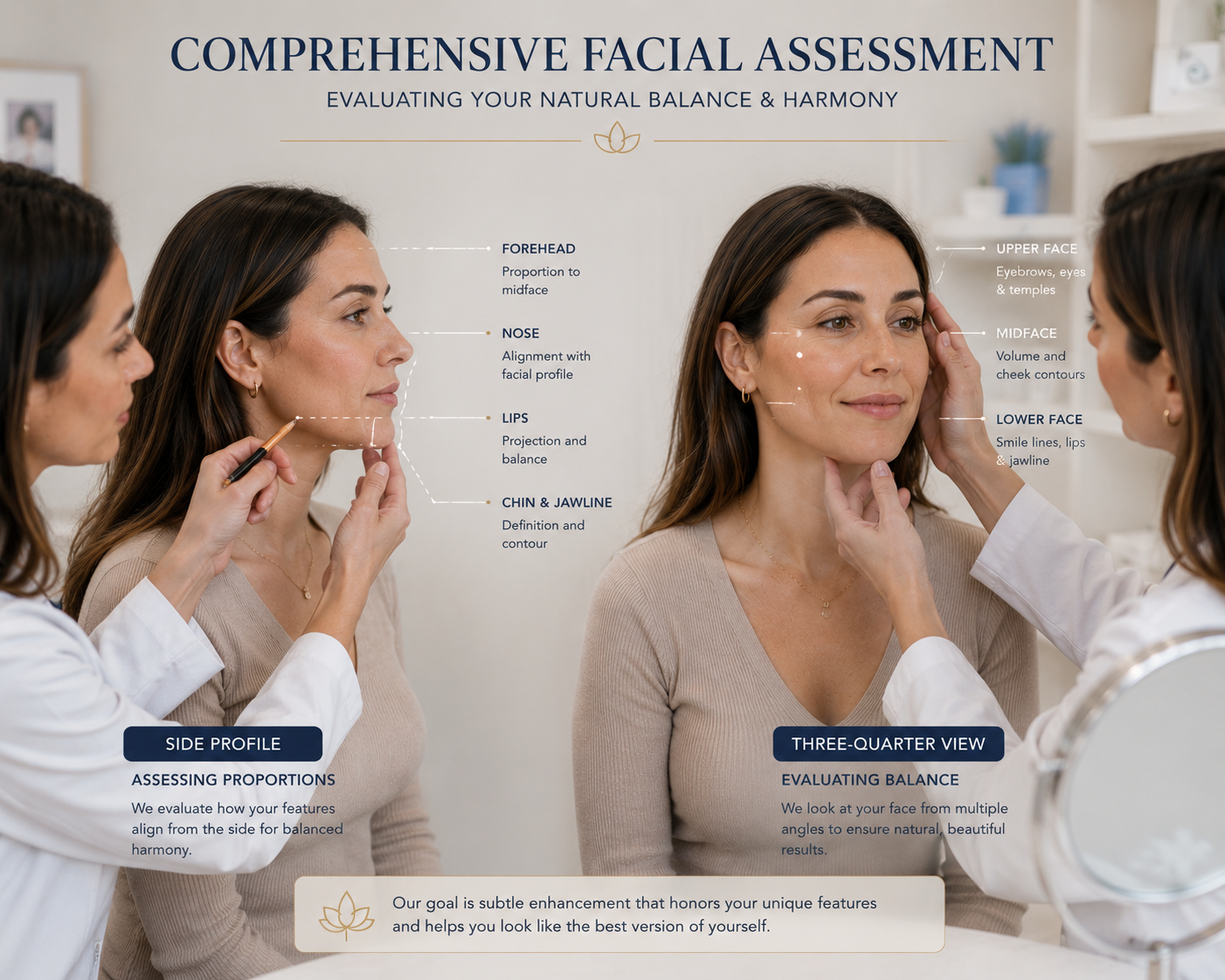
The visible fold should be assessed in relation to the cheeks, midface, skin quality, and overall facial anatomy.
This is also why I do not recommend writing:
"Morpheus8 is the best treatment for nasolabial folds." or: "Skin Boosters will remove smile lines."
Those statements are too broad.
A better approach is:
The best treatment depends on why your nasolabial folds are becoming more noticeable.
That is more accurate, more trustworthy, and more helpful for the reader.
How Do You Know Which Treatment Is Right for Your Smile Lines?
Start by asking a better question.
Not:
"What's the strongest treatment?"
Instead ask:
"What's causing my smile lines to look deeper?"
During an aesthetic consultation, factors that may be considered include:
The depth of the nasolabial fold
Skin texture
Skin elasticity
Midface appearance
Facial volume
Other areas of skin laxity
Your previous aesthetic treatments
Your desired result
Someone in their early 30s noticing subtle changes in skin quality may have very different goals from someone experiencing more advanced facial aging.
That's why copying a treatment plan from social media isn't ideal.
Two people can have smile lines that look similar in a photograph but have different facial anatomy and different treatment needs.
If you're still exploring the broader anti-aging options available, our Best Anti-Aging Treatments in Monterey Park guide can help you understand how different treatment categories address different aging concerns.
Smile Line and Anti-Aging Treatments in Monterey Park, CA
Aging doesn't happen in one isolated area of the face.
You may first notice smile lines, but you might also see changes in your cheeks, forehead, eye area, skin texture, or overall firmness.
That's why Me Medspa takes a personalized approach to anti-aging care.
Rather than recommending a treatment simply because it's trending, the goal is to understand your concerns and discuss options that align with your skin and aesthetic goals.
We welcome patients from:
Monterey Park
Alhambra
San Gabriel
Rosemead
East Los Angeles
Nearby San Gabriel Valley communities
Whether you're beginning to notice early smile lines or you're concerned about broader facial-aging changes, a consultation can help you better understand what's happening beneath the surface.
The goal isn't to make your face look frozen or completely different.
It's to create a thoughtful plan focused on healthy, balanced, natural-looking results.
Frequently Asked Questions About Smile Lines and Nasolabial Folds
Are smile lines and nasolabial folds the same thing?
Smile lines and laugh lines are common terms for nasolabial folds, the creases extending from the sides of the nose toward the corners of the mouth.
Why are my smile lines suddenly getting deeper?
Smile lines may become more noticeable because of age-related changes in collagen, skin elasticity, facial fat distribution, and deeper facial support. Sun exposure and smoking can also accelerate visible skin aging.
Can skincare get rid of nasolabial folds?
Skincare can support hydration and overall skin quality, but a deeper nasolabial fold may involve structural changes below the skin. The appropriate approach depends on what's contributing to the fold.
Does smiling cause nasolabial folds?
Smiling makes nasolabial folds more visible, but smiling is not the only cause. Facial anatomy, aging, collagen changes, skin elasticity, and changes in facial volume can all affect their appearance.
Is Botox good for smile lines?
Botox is commonly associated with dynamic wrinkles caused by muscle movement, such as some forehead and eye-area wrinkles. Nasolabial folds can involve volume and structural changes, so they require an individualized assessment rather than assuming Botox is the right option.
What is the best treatment for deep smile lines?
There isn't one treatment that's best for everyone. The appropriate option depends on whether skin quality, laxity, facial volume, or a combination of factors is contributing to the concern.
Can Morpheus8 help with smile lines?
Morpheus8 may be considered when skin firmness, texture, and collagen support are part of the patient's concerns. It should not be presented as a guaranteed way to erase every deep nasolabial fold.
When should I get my smile lines evaluated?
You can schedule an aesthetic consultation whenever changes in your smile lines or facial appearance begin to bother you. You don't need to wait until the folds become severe to discuss your options.
Schedule a Personalized Anti-Aging Consultation
Your smile lines don't need to look like someone else's for your concerns to be valid.
And you don't need to choose a treatment before you walk into a consultation.
If you've noticed deeper nasolabial folds, changes in skin firmness, or other signs of facial aging, the first step is understanding why those changes are happening.
At Me Medspa in Monterey Park, we can evaluate your skin concerns, discuss your aesthetic goals, and help you explore non-surgical anti-aging options that fit your individual needs.
We proudly serve patients from Monterey Park, Alhambra, San Gabriel, Rosemead, East Los Angeles, and nearby communities.
Wondering which anti-aging treatment is right for your skin and facial concerns?
Schedule a personalized consultation with Me Medspa and explore a treatment plan focused on refreshed, balanced, natural-looking results.
Schedule Your Free Consultation
RELATED READING
My preferred final Related Reading list is therefore:

