
Exosomes vs PRP for Skin Rejuvenation | ME MEDSPA Monterey Park
Exosomes vs PRP: Which Skin Rejuvenation Treatment Is Right for You?
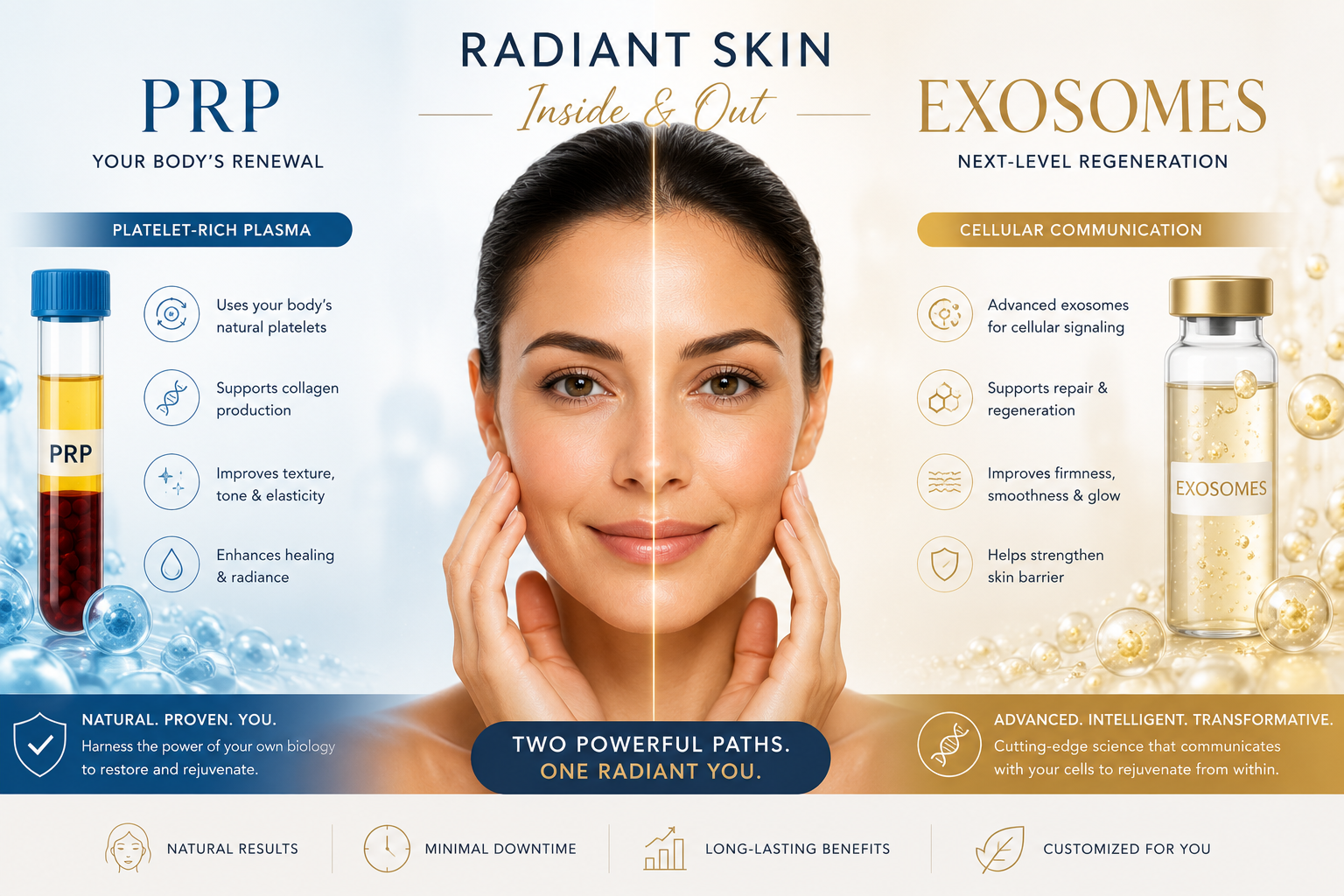
If you've been researching modern skin rejuvenation treatments, you've probably come across two names that are generating a lot of attention: Platelet-Rich Plasma (PRP) and Exosomes.
Both are frequently discussed as regenerative approaches that may support healthier-looking skin, improve overall skin quality, and complement non-surgical anti-aging treatments. But despite often being mentioned together, they are not the same treatment, and understanding the differences is important before deciding which option may be appropriate for your goals.
PRP has been used in various medical fields for years and is commonly incorporated into aesthetic procedures because it uses components derived from your own blood. Exosomes, on the other hand, are a newer and evolving area of regenerative aesthetics that has generated significant interest for their role in cell-to-cell communication and skin repair research.
With so much information available online—and plenty of marketing claims—it can be difficult to separate scientific evidence from hype.
In this guide, we'll explain how PRP and Exosomes differ, how they are commonly used in aesthetic medicine, what current research suggests, and why a personalized consultation is the best way to determine which treatment may be appropriate for your individual skin concerns.
Headline Structure
H2
What Is PRP?
H2
What Are Exosomes?
H2
How Do PRP and Exosomes Work?
H2
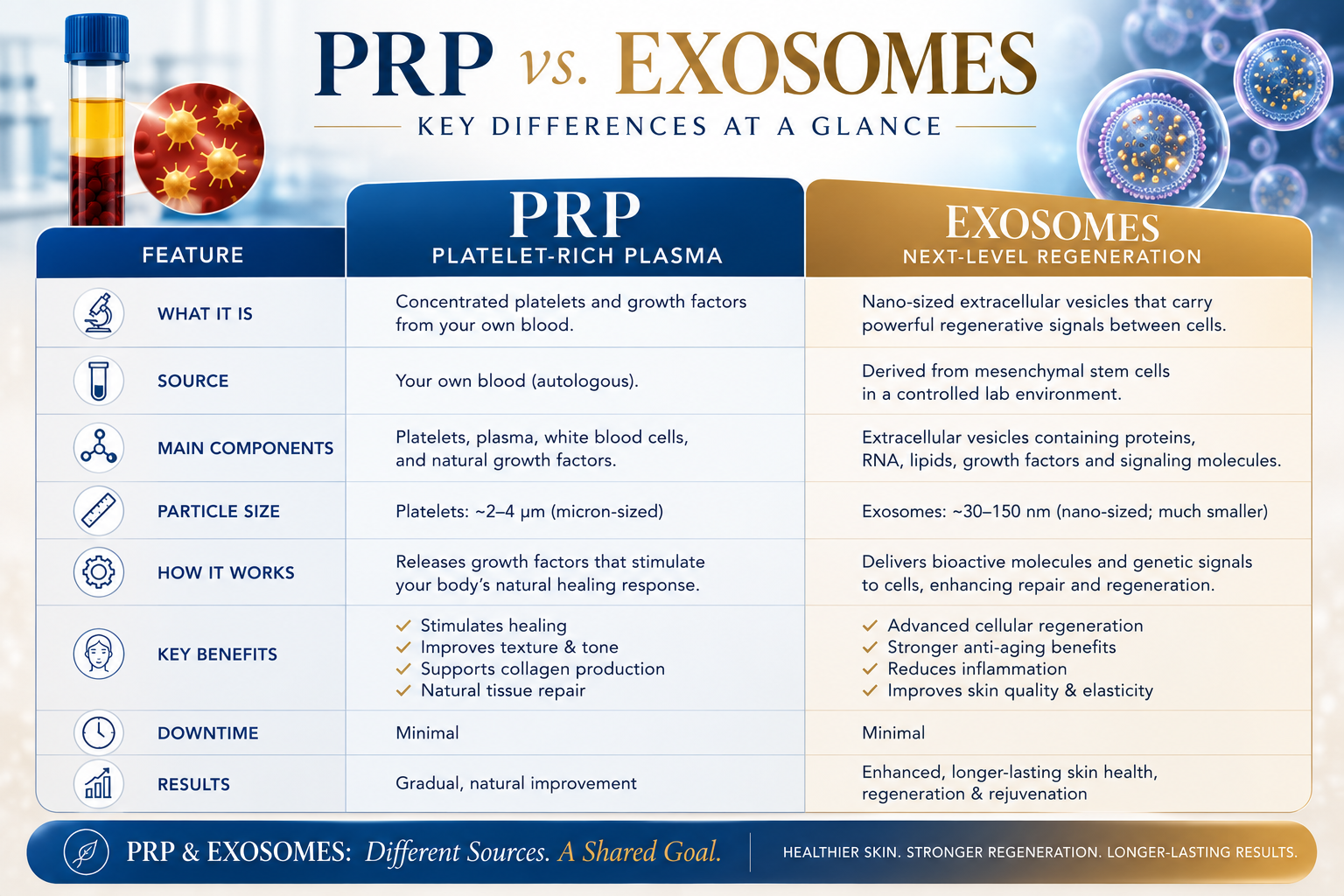
Key Differences Between PRP and Exosomes
H2
Potential Benefits of Each Treatment
H2
Who May Be a Good Candidate?
H2
Are Exosomes FDA Approved?
H2
Exosomes vs PRP at ME MEDSPA
H2
Frequently Asked Questions
H2
Related Reading
H2
Schedule Your Consultation
What Is PRP?
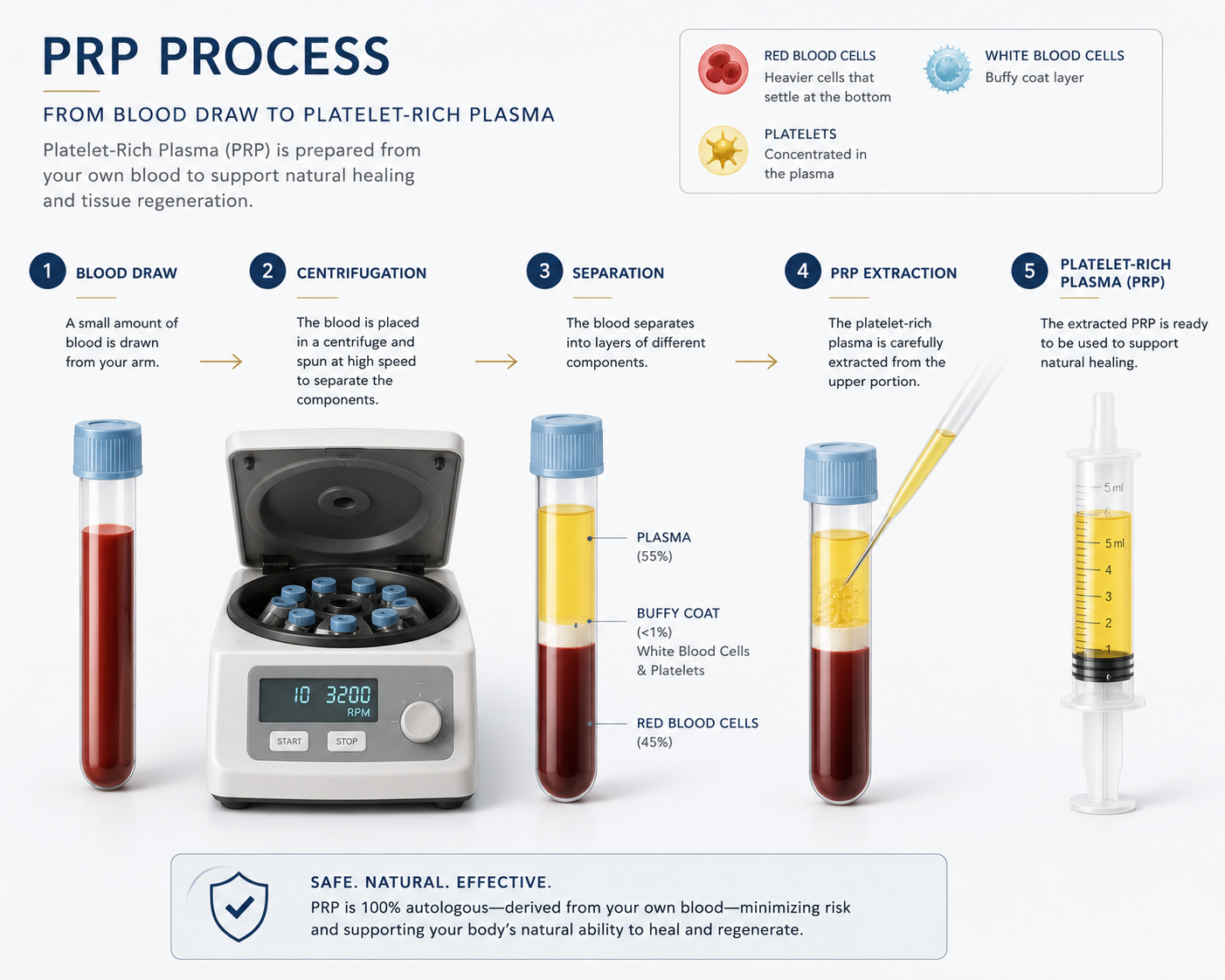
Platelet-Rich Plasma, commonly known as PRP, is created by drawing a small sample of a patient's blood and processing it in a centrifuge to concentrate platelets and plasma.
Platelets naturally contain proteins and growth factors that play a role in the body's healing response. In aesthetic medicine, PRP is commonly used alongside procedures such as microneedling to support skin rejuvenation and improve the overall appearance of the skin.
Because PRP comes from your own blood, many patients appreciate that it uses material already present within their body rather than a synthetic product.
Research into PRP continues to evolve, and published studies have explored its use for improving skin texture, acne scars, and other cosmetic concerns. Individual results vary, and the effectiveness of treatment depends on factors such as patient characteristics, treatment protocols, and the condition being addressed.
If you've been exploring why skin quality changes over time, our guide Why Skin Ages After 30: Understanding Collagen Loss & How to Slow It Naturally explains how collagen decline contributes to visible aging.
What Are Exosomes?
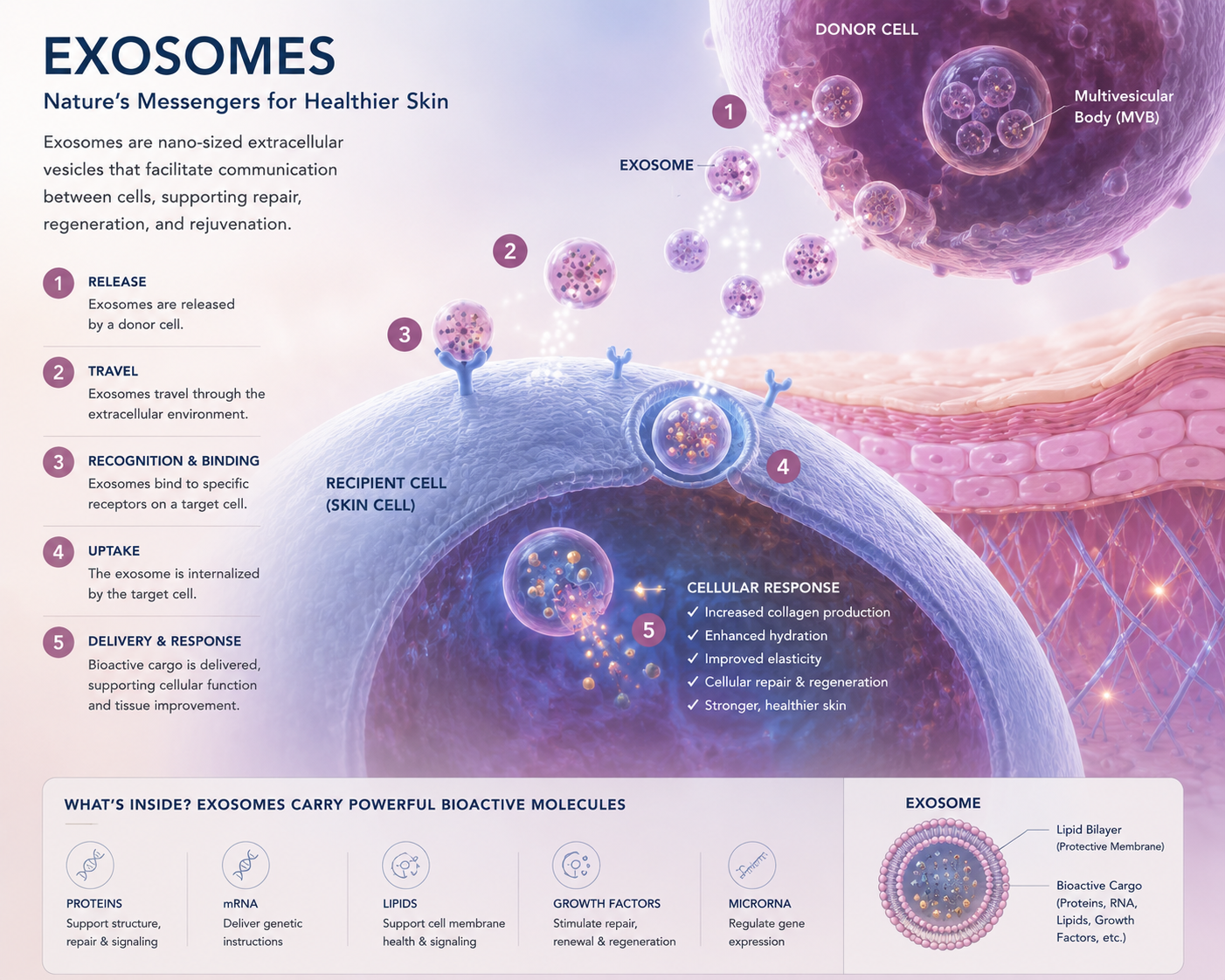
Exosomes are tiny extracellular vesicles released by cells that help facilitate communication between cells. Researchers continue to investigate their role in tissue repair, inflammation, and regenerative medicine.
Within aesthetics, exosomes are being studied for their potential to support skin rejuvenation when used alongside treatments such as microneedling.
Unlike PRP, exosomes are not derived from the patient's own blood. Depending on the manufacturer and product, they may originate from carefully processed laboratory sources designed for regenerative applications.
Because exosome technology is relatively new compared to PRP, scientific understanding continues to develop. While early research has generated interest, it's important to recognize that evidence is still evolving, and not all products marketed as "exosomes" are the same.
Patients should be cautious about exaggerated marketing claims and seek information from qualified healthcare professionals who discuss both potential benefits and current limitations.
How Do PRP and Exosomes Work?
Although PRP and Exosomes are often grouped together under the umbrella of regenerative aesthetics, they work differently.
PRP
PRP relies on concentrated platelets obtained from your own blood. These platelets release growth factors that participate in the body's natural healing response. In aesthetic medicine, PRP is frequently paired with procedures such as microneedling to support skin rejuvenation.
Exosomes
Exosomes function differently. Rather than being concentrated platelets, they are microscopic vesicles involved in cell-to-cell communication. Researchers are investigating how these signaling molecules may influence tissue repair and skin health in regenerative medicine.
Because they operate through different biological mechanisms, PRP and Exosomes are not interchangeable.
The most appropriate option depends on factors such as your skin concerns, treatment goals, provider recommendations, and the specific treatment plan being considered.
If you're beginning your anti-aging journey, it's also helpful to understand the underlying causes of visible aging. Our guides on Crow's Feet: Causes, Prevention & Best Treatments and Smile Lines vs Nasolabial Folds explain how collagen decline and facial aging contribute to common skin concerns.
Key Differences Between PRP and Exosomes
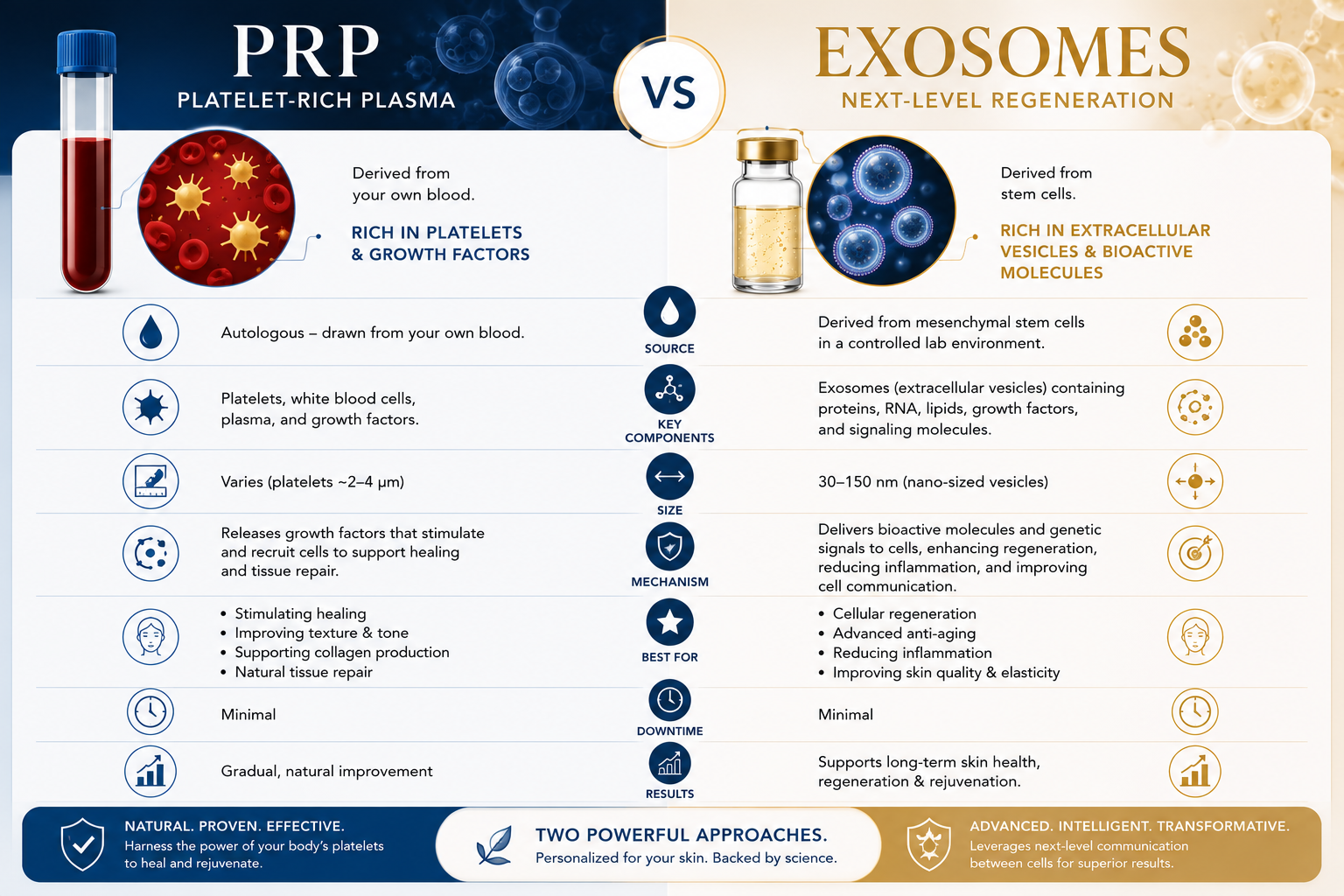
Although both treatments are associated with regenerative aesthetics, several important differences distinguish them.
Feature PRP Exosomes Source Patient's own blood Laboratory-derived extracellular vesicles Preparation Blood draw + centrifuge Prepared product Biological Role Concentrated platelets and growth factors Cell-to-cell signaling vesicles Research History Longer clinical history Emerging field of research Treatment Plan Personalized based on patient Depends on product and provider.
Understanding these differences helps patients ask better questions during a consultation instead of assuming both treatments produce identical results.
Potential Benefits of PRP and Exosomes
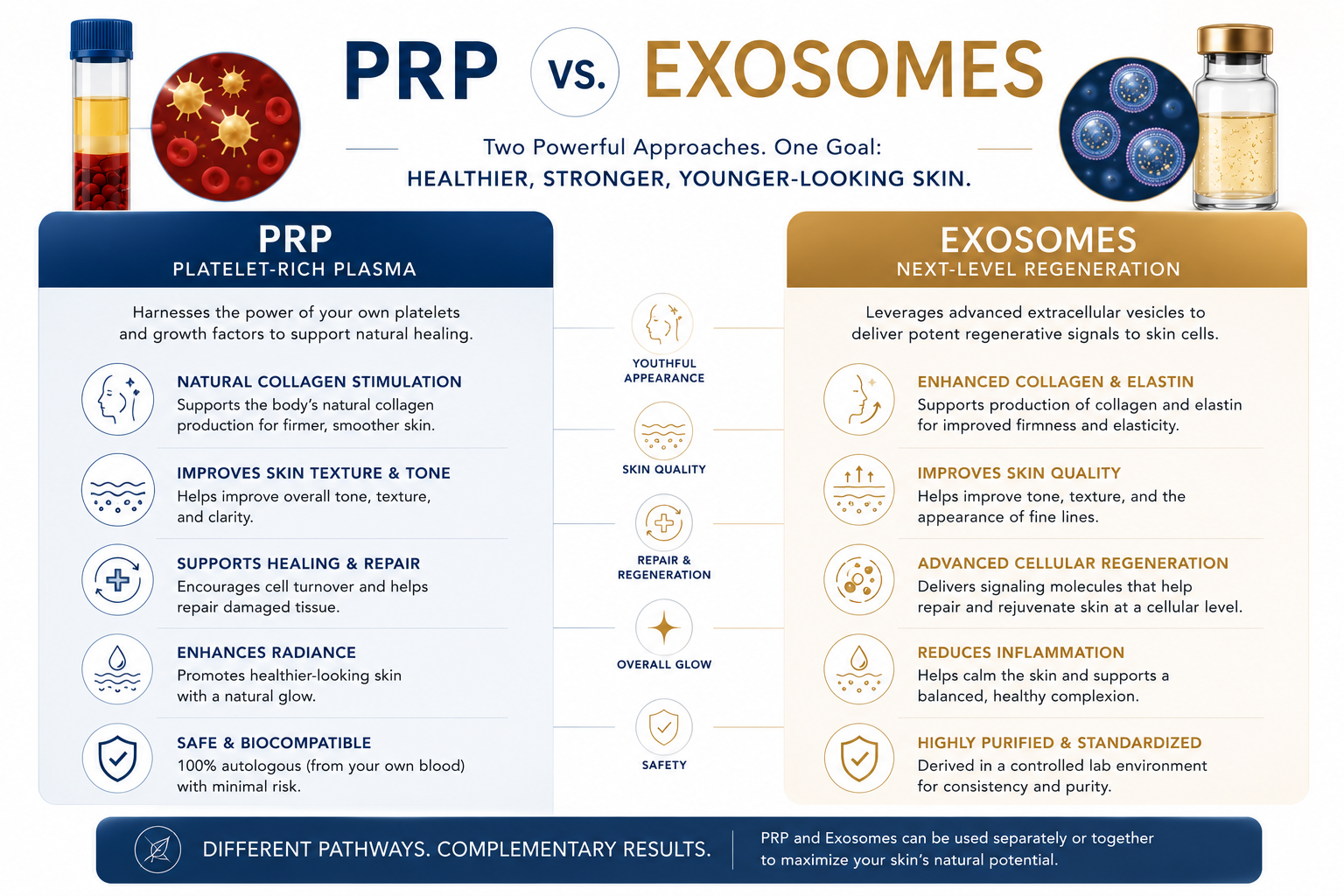
Both PRP and exosomes are used with the goal of supporting healthier-looking skin, but they do so through different biological mechanisms. It's important to understand that treatment outcomes vary from person to person, and research—particularly for exosomes—is still evolving.
Potential Benefits of PRP
Because PRP uses concentrated platelets from your own blood, it has been studied for its potential to support:
Improved skin texture
Healthier-looking skin tone
Reduction in the appearance of acne scars
Support for collagen production
Skin rejuvenation when combined with microneedling
PRP has a longer history of use in aesthetic medicine compared with exosomes, although treatment protocols vary between providers.
Potential Benefits of Exosomes
Exosomes are being studied for their role in cell signaling and regenerative medicine.
Early research suggests they may have potential applications related to:
Skin repair
Overall skin quality
Skin hydration
Recovery following certain aesthetic procedures
However, many of these applications continue to be investigated, and more high-quality clinical research is needed before definitive conclusions can be made.
This is why it's important to approach online claims about exosomes with caution. Marketing language often moves faster than scientific evidence.
Who May Be a Good Candidate?
There isn't a single treatment that's best for everyone.
Your provider may consider factors such as:
Your age
Skin quality
Skin texture
Previous treatments
Medical history
Personal goals
Some patients are primarily concerned about improving skin texture, while others are looking for support with overall skin rejuvenation.
A consultation allows your provider to evaluate your concerns and discuss which options are appropriate based on current evidence and your individual circumstances.
If you're still learning about why skin changes over time, you may also find these guides helpful:
Why Skin Ages After 30: Understanding Collagen Loss & How to Slow It Naturally
Smile Lines vs Nasolabial Folds: Why They Get Deeper With Age & What You Can Do

Are Exosomes FDA Approved?
This is one of the most common questions patients ask.
Currently, the U.S. Food and Drug Administration (FDA) has not approved exosome products for cosmetic skin rejuvenation or anti-aging treatments.
The FDA has also published safety communications warning consumers about businesses marketing unapproved regenerative medicine products, including products described as exosomes.
This doesn't necessarily mean every area of research lacks promise. It simply means patients should understand that research is ongoing and that marketing claims should not be confused with FDA approval.
If you're considering any regenerative aesthetic treatment, ask your provider:
What product is being used?
Is it FDA-approved for this purpose?
What evidence supports its use?
What are the potential risks and benefits?
An experienced provider should be comfortable discussing both what is currently known and what remains under investigation.
Exosomes vs PRP at ME MEDSPA
At ME MEDSPA, we believe education comes before treatment.
Every patient's skin is different, which means the most appropriate approach depends on your individual concerns—not simply on what's trending online.
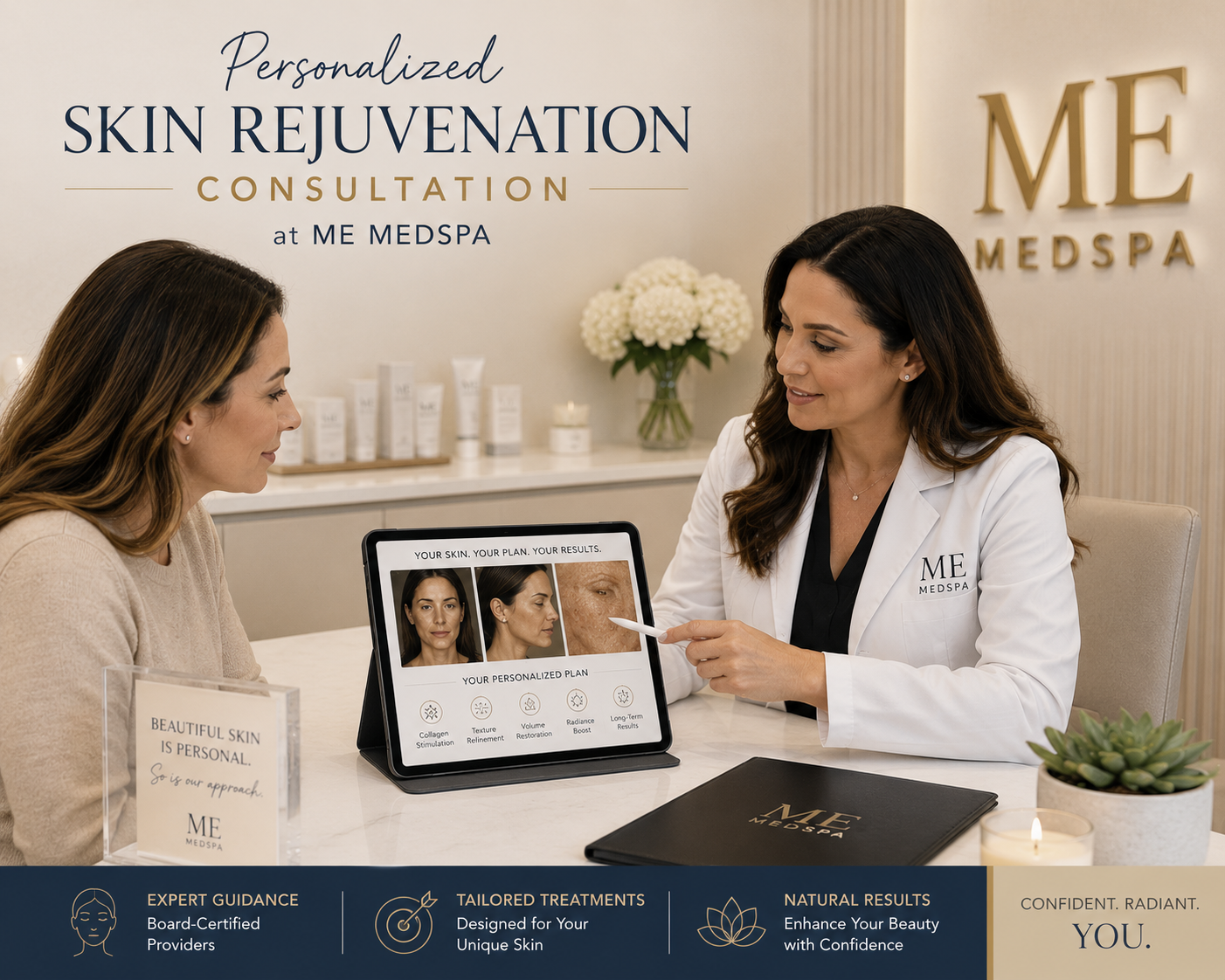
During your consultation, we'll evaluate your skin, discuss your goals, review your medical history, and explain the options that are appropriate for your situation.
Our priority is helping you make an informed decision based on evidence, safety, and realistic expectations.
We proudly serve patients throughout:
Monterey Park
Alhambra
San Gabriel
Rosemead
East Los Angeles

Related Reading
Continue exploring our anti-aging guides:
Why Skin Ages After 30: Understanding Collagen Loss & How to Slow It Naturally
Crow's Feet: Causes, Prevention & Best Treatments in Monterey Park
Smile Lines vs Nasolabial Folds: Why They Get Deeper With Age & What You Can Do
Signs of Aging Skin: When Should You Start Anti-Aging Treatments?
Frequently Asked Questions
Which is better: PRP or Exosomes?
Neither treatment is universally better. The most appropriate option depends on your skin concerns, treatment goals, medical history, and the provider's recommendations.
Is PRP FDA approved?
PRP itself is created from a patient's own blood. The preparation systems used to obtain PRP may have FDA clearance for specific purposes, but cosmetic uses can vary. Ask your provider how PRP is being used during treatment.
Are Exosomes FDA approved for cosmetic treatments?
No. At this time, the FDA has not approved exosome products for cosmetic skin rejuvenation or anti-aging treatments.
Can PRP and Exosomes be combined with microneedling?
Both have been used in conjunction with microneedling in aesthetic practices. Whether that combination is appropriate depends on your individual treatment plan.
Which treatment has more scientific research?
PRP has a longer history of clinical research in aesthetic medicine. Exosome research is newer and continues to evolve.
Are results permanent?
No. Skin continues to age naturally, and maintenance treatments may be recommended depending on the treatment performed and your long-term goals.
Book Your Consultation
Choosing between PRP and Exosomes isn't about finding a universally "better" treatment—it's about understanding which option aligns with your skin concerns, goals, and current scientific evidence.
At ME MEDSPA, we believe every treatment recommendation should begin with education and a personalized consultation.
If you're interested in learning more about skin rejuvenation or want to explore your non-surgical anti-aging options, our team is here to help.
Schedule your consultation today to discuss a personalized treatment plan designed around your skin—not marketing trends.

