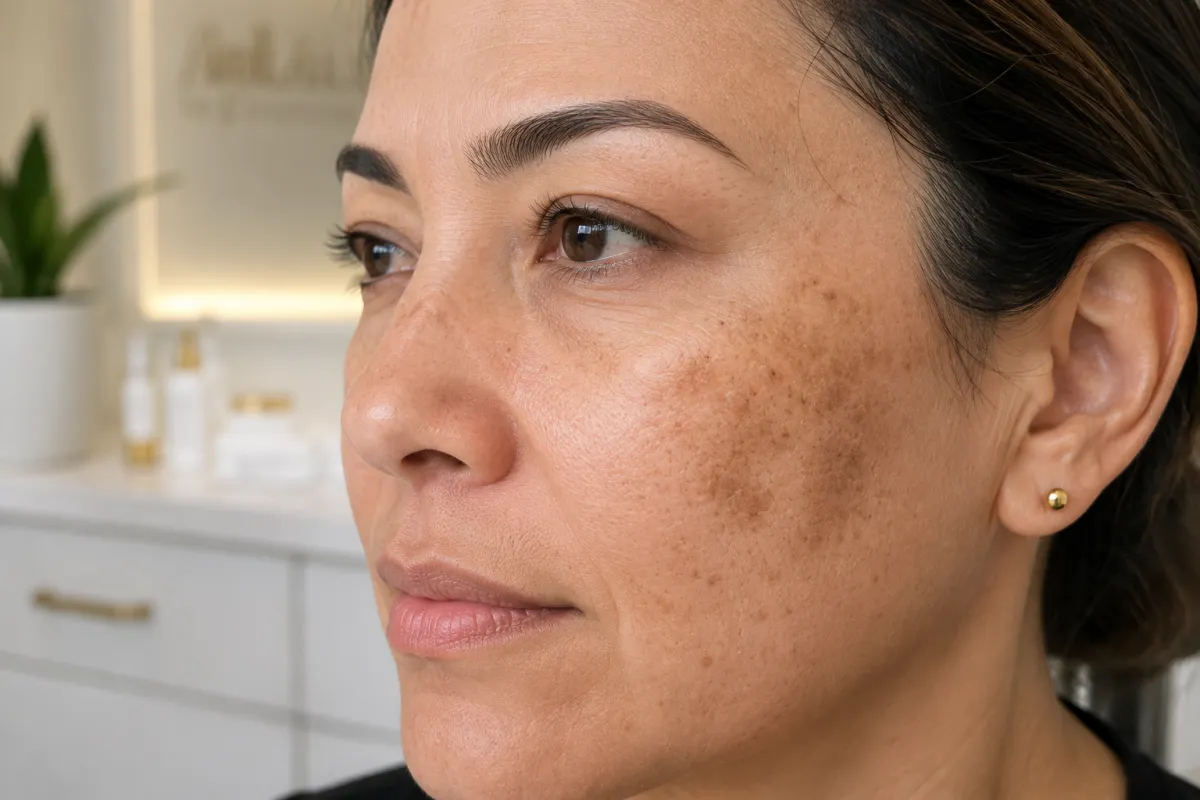
PicoSure for Dark Spots & Pigmentation in Monterey Park, CA
PicoSure for Dark Spots and Pigmentation: How Does Picosecond Laser Treatment Work?
Dark spots can appear for many reasons. Years of sun exposure, previous inflammation, and other pigment-related changes can all contribute to areas of the skin looking darker or less even than the surrounding complexion.
But not every dark spot is the same—and that matters when choosing a cosmetic treatment.
PicoSure is a picosecond laser system that may be considered for selected pigmentation concerns. Rather than treating every form of discoloration in exactly the same way, an appropriate treatment plan starts by identifying what type of pigmentation is present and whether laser treatment is suitable for that concern.
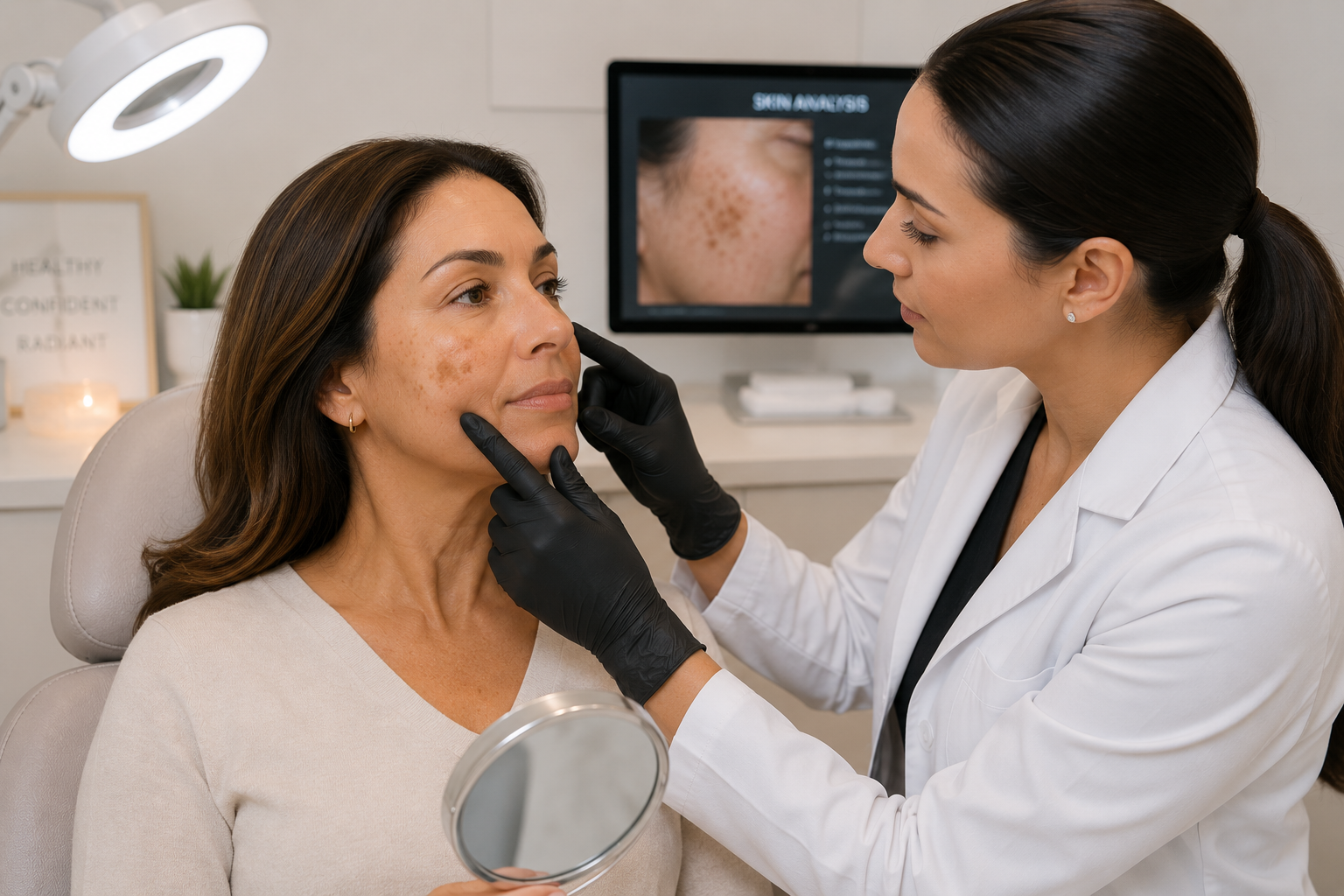
At ME MEDSPA in Monterey Park, CA, PicoSure treatment begins with an individualized skin assessment. Your provider can evaluate your pigmentation, skin characteristics, treatment history, recent sun exposure, and aesthetic goals before recommending an approach.
ME MEDSPA currently lists PicoSure Laser + Plasma among its pigmentation and resurfacing treatments for concerns including pigmentation, sun damage, and uneven skin tone.
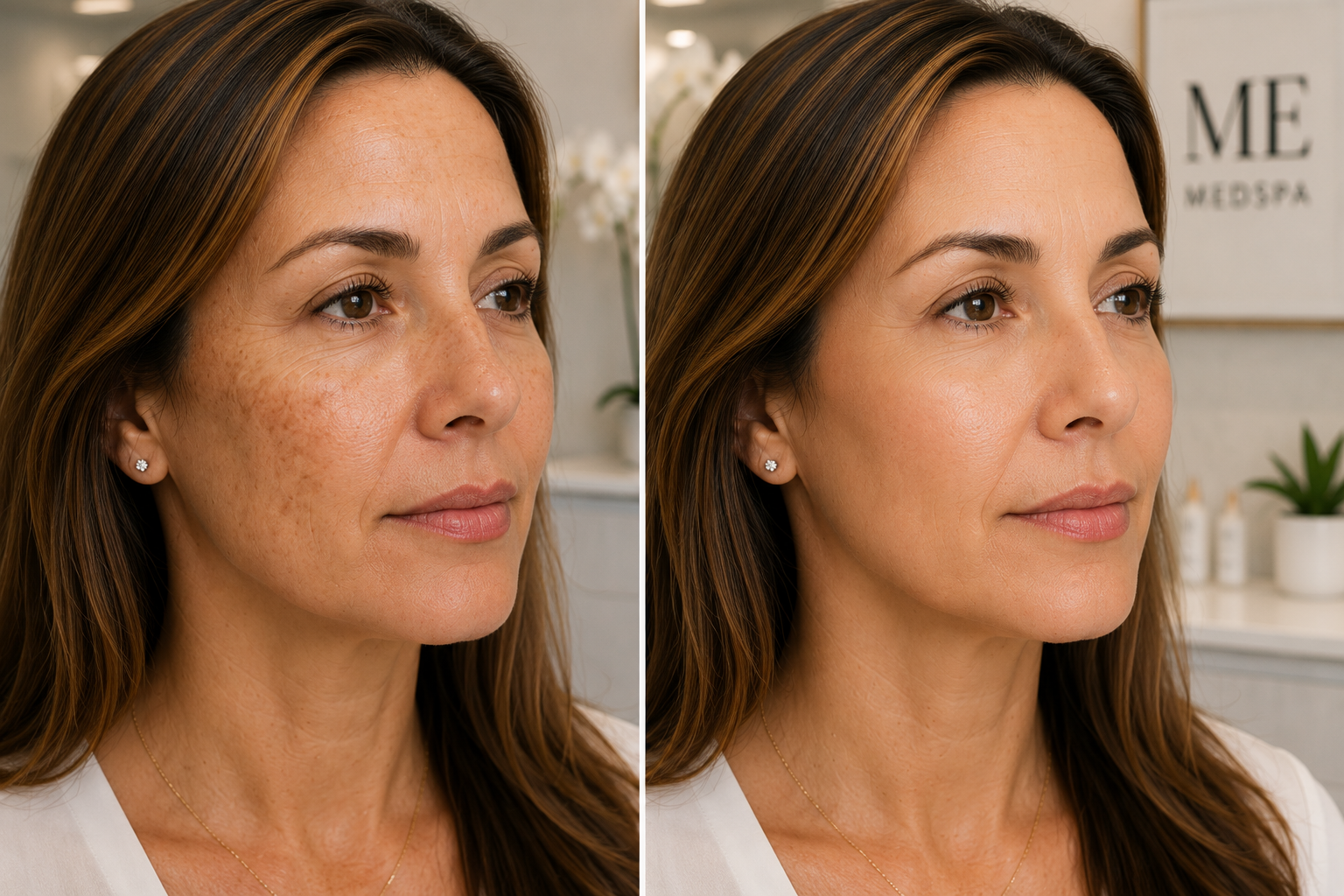
What Is PicoSure?
PicoSure is a picosecond laser technology used in aesthetic treatment.
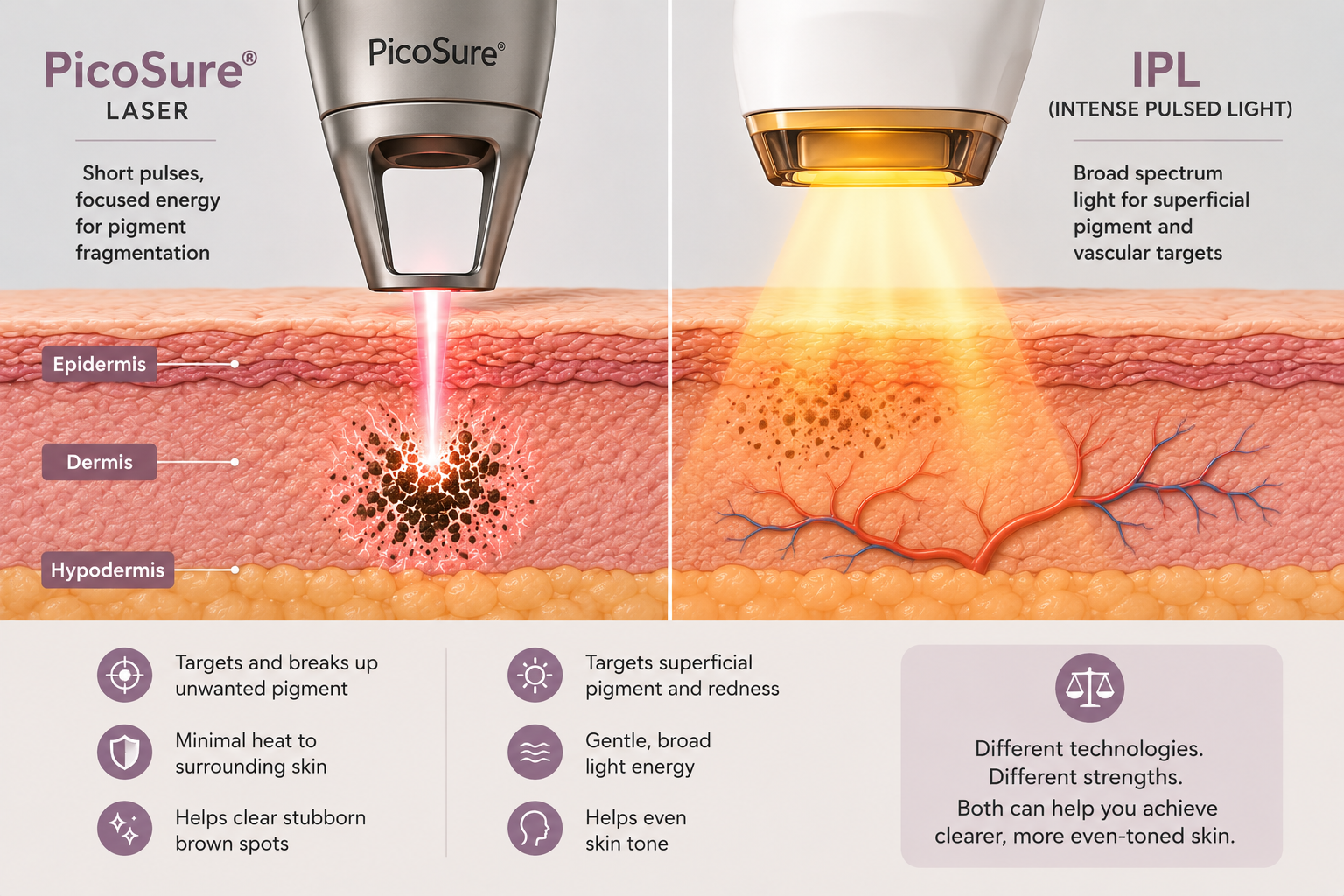
The word picosecond refers to an extremely short unit of time—one trillionth of a second. Picosecond laser systems deliver energy in very short pulses rather than functioning like IPL or other light-based technologies.
This distinction is important because PicoSure should not be described as an IPL photofacial.
At ME MEDSPA, PicoSure is included within the clinic's pigmentation and resurfacing treatment category.
The appropriate use of a laser depends on the specific concern being treated, the patient's skin, treatment settings, and provider assessment.
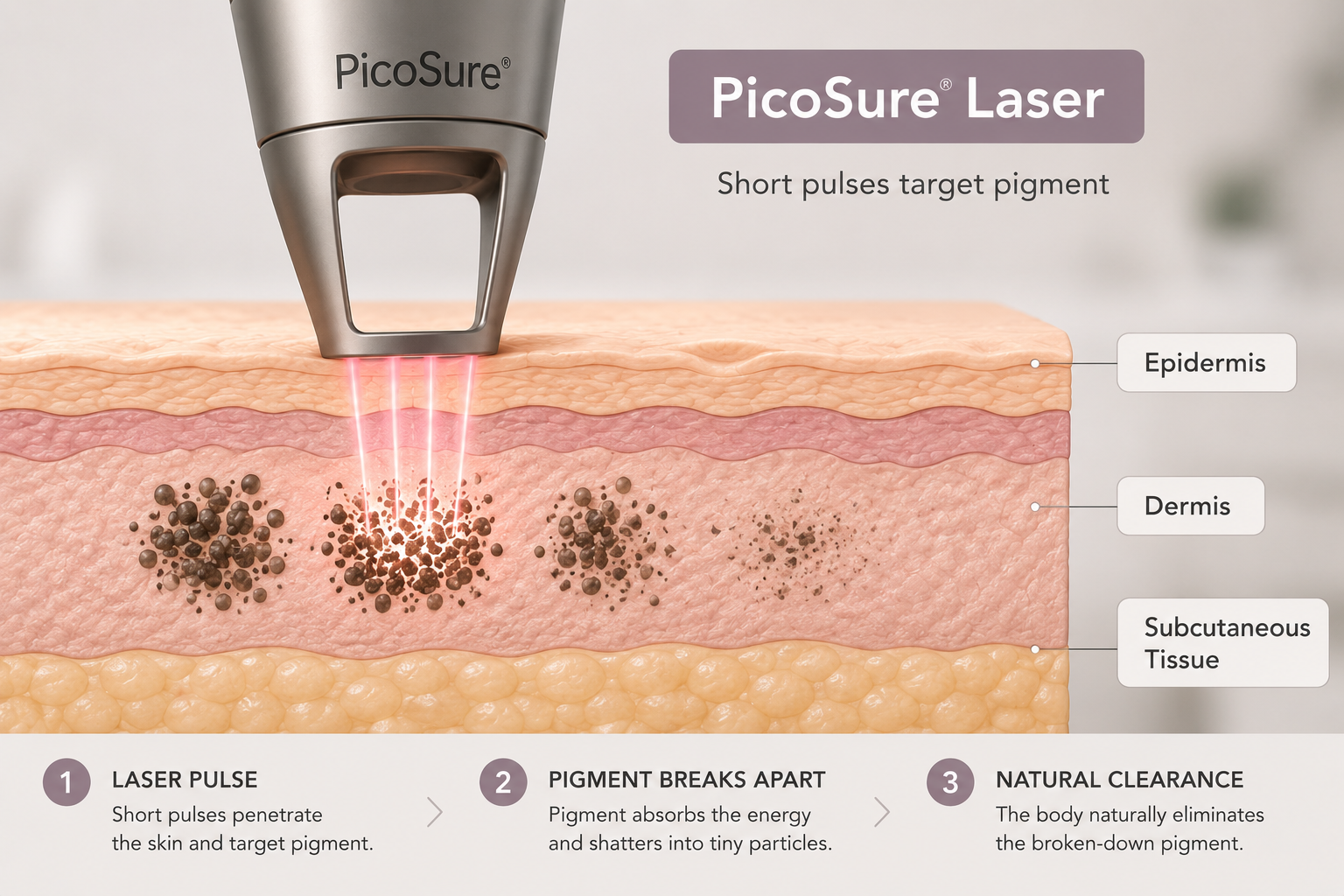
How Does PicoSure Work on Pigmentation?
Pigmentation is associated with melanin, the pigment that contributes to skin color.
When an appropriate pigmented target is treated with laser energy, that energy can be absorbed by pigment within the treatment area.
With picosecond technology, very short laser pulses create effects within the targeted pigment. The body's subsequent response contributes to gradual changes in the appearance of appropriate pigmentation.
A simple way to understand the concept is:
Picosecond laser energy → appropriate pigment target → treatment response → gradual change in pigmentation
This shouldn't be described as simply “burning away dark spots.”
The response depends on the type and depth of pigmentation, wavelength and settings used, skin characteristics, and individual response.
What Types of Dark Spots May Be Considered for PicoSure?
“Dark spot” is a broad visual description rather than a diagnosis.
Different types of pigmentation can develop for different reasons, which means they shouldn't automatically receive the same treatment.
Depending on the individual assessment and treatment indication, laser treatment may be discussed for selected pigment concerns such as:
Sun-Related Pigmentation
Repeated ultraviolet exposure can contribute to areas of increased pigmentation and an uneven-looking complexion.
Freckle-Like Pigmentation
Certain superficial pigmented spots may be considered for laser treatment depending on their characteristics and the patient's skin.
Post-Inflammatory Pigmentation
Darkening can sometimes develop following inflammation or injury to the skin.
However, post-inflammatory hyperpigmentation requires careful assessment because treatment itself can potentially influence pigmentation.
Other Selected Pigmented Lesions
Different benign pigmented lesions have different characteristics and treatment considerations.
The important point is that a provider should identify what the dark spot appears to be before treating it cosmetically.
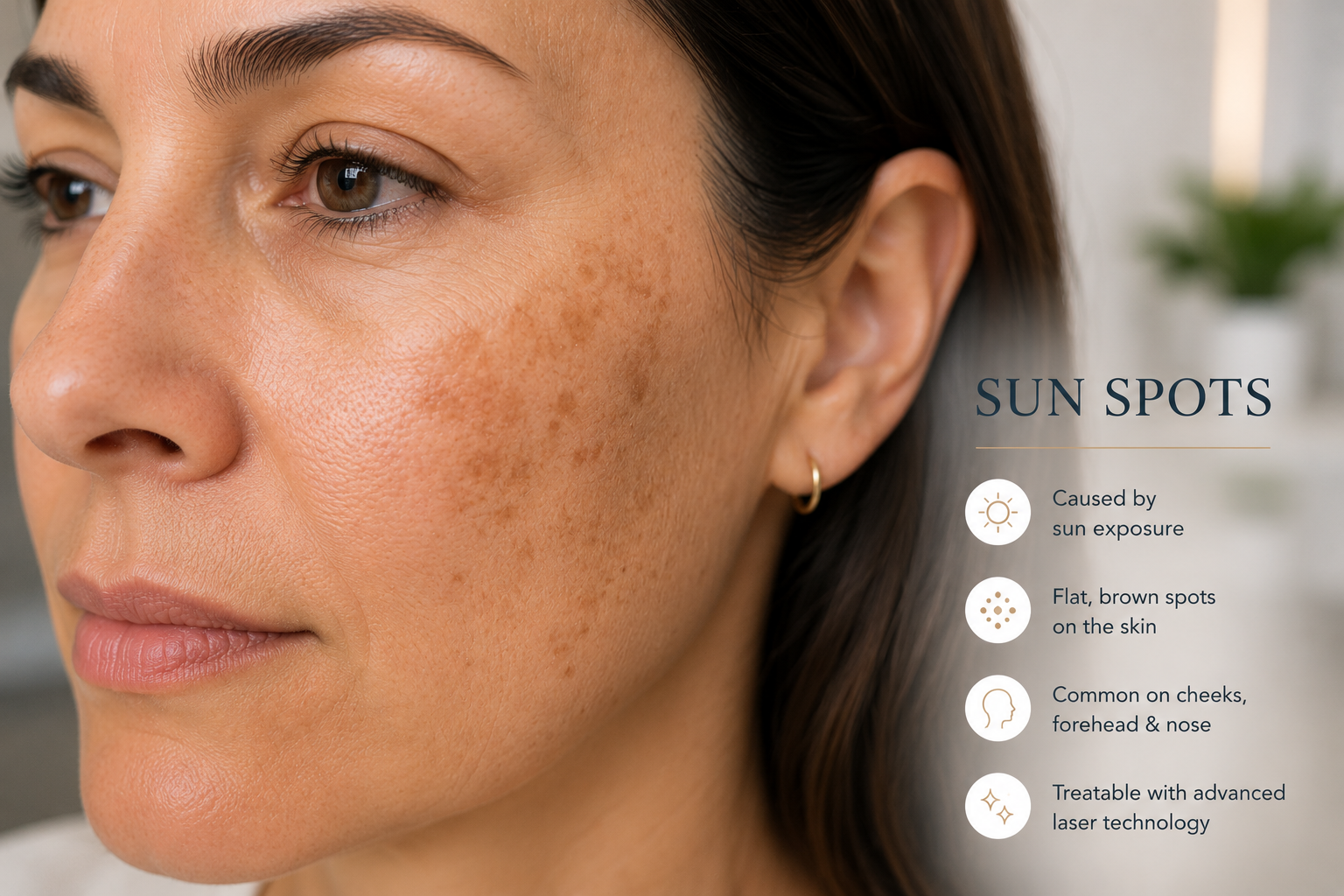
Can PicoSure Help with Sunspots?
Sun-related pigmentation is one of the concerns patients commonly research when looking into laser treatments.
Cumulative UV exposure can contribute to solar lentigines, commonly called sunspots or age spots, as well as more generalized uneven pigmentation.
ME MEDSPA's skin-rejuvenation page specifically places PicoSure within its pigmentation and resurfacing options for concerns including sun damage and uneven skin tone.
However, not every brown spot-on sun-exposed skin is automatically a sunspot.
A spot that is new, changing, irregular, symptomatic, or otherwise concerning should be appropriately evaluated rather than simply treated cosmetically.
Can PicoSure Treat Post-Inflammatory Hyperpigmentation?
Post-inflammatory hyperpigmentation (PIH) refers to areas of increased pigmentation that can develop after inflammation or injury.
For example, some people notice darker marks after acne lesions or other inflammatory skin changes resolve.
PIH should not automatically be treated the same way as sunspots.
Treatment selection requires consideration of:
Cause of the pigmentation
Depth and appearance
Skin characteristics
History of pigmentation changes
Previous treatments
Current skin condition
Risk of additional pigment alteration
This is particularly important because laser and other energy-based treatments can themselves affect pigmentation in some patients.
Can PicoSure Treat Melasma?
Melasma deserves its own discussion because it is more complex than an isolated sunspot.
Melasma typically appears as areas of hyperpigmentation, often involving the face, and can be influenced by factors such as sun exposure and hormonal changes.
It shouldn't simply be treated as though it were another ordinary brown spot.
ME MEDSPA's current skin-rejuvenation page lists PicoSure Laser + Plasma among its options for pigmentation and specifically mentions melasma.
However, that does not mean every patient with melasma is automatically an appropriate candidate.
Melasma can be persistent and recurrent, and treatment decisions should account for skin characteristics, triggers, previous treatment history, sun exposure, and the risk of pigmentation changes.
Avoid promising:
“PicoSure permanently cures melasma.”
A more appropriate goal is individualized management and improvement when treatment is considered suitable.
PicoSure vs. Lumecca IPL for Dark Spots: What's the Difference?
PicoSure and Lumecca can both come up when patients research pigmentation treatment, but they use different technologies.
PicoSure
PicoSure is based on picosecond laser technology.
Lumecca
Lumecca uses intense, pulsed light (IPL) rather than a laser.
ME MEDSPA lists both technologies within its pigmentation and resurfacing treatment category.
The better option depends on what is being treated.
A provider may consider factors such as:
Type of pigmentation
Depth of pigmentation
Presence of redness or vascular concerns
Skin characteristics
Previous treatment
Recent sun exposure
Treatment goals
PicoSure vs. Chemical Peels for Pigmentation
PicoSure and chemical peels also work differently.
A picosecond laser uses laser energy.
A chemical peel applies a chemical solution to the skin to create controlled exfoliation or resurfacing at a depth determined by the formulation and treatment.
ME MEDSPA offers SkinCeuticals Micro Peel as part of its skin-renewal options and describes it as a treatment intended to resurface and refine skin texture.
Neither approach should automatically be considered better for every pigmentation concern.
Treatment selection can depend on:
Type of discoloration
Depth of concern
Overall skin texture
Skin characteristics
Previous treatments
Desired recovery
Current skincare routine
Does PicoSure Permanently Remove Dark Spots?
PicoSure shouldn't be marketed as guaranteeing that pigmentation will never return.
Even when an appropriate pigmented area improves, future factors can contribute to new or recurrent discoloration.
These may include:
Continued UV exposure
New inflammation
Hormonal influences
Individual tendency toward pigmentation
Underlying pigmentary conditions
Skin aging
Sun protection and appropriate skincare remain important after cosmetic pigmentation treatment.
What Does PicoSure Treatment Feel Like?
Treatment sensation varies according to the area being treated, device settings, individual sensitivity, and treatment protocol.
Patients may notice sensations associated with individual laser pulses.
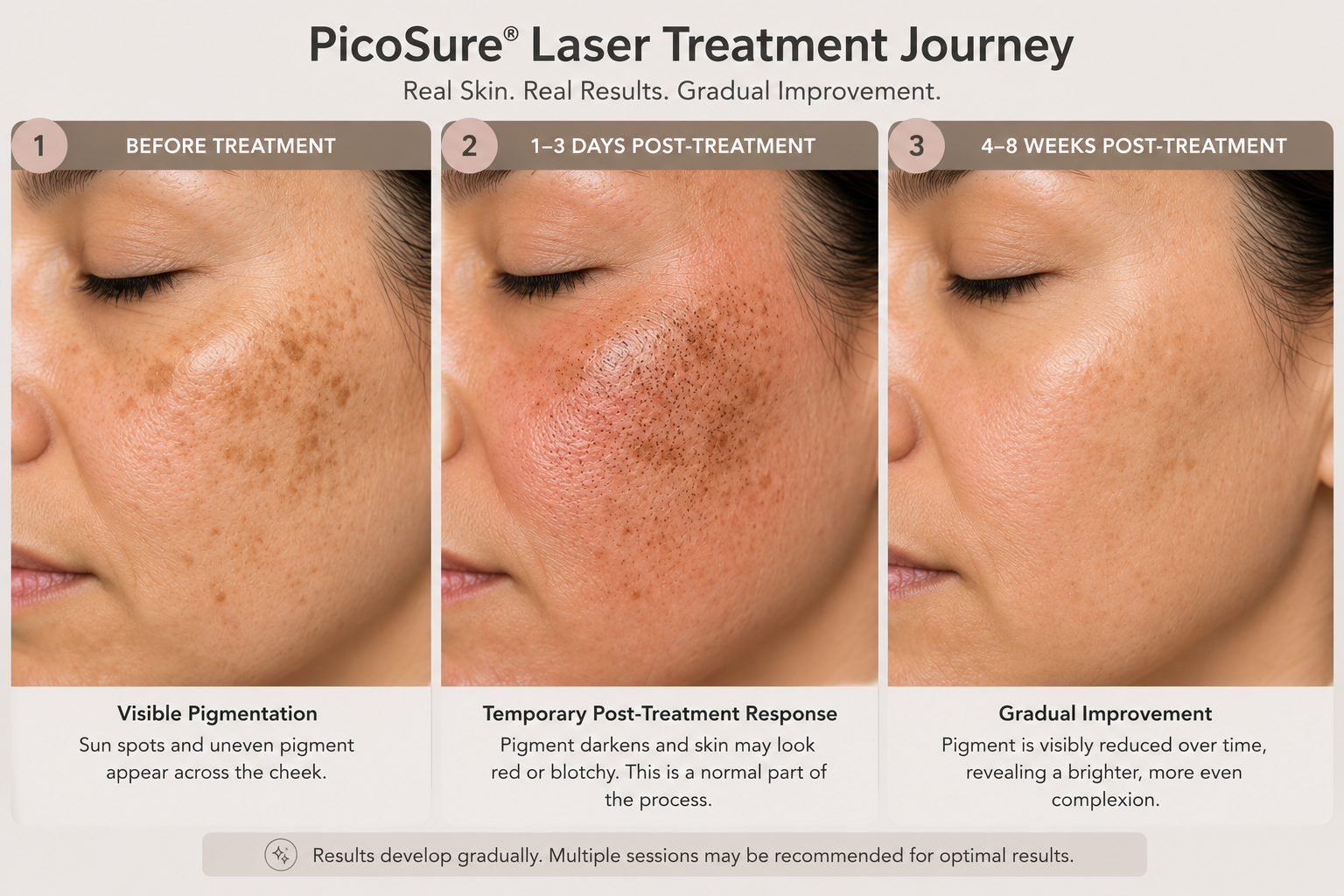
After treatment, temporary reactions can vary but may include:
Redness
Warmth
Mild swelling
Sensitivity
Temporary changes in the appearance of treated pigmentation
What Happens to Pigmentation After PicoSure?
Changes in pigmentation are not necessarily immediate.
Depending on the pigment being treated and the treatment protocol, an area may temporarily look different before gradual cosmetic improvement becomes apparent.
Patients shouldn't pick, scratch, scrub, or aggressively exfoliate a treated area unless specifically instructed to do so.
The exact post-treatment appearance can vary according to:
Pigmentation type
Treatment settings
Skin characteristics
Treatment area
Individual response
When Will I See Results From PicoSure?
There isn't one exact results timeline appropriate for every pigmentation concern.
Visible changes depend on:
What is being treated
Pigmentation depth
Treatment settings
Treatment area
Number of sessions
Skin characteristics
Individual response
How Many PicoSure Treatments Will I Need?
There is no universal treatment number.
Some pigmentation concerns may respond differently from others, and treatment planning should be based on the individual patient rather than a fixed package applied to everyone.
The number and spacing of treatments may depend on:
Type of pigmentation
Severity
Treatment area
Skin characteristics
Treatment settings
Previous treatments
Individual response
Desired cosmetic outcome
Your provider can evaluate your progress before recommending additional treatment.
Is There Downtime After PicoSure?
PicoSure is a non-surgical treatment, but non-surgical doesn't automatically mean zero downtime.
Temporary redness, warmth, swelling, sensitivity, or visible changes in treated pigmentation may occur depending on the treatment performed.
Recovery can vary according to treatment settings and individual skin response.
If you're preparing for a wedding, photoshoot, vacation, or another important event, discuss timing with your provider rather than assuming your skin will look completely unchanged immediately afterward.
What Should I Do After PicoSure Treatment?
Aftercare should follow the instructions given by your treating provider.
General considerations may include:
Keep treated skin clean as instructed.
Avoid picking or scratching the treatment area.
Avoid aggressive exfoliation.
Protect treated skin from unnecessary sun exposure.
Follow sunscreen recommendations.
Ask when to restart retinoids.
Ask when to resume exfoliating acids or other active skincare ingredients.
Follow recommendations regarding heat, exercise, swimming, and similar activities.
Ask before scheduling another peel, facial, laser, or energy-based procedure.
Contact your provider if you experience a reaction that concerns you or symptoms that worsen rather than improve.
Sun protection is especially important when the original treatment concern involves pigmentation or sun damage.
Who May Be a Candidate for PicoSure?
PicoSure may be worth discussing if you're concerned about selected pigmentation or uneven-looking skin tone and want to explore laser-based treatment.
However, having a dark spot doesn't automatically make someone an appropriate candidate.
A consultation should consider:
Type of pigmentation
Skin characteristics
Current skin condition
Recent sun exposure or tanning
Medical history
Medications
Previous laser treatments
History of pigmentation changes
Current skincare products
Treatment goals
Your provider should also determine whether any lesion requires medical evaluation rather than cosmetic laser treatment.
Related Reading
Frequently Asked Questions About PicoSure for Pigmentation
Is PicoSure the same as IPL?
No. PicoSure uses laser technology, while IPL uses intense pulsed light. ME MEDSPA offers both PicoSure and Lumecca IPL within its pigmentation and resurfacing treatment options.
Can PicoSure remove sun spots?
PicoSure may be considered for appropriate pigmentation concerns, including selected sun-related discoloration. The pigmentation should first be evaluated to determine what it is and whether laser treatment is appropriate.
Can PicoSure treat acne dark spots?
Dark marks remaining after acne may represent post-inflammatory pigmentation rather than true acne scars. Whether PicoSure is appropriate depends on the type of pigmentation, skin characteristics, and individual assessment.
Does PicoSure work for melasma?
ME MEDSPA lists PicoSure among its pigmentation options and mentions melasma on its skin-rejuvenation page. However, melasma is complex and can recur, so treatment should be individualized rather than presented as a guaranteed cure.
Is PicoSure better than Lumecca IPL?
Neither technology is universally better. PicoSure uses picosecond laser technology, while Lumecca uses IPL. Treatment selection depends on the concern, skin characteristics, treatment history, and provider assessment.
Does PicoSure permanently remove pigmentation?
No cosmetic treatment should guarantee that pigmentation will never return. Future UV exposure, inflammation, hormonal factors, and other influences can contribute to new or recurrent pigmentation.
How many PicoSure sessions will I need?
There is no universal number. The appropriate treatment plan depends on the pigmentation, severity, treatment settings, skin characteristics, and individual response.
Is PicoSure painful?
Treatment sensation varies between patients and according to the treatment area and settings. It shouldn't be described as universally painless.
Book Your Consultation
Every pigmentation concern is different. At ME MEDSPA, your provider will evaluate your skin, pigmentation concerns, recent sun exposure, previous treatments, and aesthetic goals to determine whether PicoSure is an appropriate option for you.
We welcome clients from Monterey Park, Alhambra, San Gabriel, Rosemead, and surrounding communities who are looking for personalized pigmentation and skin-rejuvenation treatments.
Ready to take the next step?
Schedule your consultation today and discover whether PicoSure can be part of your personalized treatment plan for dark spots, pigmentation, sun-related discoloration, or uneven-looking skin tone.

