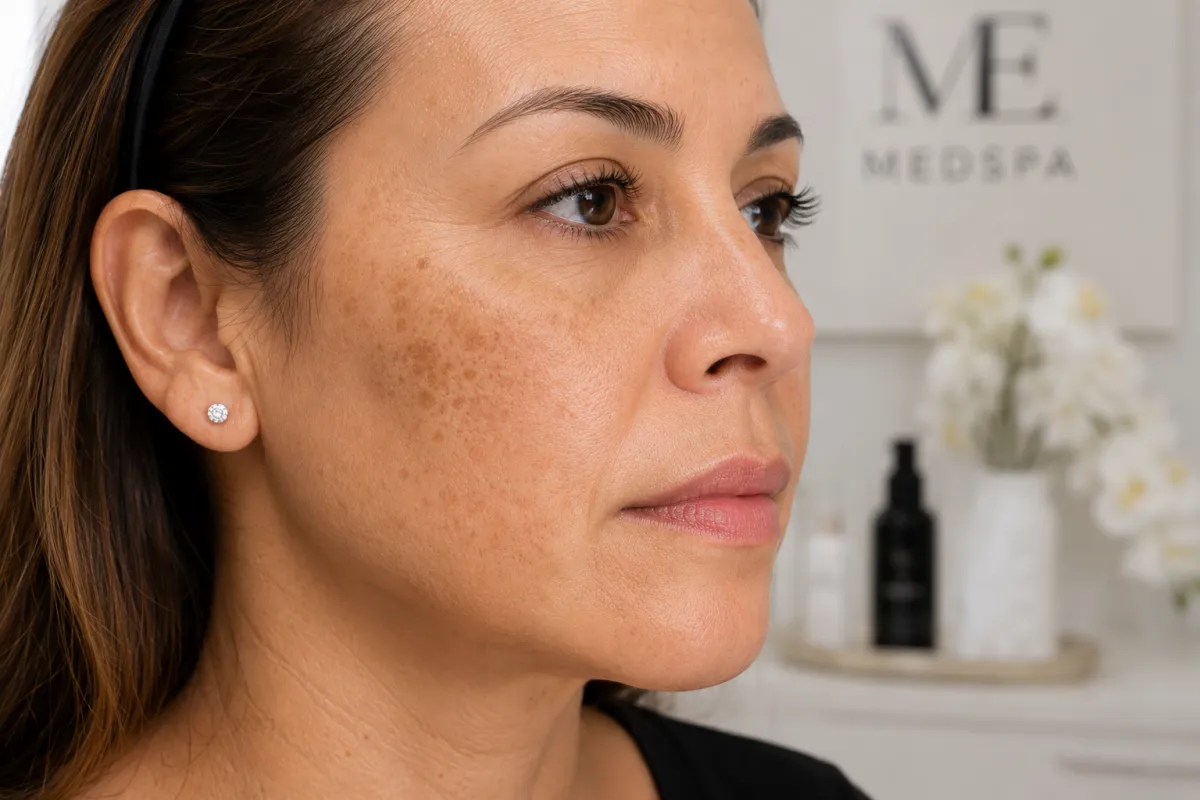
Lumecca IPL for Sun Damage & Dark Spots in Monterey Park
IPL Photo facial for Sun Damage and Dark Spots: What Lumecca Can Do for Your Skin
Years of sun exposure can gradually become visible on the skin. Brown spots, areas of uneven pigmentation, redness, and an uneven-looking complexion may become more noticeable even when you maintain a good daily skincare routine.
These changes are often associated with photoaging, or changes in the skin related to cumulative exposure to ultraviolet radiation.
For patients bothered by visible pigmentation or certain vascular concerns, an IPL photofacial may be one treatment worth discussing.
Lumecca by InMode is an intense, pulsed light (IPL) technology used for selected pigmented and vascular concerns. Unlike a laser that operates using a specific wavelength, IPL delivers a range of light wavelengths. The appropriate treatment settings depend on the concern being addressed and the patient's skin characteristics.
At ME MEDSPA in Monterey Park, CA, Lumecca IPL treatments are personalized according to your skin, areas of concern, medical history, recent sun exposure, and aesthetic goals.
IPL should not be presented as permanently eliminating every dark spot or creating flawless skin. A more realistic goal is improvement in the appearance of appropriate pigmentation, redness, and uneven skin tone.
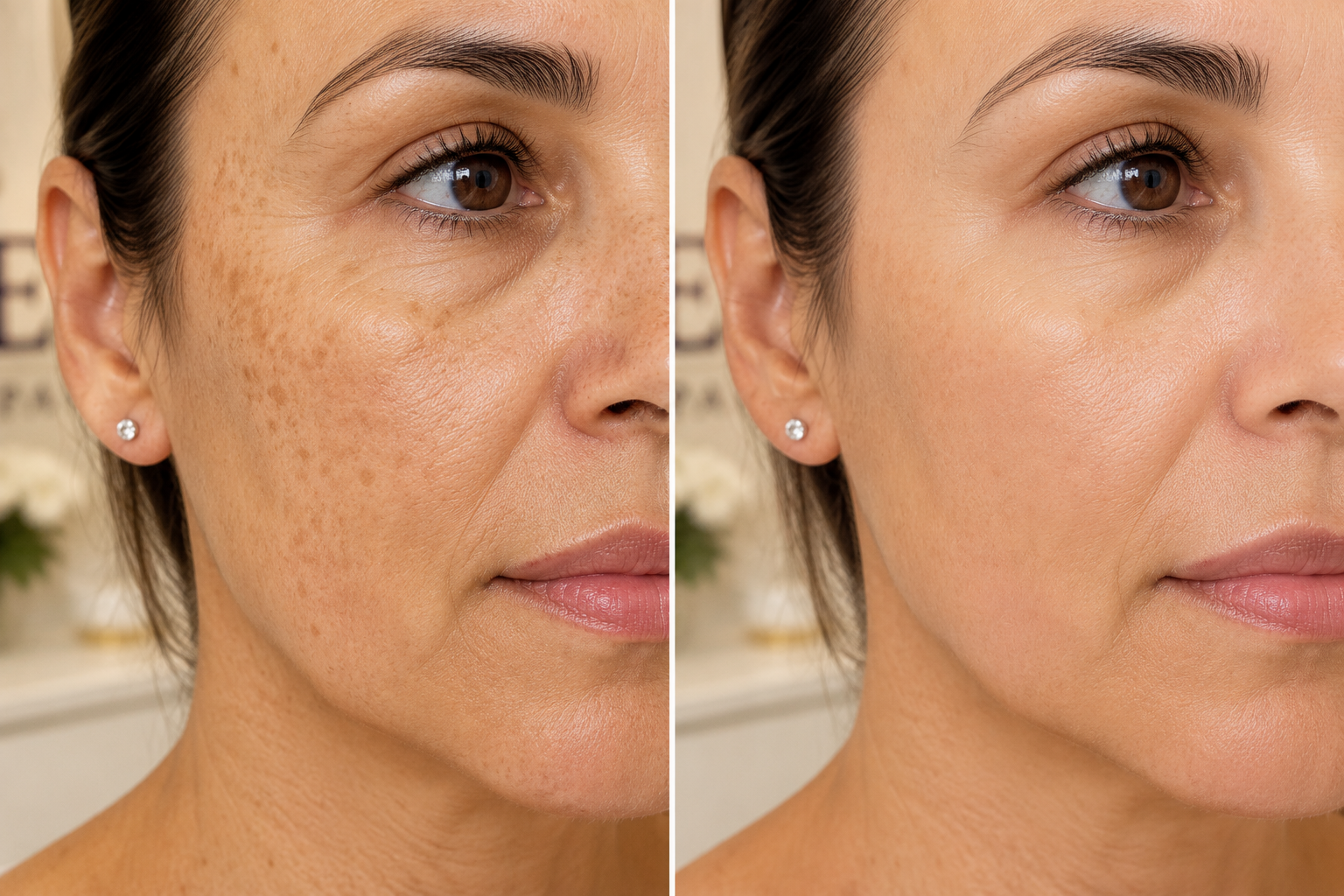
What Is an IPL Photofacial?
IPL stands for intense, pulsed light.
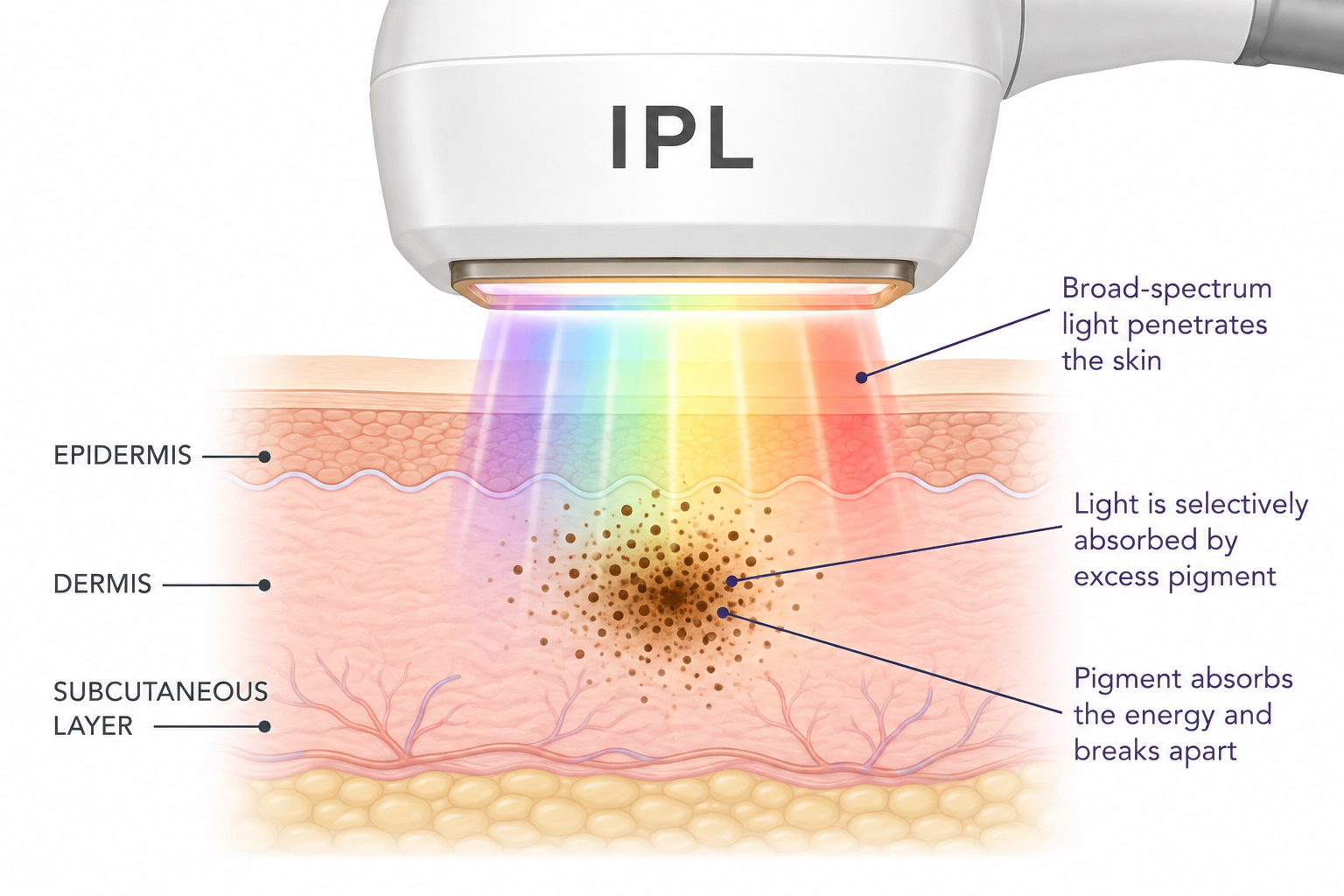
An IPL photofacial uses pulses of broad-spectrum light rather than the single, specific wavelength associated with many laser systems.
This light can be directed toward selected chromophores—or light-absorbing targets—within the skin.
Depending on the treatment and wavelength range being used, targets may include melanin associated with pigmentation or hemoglobin associated with certain visible vascular concerns.
This is why IPL can be used for more than one type of cosmetic concern.
IPL treatments may be considered for concerns such as:
Certain brown spots and areas of pigmentation
Sun-related discoloration
Uneven-looking skin tone
Certain visible blood vessels
Facial redness in appropriate patients
However, not every brown or red spot should automatically be treated with IPL. Pigmented lesions should be appropriately evaluated before cosmetic treatment, particularly when a spot is new, changing, irregular, or otherwise concerning.
What Is Lumecca IPL?
Lumecca is an IPL applicator from In Mode designed for light-based treatment of selected pigmented and vascular concerns.
The FDA database identifies InMode's SR IPL device as a powered light-based, non-laser surgical instrument with thermal effect, and later InMode system documentation identifies Lumecca 580 and Lumecca 515 as IPL applicators.
That distinction matters:
Lumecca = IPL technology
It should not simply be described as a laser.
During treatment, pulses of light are delivered to the selected area according to the treatment settings chosen by the provider.
The appropriate settings depend on factors such as the concern being treated, treatment area, skin characteristics, and individual assessment.
How Does Lumecca IPL Work for Dark Spots?
Pigmented areas contain melanin, the pigment responsible for color in the skin.
IPL delivers light that can be absorbed by appropriate pigmented targets. That light energy produces a controlled treatment effect in the targeted area.
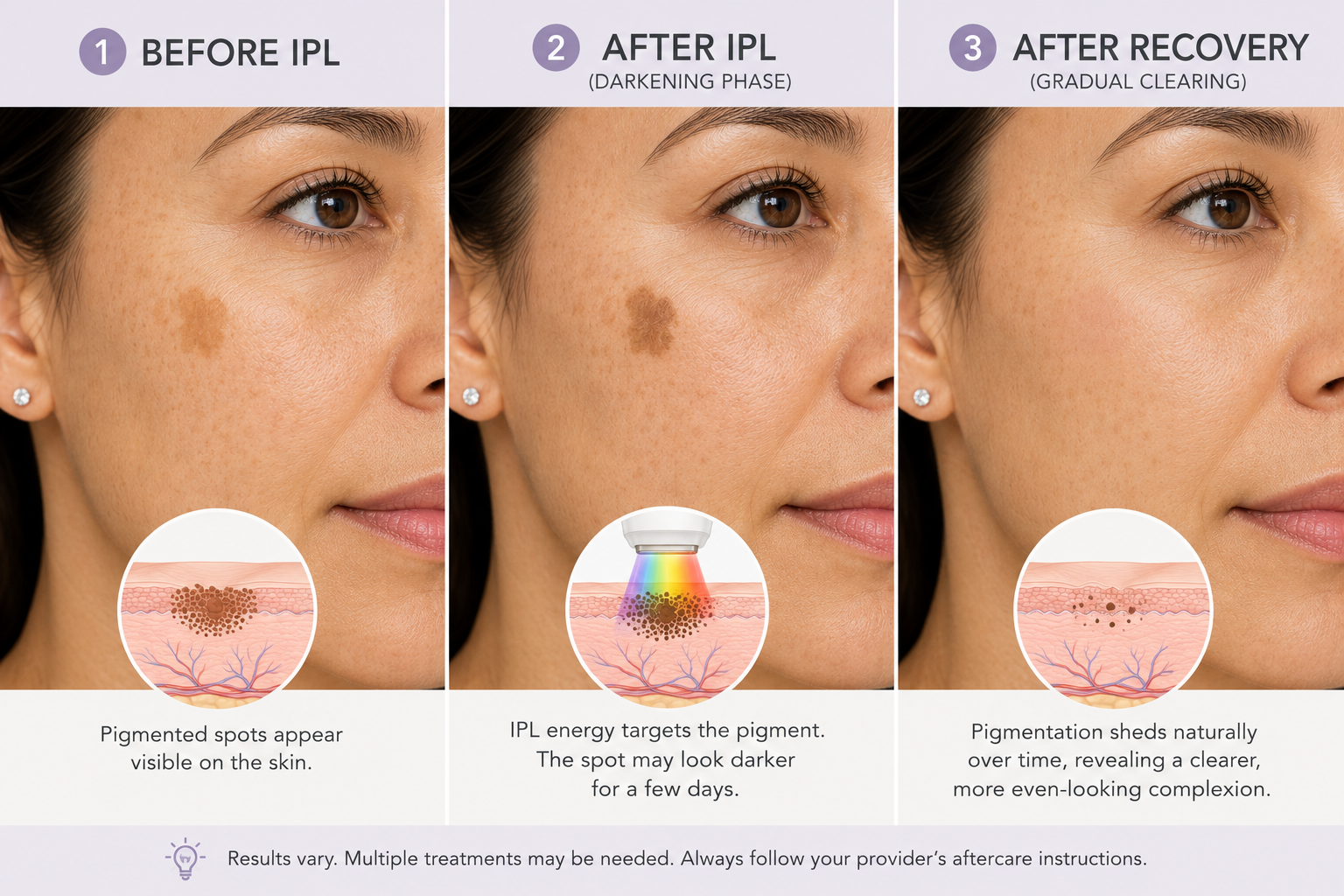
Following treatment, certain pigmented areas may temporarily appear darker or more noticeable before gradually changing as the skin responds.
The process shouldn't be described as simply “burning off dark spots.”
A better way to understand the treatment is:
IPL light → absorption by an appropriate pigment target → controlled treatment response → gradual change in the appearance of pigmentation.
The response depends on the type and depth of pigmentation, skin characteristics, treatment settings, and individual response.
Can Lumecca IPL Help with Sun Damage?
IPL is commonly studied and used for cosmetic changes associated with photoaging, including certain forms of pigmentation.
One particularly relevant concern is solar lentigines, commonly called sunspots or age spots.
Solar lentigines are associated with chronic sun exposure and typically appear as flat areas of increased pigmentation.
A 2025 systematic review examining clinical trials for solar lentigines included 41 studies involving 3,234 patients. IPL was among the treatment modalities showing effectiveness for solar lentigines, although the review also emphasized that treatment approaches vary and additional high-quality research is useful.
This doesn't mean every brown spot is a sunspot—or that every pigmented lesion should be treated with IPL.
An appropriate assessment should determine what the pigmentation appears to be before treatment is performed.
What Types of Dark Spots May IPL Treat?
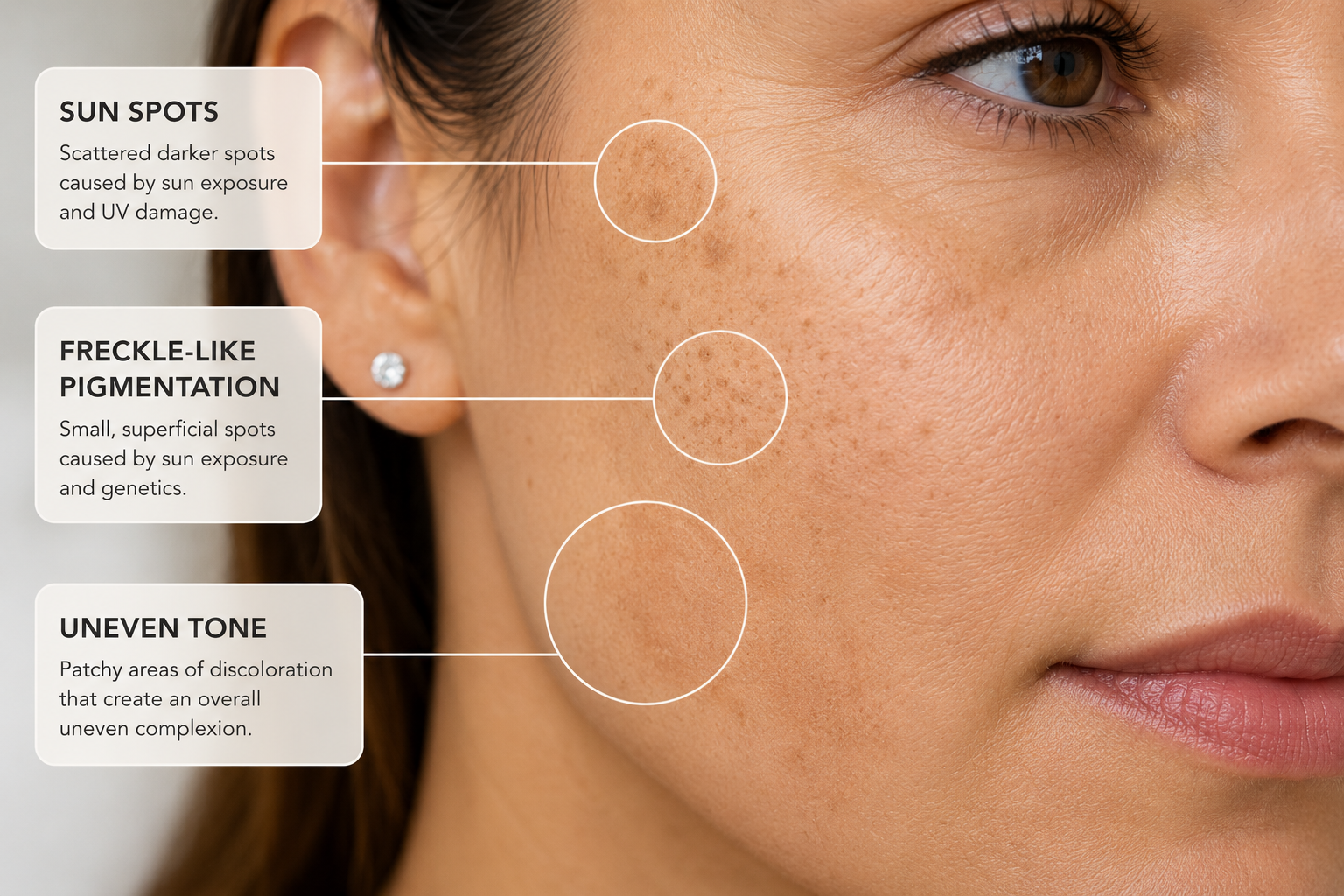
IPL may be considered for selected superficial pigmented concerns, particularly when the pigmentation is an appropriate target for the device and treatment settings.
Examples can include certain:
Sunspots
Solar lentigines are flat pigmented areas associated with cumulative sun exposure.
They commonly become more noticeable on areas that receive regular sunlight, such as the face.
Freckle-Like Pigmentation
Some superficial pigmentation may also respond to IPL, depending on its characteristics and the patient's skin.
Uneven Pigmentation from Photoaging
Cumulative sun exposure can contribute to a mottled or uneven-looking complexion rather than producing only individual isolated spots.
IPL may be considered as part of a treatment plan for appropriate photoaging-related pigmentation.
The key word throughout this discussion is appropriate.
“Dark spot” is a visual description—not a diagnosis. Different pigmented lesions have different causes, and they should not automatically receive the same treatment.
Can Lumecca IPL Treat Redness and Visible Blood Vessels?
IPL isn't used only for pigmentation.
Certain wavelengths of light can also interact with hemoglobin, which makes selected vascular concerns potential IPL targets.
Research on IPL skin rejuvenation has reported improvements in concerns including erythema and telangiectasia, in addition to pigmentation-related changes.
Depending on the individual assessment, IPL may therefore be considered for certain:
Areas of facial redness
Small visible vessels
Telangiectasia
Mixed redness and pigmentation concerns
However, redness can have many causes.
Persistent facial redness, inflammatory skin conditions, visible vessels, and temporary flushing aren't necessarily the same problem. Your provider should evaluate what is causing the visible concern before deciding whether IPL is appropriate.
Does Lumecca IPL Remove Dark Spots Permanently?
Lumecca shouldn't be advertised as guaranteeing that dark spots will never return.
IPL may improve the appearance of appropriate pigmented lesions, but the skin continues to be exposed to factors that influence pigmentation over time.
Future ultraviolet exposure can contribute to new sun-related pigmentation, and other forms of discoloration may have different causes.
The durability of improvement can therefore depend on:
Type of pigmentation
Treatment response
Skin characteristics
Subsequent sun exposure
Skincare habits
Individual tendency to develop pigmentation
Other biological or environmental factors
Consistent sun protection remains important even after successful cosmetic treatment.
The goal should be improvement in existing appropriate pigmentation, not a promise that the patient will never develop another dark spot.
Lumecca IPL vs. PicoSure for Dark Spots: What's the Difference?
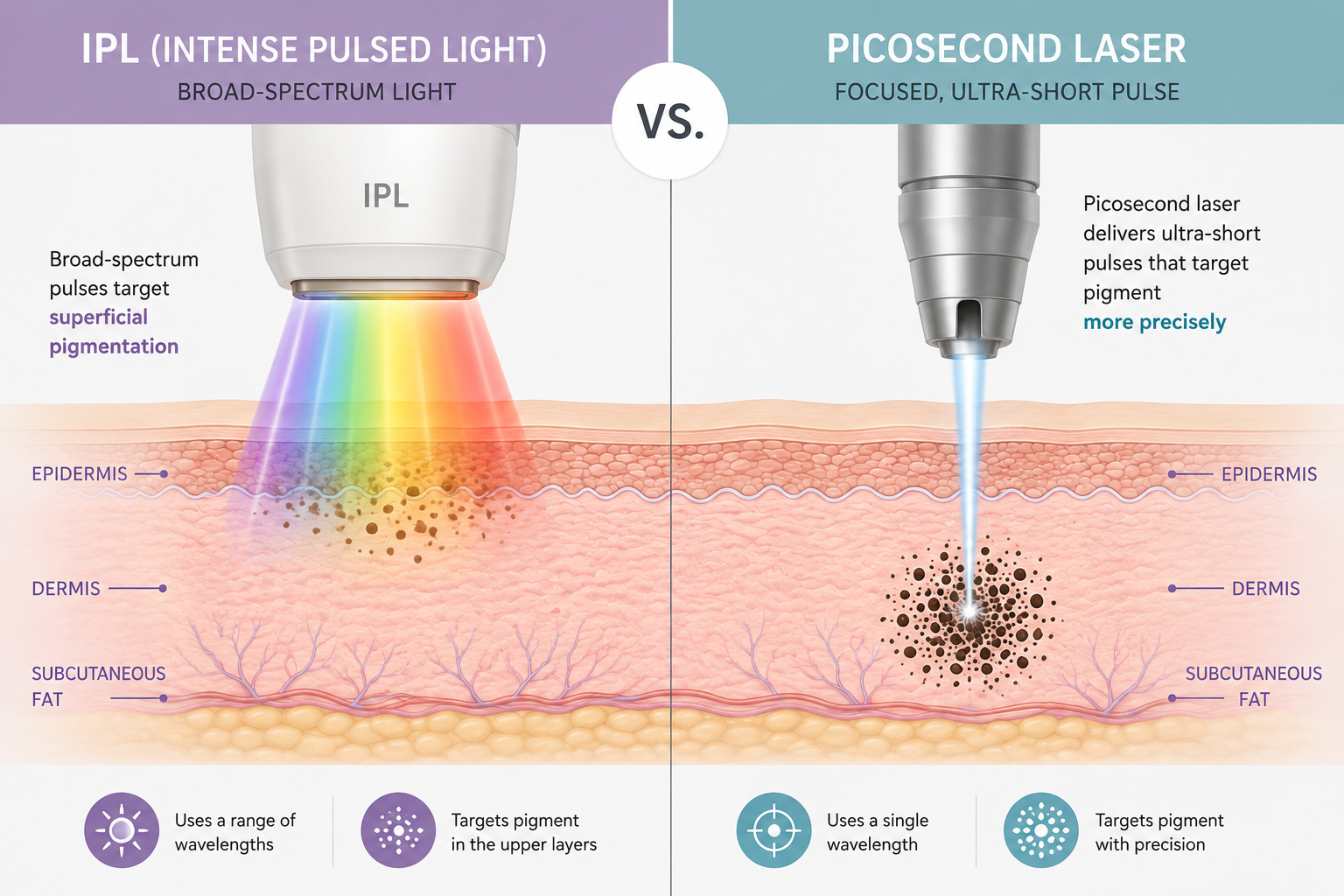
Patients researching pigmentation treatment often encounter both IPL and picosecond laser treatments, but the technologies aren't interchangeable.
Lumecca IPL
Lumecca uses intense, pulsed light and can target appropriate pigmented and vascular concerns.
PicoSure
PicoSure is a picosecond laser system. It uses laser energy rather than broad-spectrum IPL.
The appropriate treatment depends on factors including:
Type of pigmentation
Depth of pigmentation
Skin characteristics
Treatment history
Other skin concerns
Provider assessment
One device shouldn't automatically be labeled “better” for every dark spot.
For example, a patient with visible superficial sun-related pigmentation may have very different treatment needs from someone with a different pigmentary condition.
What Can't Lumecca IPL Treat?
Understanding what IPL cannot automatically fix is just as important as understanding what it may help.
Not every pigmentation concern is an appropriate IPL target.
A dark spot could represent different types of pigmentation or a skin lesion that requires medical evaluation rather than cosmetic treatment.
IPL also shouldn't be presented as a universal treatment for:
Every type of melasma
Every form of post-inflammatory hyperpigmentation
Suspicious or changing pigmented lesions
All redness
Deep acne scars
Significant skin laxity
Every textural concern
If a pigmented lesion is changing in size, shape, color, border, or appearance—or otherwise looks concerning—it should be medically evaluated rather than simply treated cosmetically.
This is one reason an in-person skin assessment matters.
What Does a Lumecca IPL Treatment Feel Like?
During treatment, the Lumecca applicator is positioned against the skin and pulses of light are delivered to selected areas.
Patients can experience sensations associated with each pulse, and treatment comfort varies according to the area, settings, individual sensitivity, and treatment protocol.
Following IPL, temporary effects may include:
Redness
Warmth
Mild swelling
Sensitivity
Temporary darkening of treated pigmented areas
Other localized skin responses
These effects aren't identical for every patient.
Avoid describing Lumecca as completely painless or promising that every patient will experience the same recovery.
What Happens to Dark Spots After Lumecca IPL?
One thing that can surprise patients is that certain treated pigmented areas may look temporarily darker or more noticeable after IPL.
That doesn't necessarily mean the treatment made the pigmentation worse.
Appropriate pigmented targets can change in appearance following light treatment, and the visible response can evolve as the skin recovers.
Patients should avoid picking, scratching, or aggressively exfoliating treated areas unless instructed otherwise.
Your provider should explain what type of post-treatment response is expected based on the treatment performed and what changes would warrant contacting the clinic.
How Long Does It Take to See Results From Lumecca IPL?
Some visible changes may occur following treatment, but there isn't one exact timeline that applies to every patient or every concern.
The manufacturer describes pigmentation changes occurring over the days following treatment, with continued visible change afterward. However, individual results depend on the indication, treatment settings, skin characteristics, and treatment plan.
Rather than promising that every patient's skin will look dramatically different after a specific number of days, it's more accurate to say that changes develop as the treated skin responds following the procedure.
The timing and degree of improvement may depend on:
Type of pigmentation or vascular concern
Severity
Treatment settings
Treatment area
Skin characteristics
Number of sessions
Individual response
Your provider can evaluate the treated area and determine whether additional treatment may be appropriate.
How Many Lumecca IPL Treatments Will I Need?
There isn't one treatment number appropriate for every patient.
The number and spacing of IPL sessions depend on the concern being treated, its severity, treatment area, skin characteristics, settings used, and individual response.
Research on IPL also uses varying treatment schedules. A systematic review of IPL for skin rejuvenation found substantial variation among included studies and specifically noted the lack of consensus regarding treatment parameters.
This is why a universal promise such as “everyone needs exactly three treatments” should be avoided.
Your ME MEDSPA provider can recommend an individualized treatment plan and evaluate your response before deciding whether another session is appropriate.
Is There Downtime After Lumecca IPL?
IPL is non-surgical, but that doesn't mean every patient will have zero visible recovery.
Temporary redness, warmth, swelling, sensitivity, or darkening of targeted pigment can occur.
How noticeable these effects are and how long they remain can vary.
If you have an important event approaching, discuss the timing with your provider rather than assuming your skin will look completely unchanged immediately after treatment.
What Should I Do After Lumecca IPL?
Your provider will give you individualized instructions according to the treatment performed and your skin's response.
General post-treatment considerations may include:
Follow your provider's cleansing and skincare instructions.
Avoid picking or scratching treated pigmented areas.
Don't aggressively exfoliate the treated skin.
Protect your skin from excessive sun exposure.
Follow sunscreen recommendations carefully.
Ask when to resume retinoids, exfoliating acids, or other active skincare products.
Follow instructions regarding exercise, heat exposure, swimming, and other activities.
Ask before undergoing another facial, peel, laser, or energy-based procedure.
Contact your provider if you develop a reaction that concerns you or symptoms that become more severe rather than improving.
Sun protection is particularly important because this treatment is frequently used for concerns related to sun exposure and pigmentation.
Who May Be a Candidate for Lumecca IPL?
Lumecca may be worth discussing if you have appropriate pigmentation, sun-related discoloration, or selected vascular concerns.
However, IPL isn't automatically appropriate for every person with dark spots or redness.
Your consultation should consider:
What type of pigmentation or redness is present
Skin characteristics
Recent sun exposure or tanning
Medical history
Medications
Previous procedures
Current skincare products
History of pigmentation changes
Treatment goals
Your provider should also evaluate whether a visible lesion needs medical assessment rather than cosmetic treatment.
Related Reading
Frequently Asked Questions About Lumecca IPL
Is Lumecca IPL a laser?
No. Lumecca uses intense, pulsed light (IPL). FDA documentation classifies InMode's SR IPL technology as a powered light-based non-laser instrument.
Does IPL get rid of sun spots?
IPL may improve the appearance of appropriate sun-related pigmentation, including certain solar lentigines. A 2025 systematic review found IPL among the effective modalities studied for solar lentigines. Results vary, and not every brown spot is an appropriate IPL target.
Why do brown spots look darker after IPL?
Certain targeted pigmented areas can temporarily become darker or more noticeable following treatment as they respond to the light energy. Your provider should explain the expected post-treatment response and aftercare for your particular treatment.
Can Lumecca IPL treat redness?
IPL may be considered for selected vascular concerns and facial redness. Research on IPL skin rejuvenation has reported improvement in erythema and telangiectasia, but redness can have different causes and should be evaluated before treatment.
Is Lumecca better than PicoSure for dark spots?
Neither treatment is automatically better for every patient. Lumecca uses IPL, while PicoSure uses picosecond laser technology. The appropriate choice depends on the type and depth of pigmentation, skin characteristics, previous treatments, and provider assessment.
Can Lumecca treat melasma?
Melasma requires careful evaluation. It shouldn't be treated as though it were simply another sun spot, and IPL isn't automatically appropriate for every person with melasma. Your provider should identify the pigmentation concern before recommending treatment.
Does Lumecca IPL permanently remove pigmentation?
No treatment should guarantee that pigmentation will never return. IPL may improve existing appropriate pigmentation, but future sun exposure and other factors can contribute to new or recurrent discoloration.
How many Lumecca treatments do I need?
There is no universal treatment number. Your treatment plan depends on the concern being addressed, severity, skin characteristics, settings, and individual response.
Book Your Consultation
Every skin concern is different. At ME MEDSPA, your provider will evaluate your skin, pigmentation concerns, recent sun exposure, and aesthetic goals to determine whether Lumecca IPL is an appropriate option for you.
We welcome clients from Monterey Park, Alhambra, San Gabriel, Rosemead, and surrounding communities who are looking for personalized aesthetic treatments and professional skin care.
Schedule your consultation today and discover whether Lumecca IPL can be part of your personalized treatment plan for sun damage, dark spots, uneven skin tone, or visible redness.

