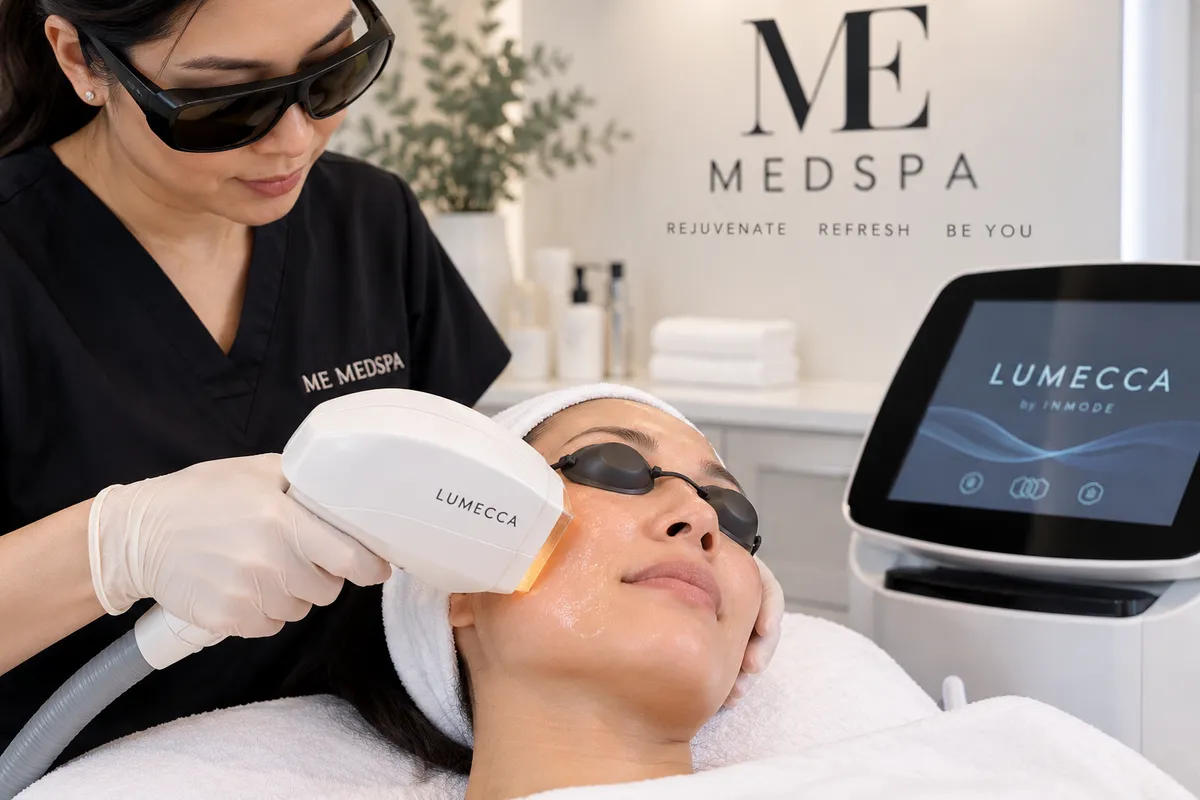
IPL vs. PicoSure in Monterey Park, CA | ME MEDSPA
IPL vs. PicoSure: Which Treatment Is Better for Dark Spots, Sun Damage, and Uneven Skin Tone?
Dark spots can be frustrating because they don't always have an obvious cause—and they don't all behave the same way.
You may notice small brown spots appearing after years of sun exposure. Perhaps your complexion looks less even than it used to, or discoloration from previous breakouts seems to linger long after the acne itself has healed.
IPL and PicoSure.
Both technologies may be considered for certain pigmentation and skin-rejuvenation concerns, but they work differently.
Lumecca IPL uses intense, pulsed light, while PicoSure is a laser technology that delivers energy in extremely short pulses.
At ME MEDSPA in Monterey Park, CA, treatment planning should begin with evaluating your skin, the type of discoloration you're concerned about, your history, and your aesthetic goals.
This guide explains the differences between Lumecca IPL and PicoSure, the concerns each technology may be considered for, and what you should know before choosing a pigmentation treatment.

Why Do Dark Spots and Uneven Skin Tone Develop?
Not every brown spot has the same cause.
This is one of the most important things to understand before considering IPL, PicoSure, or another pigmentation treatment.
Visible discoloration can be influenced by factors including:
Sun exposure
Natural aging
Previous inflammation
Acne
Hormonal influences
Genetics
Certain skin conditions
Individual pigment response
Some discoloration may appear relatively superficial, while other pigmentation concerns can behave very differently.
Two brown spots that look similar to you may not necessarily represent the same condition—or respond to the same treatment.
That's why identifying the concern should come before selecting the device.
What Are Sunspots?
Years of ultraviolet exposure can contribute to visible changes in pigmentation.
Over time, you may notice flat brown areas developing on frequently sun-exposed areas such as the:
Face
Cheeks
Forehead
Hands
Upper chest
Other exposed areas
People commonly refer to these areas as sunspots or age spots.
Professional treatment may improve the appearance of certain appropriately diagnosed pigmented lesions.
However, treating existing pigmentation doesn't prevent future sun damage.
UV exposure can continue contributing to new pigmentation and other visible signs of photodamage.
That makes daily sun protection an important part of maintaining your skin—even after professional treatment.

What About Dark Marks After Acne?
Sometimes the acne disappears but a dark mark remains.
This may be post-inflammatory hyperpigmentation, commonly abbreviated as PIH.
PIH can occur when inflammation in the skin triggers increased pigmentation in the affected area.
It's important to distinguish this from an indented or raised acne scar.
A person can even have both pigmentation and textural acne scarring.
Post-acne discoloration may gradually improve over time, but the process can be slow.
Individual skin characteristics also matter because some people are more prone to developing pigmentation following inflammation.
This becomes especially important when considering energy-based treatments.
Treatment selection and settings should account for the patient's skin and pigment response because inappropriate treatment can potentially cause unwanted pigment changes.
Is Melasma the Same as a Sunspot?
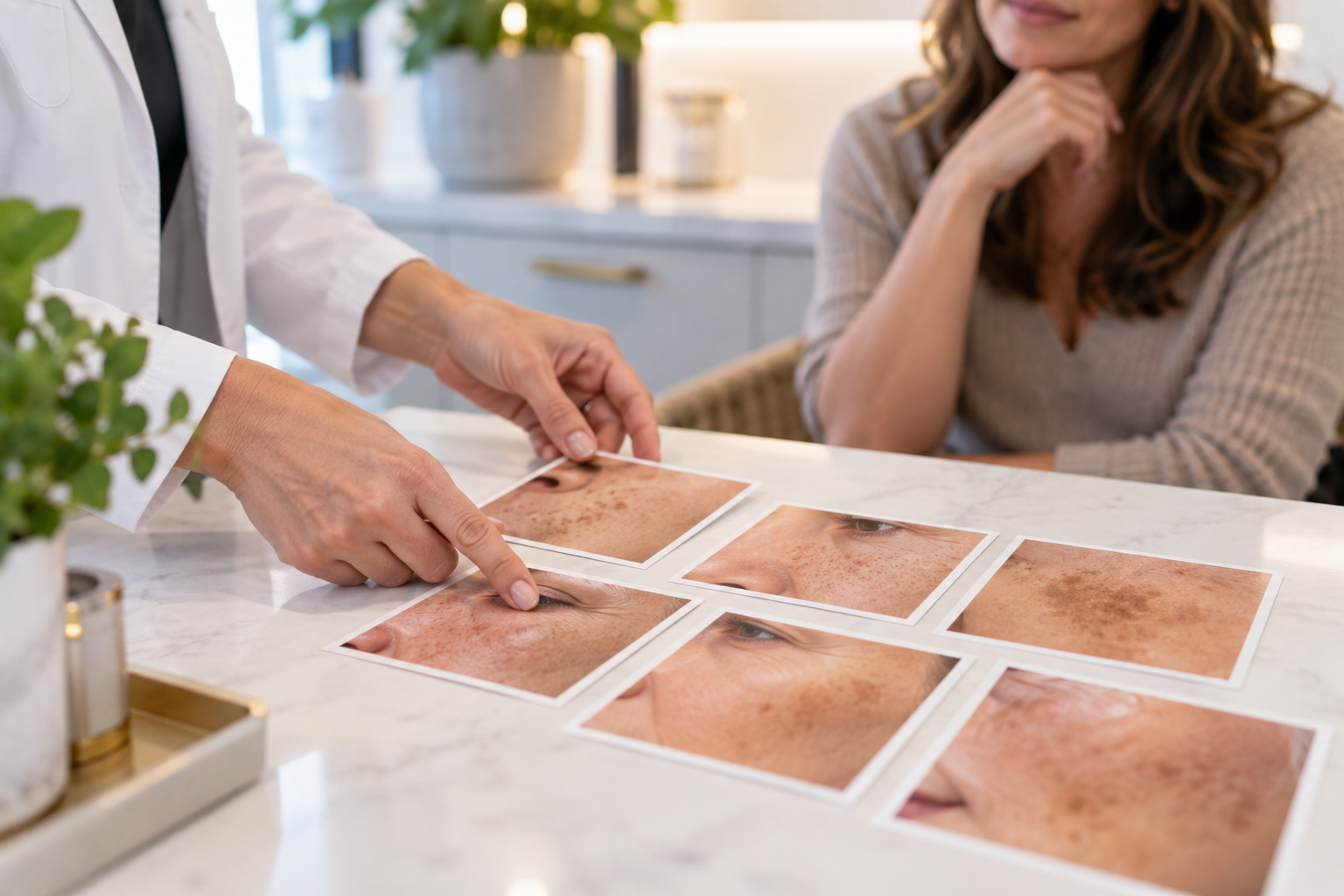
Melasma is a pigmentation condition that commonly appears as patches of brown or gray-brown discoloration, often on the face.
Several factors may influence melasma, including hormonal factors and sun exposure.
It can also behave differently from an isolated sunspot.
This distinction matters because not every pigmentation treatment is appropriate for every person with melasma.
Energy-based treatments require careful patient and treatment selection.
If your pigmentation appears patchy, symmetrical, or repeatedly returns, don't automatically assume that you're dealing with ordinary sunspots.
A professional assessment can help determine the appropriate next step.
What Is Lumecca IPL?
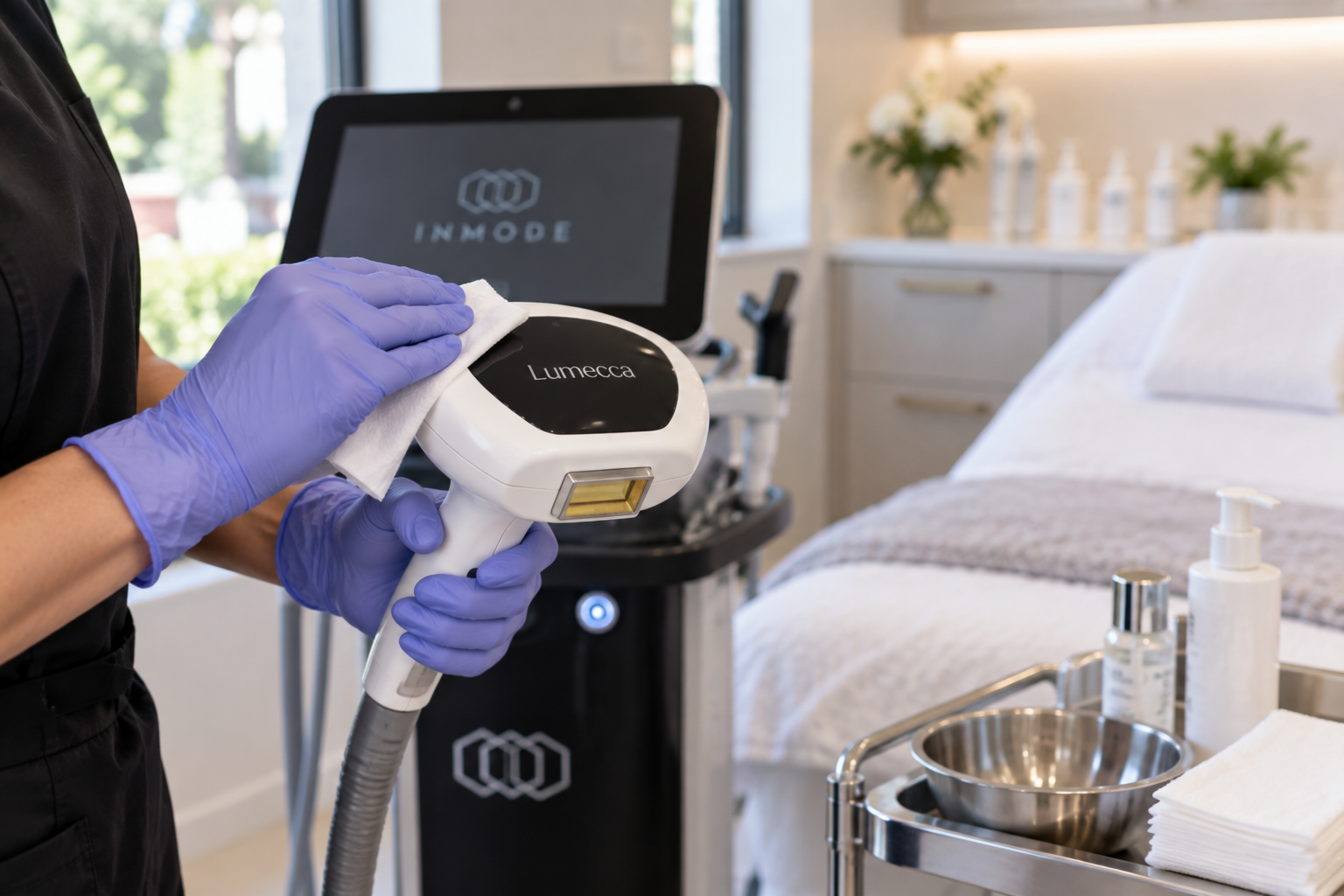
Lumecca IPL is an intense, pulsed light treatment available at ME MEDSPA.
IPL stands for intense, pulsed light.
Although IPL is sometimes casually described as a laser treatment, IPL and lasers are technically different.
IPL delivers multiple wavelengths of light, while laser devices use more specific wavelengths or wavelength ranges depending on the technology.
For appropriately selected patients, IPL may be considered for certain concerns involving:
Pigmented lesions
Sun-related discoloration
Uneven-looking skin tone
Redness
Visible vascular concerns
Photodamage
The exact concerns that can be treated depend on the patient, treatment area, device, settings, and professional assessment.
This is why you shouldn't automatically book IPL simply because you see a brown spot.
First, your provider needs to understand what that spot may represent.
How Does Lumecca IPL Work?
Lumecca delivers pulses of light to the treatment area.
Specific targets within the skin absorb portions of that light energy.
When appropriate pigmentation is being treated, melanin within the target absorbs light energy and produces a controlled effect.
Following treatment, certain pigmented areas may temporarily appear darker before gradually changing as the skin responds.
IPL can also target hemoglobin in appropriate vascular concerns.
That's one reason IPL is frequently discussed as a photo facial treatment for people who may have more than one visible sign of photodamage.
But treatment settings and patient selection matter.
More energy doesn't automatically mean better treatment.
What Can Lumecca IPL Be Used For?
Depending on the patient's assessment, Lumecca IPL may be considered for selected concerns involving pigmentation, redness, and visible photodamage.
For example, someone may be concerned about a combination of:
Brown discoloration + uneven-looking tone + visible redness.
That combination is one reason IPL may be discussed during a skin consultation.
However, IPL isn't automatically appropriate for every pigmentation concern or every patient.
Factors that may affect treatment planning include:
Skin characteristics
Type of pigmentation
Treatment area
Recent sun exposure
Tanning
Medications
Medical history
Previous procedures
The goal isn't simply to treat everything that looks brown.
The goal is to identify an appropriate target and determine whether IPL is suitable for that patient.
What Is PicoSure?
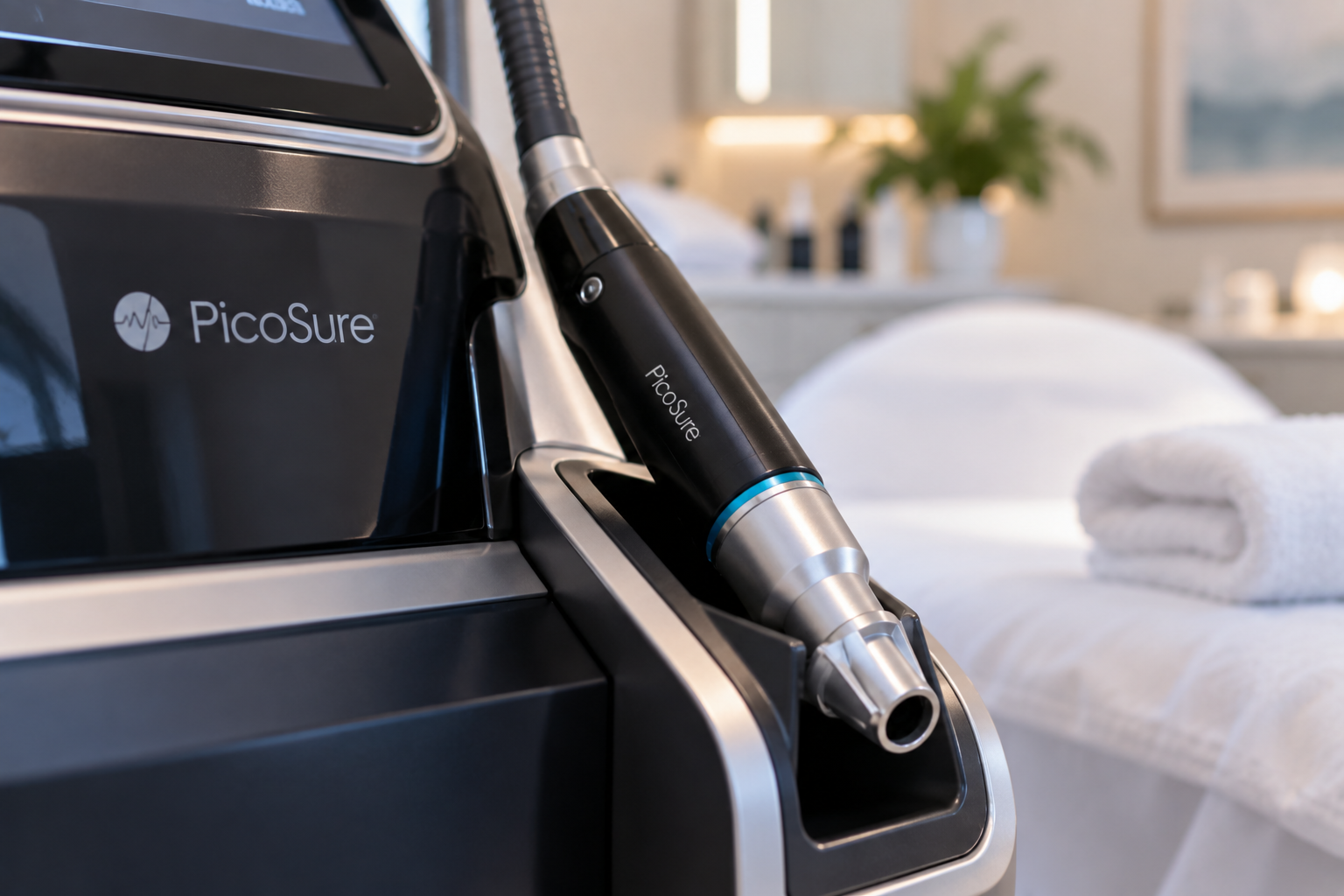
PicoSure is a laser technology.
Unlike IPL, which delivers broad-spectrum light, PicoSure delivers laser energy in extremely short pulses.
Depending on the specific treatment being performed, PicoSure may be considered for certain pigmentation and skin-rejuvenation concerns.
At ME MEDSPA, PicoSure Laser + Plasma is available as part of the practice's skin-rejuvenation services.
The most important thing to understand when comparing these technologies is:
PicoSure isn't simply a stronger version of IPL.
It's a different technology that delivers energy differently.
How Does PicoSure Work?
PicoSure delivers laser energy using extremely short pulse durations.
Depending on the treatment being performed, that energy interacts with targeted structures within the skin.
For appropriate pigment concerns, the treatment is designed to affect targeted pigment so that the body can gradually process the treated material.
Because PicoSure and IPL use different approaches to delivering energy, your provider may consider them for different concerns and treatment strategies.
Your skin characteristics + pigmentation type + treatment history + treatment area + goals all help determine whether a particular technology is appropriate.
IPL or PicoSure for Sunspots?
If your primary concern is isolated brown spots or visible sun damage, your provider may discuss IPL or an appropriate laser treatment depending on the characteristics of your pigmentation and skin.
Lumecca IPL may be particularly relevant when someone has multiple visible signs of photodamage, such as pigmentation together with redness or uneven-looking tone.
PicoSure may also be considered for appropriate pigment concerns depending on the treatment plan.
But you can't determine the right technology simply by looking at how dark a spot appears.
Your provider needs to consider:
What the pigmentation represents → your skin characteristics → recent sun exposure → treatment history → appropriate technology.

Is PicoSure Better Than IPL?
Different technology doesn't mean universally better technology.
If pigmentation occurs alongside visible redness or other signs of photodamage, IPL may have characteristics worth discussing.
If a particular pigment concern is appropriate for a laser-based treatment strategy, PicoSure may be considered.
There may also be situations where your provider recommends that neither IPL nor PicoSure should be your first treatment.
Professional skincare, sun protection, chemical exfoliation, another aesthetic procedure, or appropriate medical evaluation may make more sense depending on the concern.
The goal shouldn't be to find the strongest machine.
The goal should be:
The right treatment + the right target + the right patient.
What Does Lumecca IPL Feel Like?
Treatment experience varies depending on the patient, treatment area, and settings.
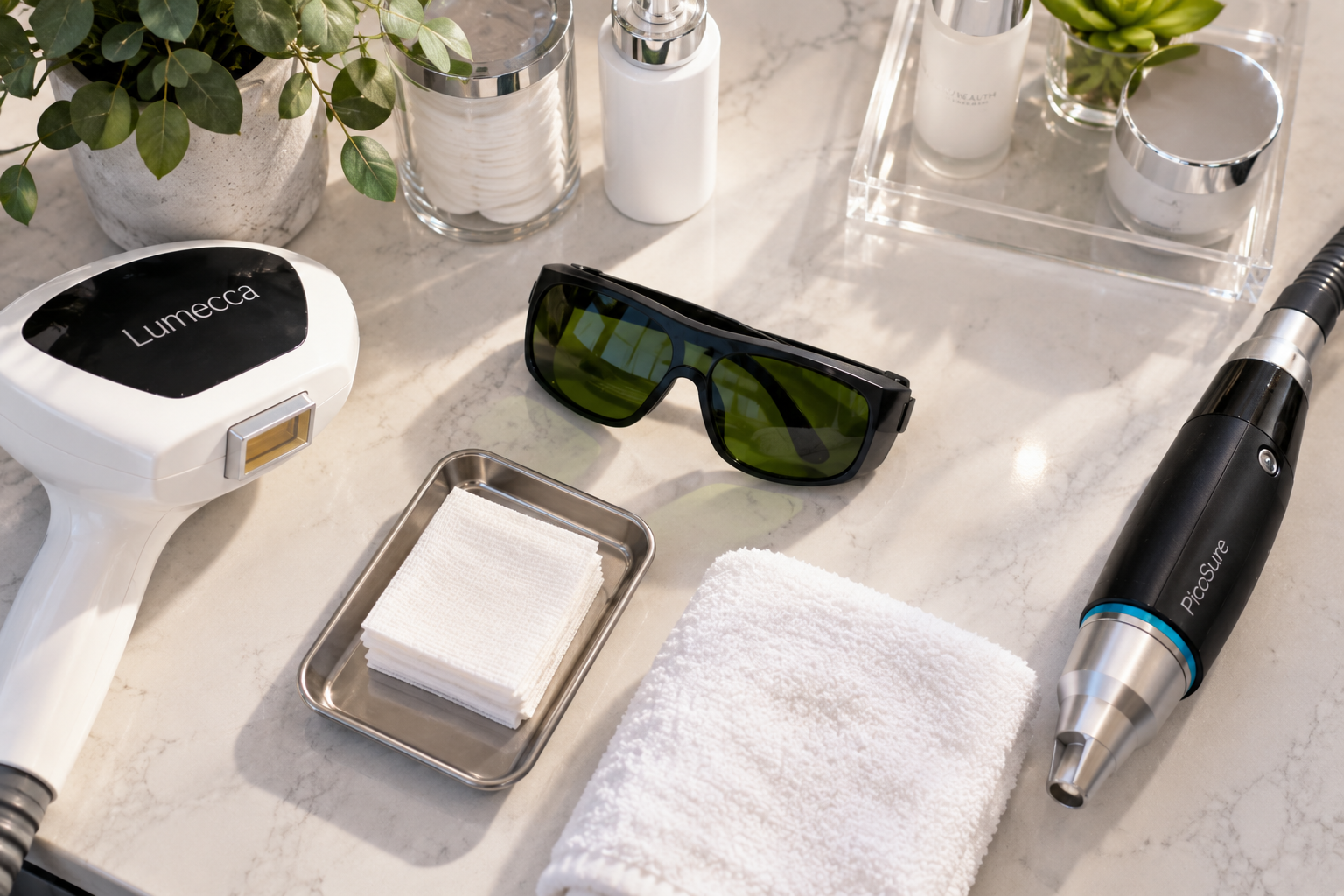
During IPL, patients may notice brief sensations of warmth or snapping as pulses of light are delivered.
Protective eyewear is used during treatment.
Temporary treatment-area reactions may include:
Redness
Warmth
Mild swelling
Sensitivity
Temporary darkening of certain treated pigmented areas
Your provider should explain what you can reasonably expect based on your specific treatment.
What Does PicoSure Feel Like?
PicoSure treatment can also produce brief sensations as laser pulses are delivered.
The experience varies according to the area being treated, treatment parameters, and individual sensitivity.
Temporary redness, swelling, sensitivity, or other treatment-area reactions may occur.
Your provider should explain appropriate aftercare and what symptoms would warrant contacting the practice.
Which Treatment Is Right for Your Pigmentation?
There isn't one universal winner in the IPL vs. PicoSure comparison.
The better question is:
What type of pigmentation or discoloration are we trying to treat?
Your provider should consider:
Skin characteristics → pigmentation type → treatment area → sun exposure → previous treatments → medical history → aesthetic goals.
For one patient, Lumecca IPL may be appropriate.
For another, PicoSure may make more sense.
And for someone else, an entirely different approach may be recommended.
That's why your skin assessment should come before choosing the technology.
How Many IPL or PicoSure Treatments Will You Need?
One of the most common questions patients have about pigmentation treatment is:
“How many sessions will I need?”
There isn't one treatment schedule that works for everyone.
The number and spacing of treatments can depend on several factors, including:
The type of pigmentation
How much discoloration is present
The area being treated
Your skin characteristics
The technology and treatment settings
Previous procedures
Recent sun exposure
How your skin responds
Your overall treatment goals
Someone concerned about a few isolated areas of sun-related pigmentation may have a very different treatment plan from someone with widespread photodamage or several types of discoloration.
When Will You See Results?
Changes after IPL or PicoSure aren't necessarily immediate.
Following an appropriate Lumecca IPL treatment, certain treated pigmented areas may temporarily appear darker before gradually changing as the skin responds.
Changes following PicoSure treatment can also develop over time depending on the treatment performed and the pigmentation being addressed.
Your individual timeline can be affected by:
Pigmentation type
Treatment technology
Treatment parameters
Number of sessions
Treatment area
Skin characteristics
Sun exposure
Individual response
It's also important to understand that treating existing pigmentation doesn't permanently prevent future discoloration.
New pigmentation can develop, and some concerns can recur.
That makes ongoing sun protection and appropriate skincare important parts of a long-term pigmentation plan.
What Is the Downtime After Lumecca IPL?
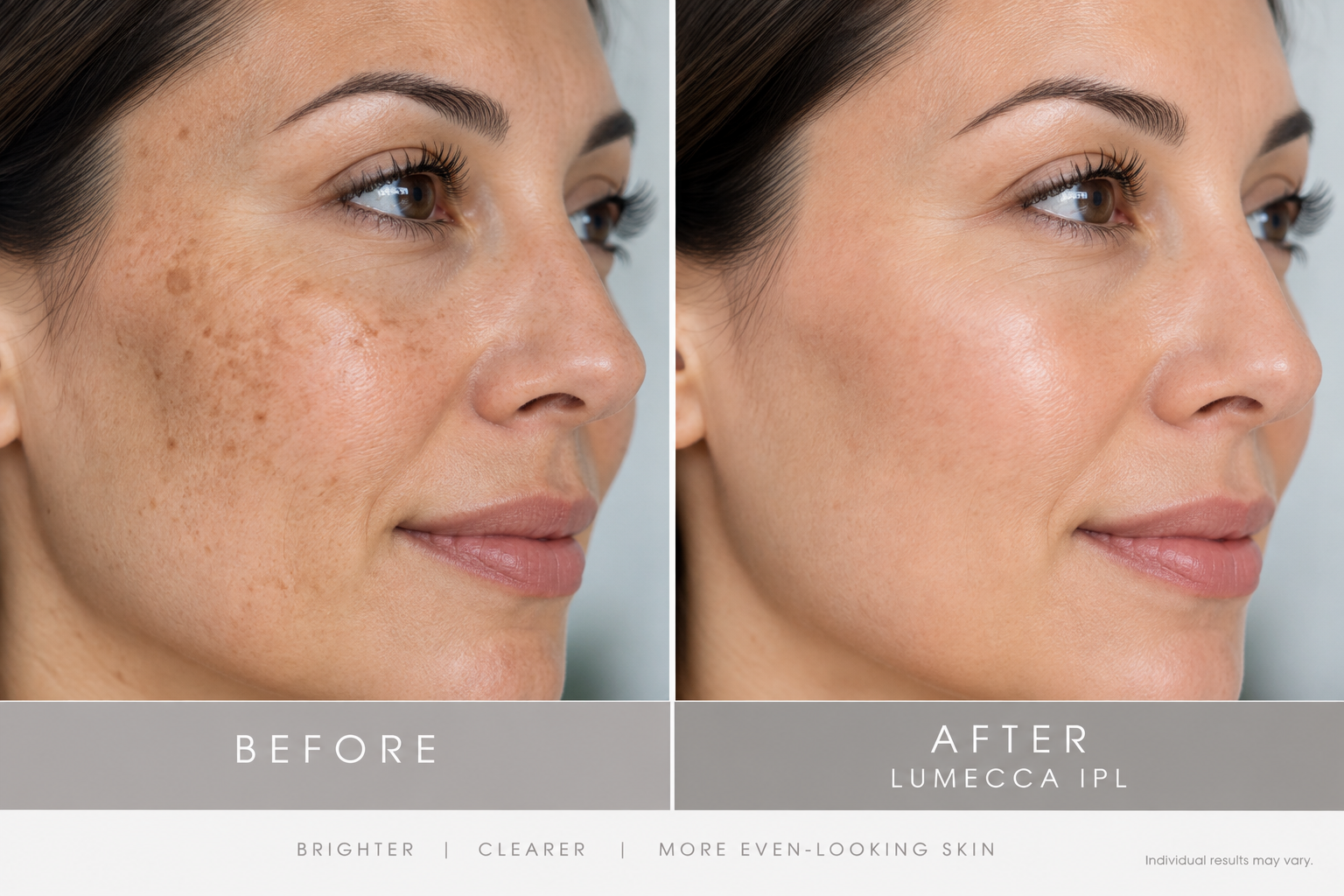
Lumecca IPL is a non-invasive treatment, but that doesn't mean your skin will necessarily look completely unchanged immediately afterward.
Temporary treatment-area reactions can include:
Redness
Warmth
Mild swelling
Sensitivity
Temporary darkening of certain treated pigmented areas
Your individual response depends on your skin, treatment area, and treatment parameters.
Your provider should explain what reactions are expected before you leave your appointment.
One particularly important point is:
Don't pick or aggressively scrub treated pigmentation simply because it temporarily appears darker.
Follow the aftercare instructions provided by your treating professional and allow your skin to recover naturally.
What Is the Downtime After PicoSure?
PicoSure is also non-surgical, but temporary treatment-area reactions may occur.
Depending on the treatment performed, these can include:
Redness
Mild swelling
Warmth
Sensitivity
Temporary changes in the appearance of treated pigmentation
Recovery varies according to treatment parameters, treatment area, skin characteristics, and individual response.
Your provider should explain what to expect and provide appropriate post-treatment instructions.
Why Is Sun Protection So Important After Pigmentation Treatment?
Professional treatment may address existing pigmentation, but your skin is still exposed to ultraviolet radiation afterward.
Continued UV exposure can contribute to additional pigmentation and visible photodamage.
Your provider may therefore give you specific instructions regarding sun exposure and sunscreen use after IPL or laser treatment.
Long-term protection may include:
Using broad-spectrum sunscreen
Reapplying sunscreen as appropriate
Seeking shade
Wearing sun-protective clothing
Wearing a hat when appropriate
Avoiding intentional tanning
Following treatment-specific instructions
Sun protection shouldn't be viewed only as something you do for a few days after treatment.
It's part of maintaining your skin over time.

Who May Be a Candidate for IPL or PicoSure?
Candidacy needs to be determined individually.
Depending on the technology and professional assessment, treatment may be considered for patients with appropriate concerns involving pigmentation, sun damage, uneven-looking tone, or other supported indications.
However, simply having a brown spot doesn't automatically mean IPL or PicoSure is appropriate.
Your provider should consider factors such as:
Your Skin Characteristics
Natural skin pigmentation and individual pigment response can affect treatment selection and settings.
The Type of Pigmentation
Sun spots, post-inflammatory hyperpigmentation, melasma, freckles, and other forms of discoloration don't necessarily behave the same way.
Recent Sun Exposure
Recent tanning or significant UV exposure may affect treatment planning and risk.
Medical History
Certain medical conditions, medications, or previous reactions may affect whether treatment is appropriate.
Previous Treatments
Tell your provider about recent lasers, IPL, chemical peels, injectables, prescription skincare, and other procedures.
A consultation can also help determine whether something that looks like ordinary pigmentation requires a different type of evaluation.
When Should a Dark Spot Be Evaluated Before Cosmetic Treatment?
Not every changing or unusual skin lesion should automatically be treated as cosmetic pigmentation.
If you notice a spot that is:
New
Changing
Irregular
Bleeding
Persistently irritated
Otherwise concerning
appropriate medical evaluation may be needed before an aesthetic procedure is considered.
IPL and PicoSure aren't substitutes for diagnosing suspicious skin lesions.
If a provider believes an area requires medical evaluation, cosmetic treatment shouldn't be the first priority.
Why Skin Tone Matters With Light and Laser Treatments
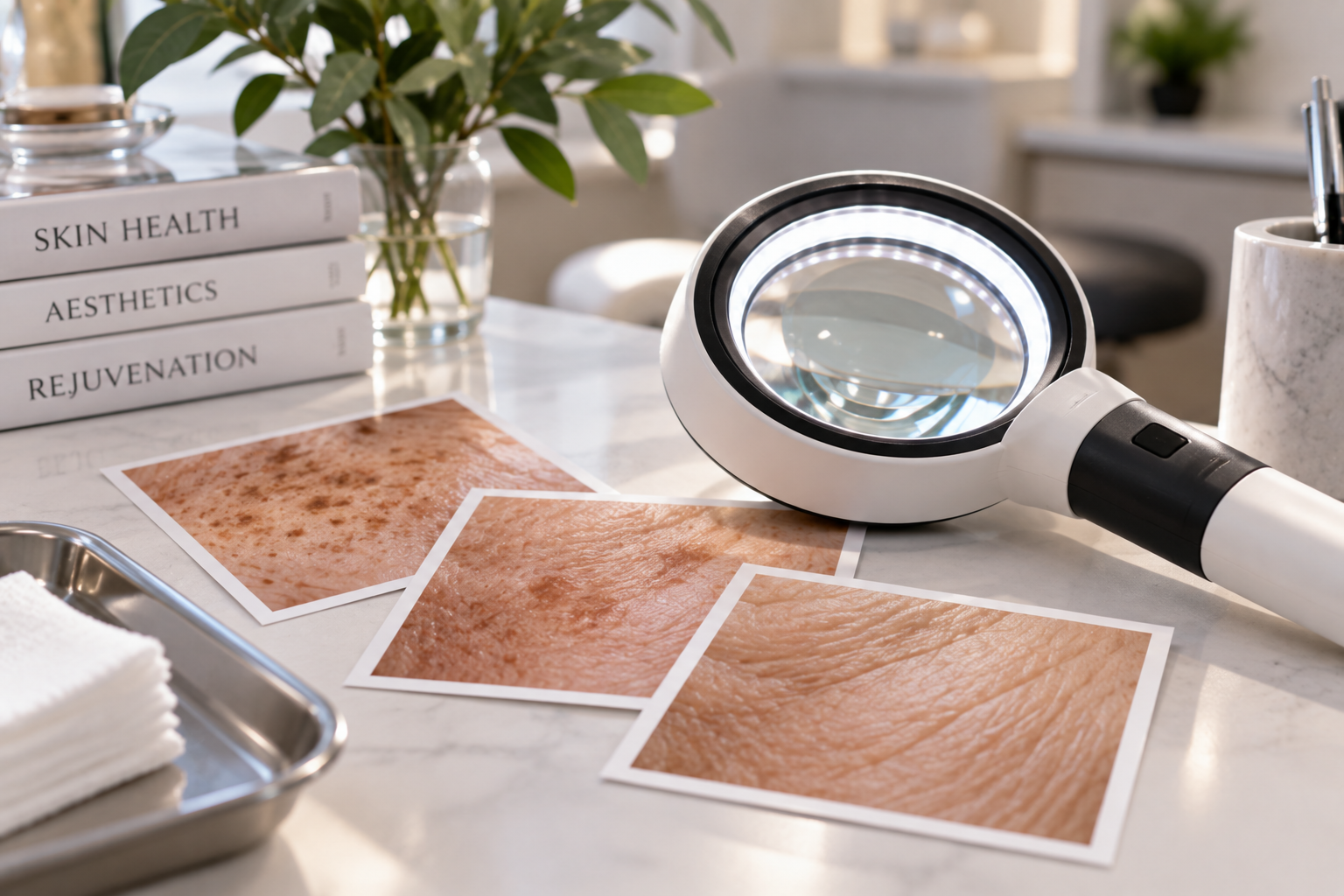
Melanin absorbs light.
That's useful when pigment is the intended target, but it also means a patient's natural skin pigmentation needs to be considered when choosing a technology and treatment parameters.
Inappropriate treatment selection or overly aggressive energy settings can increase the possibility of unwanted pigment changes.
This doesn't mean that everyone with a deeper skin tone is automatically excluded from every energy-based treatment.
Instead, it means the provider needs to consider the:
Technology + target + treatment parameters + skin characteristics + individual risk.
Personalized assessment matters more than using the same treatment protocol for everyone.
IPL vs. PicoSure vs. Chemical Peels
IPL and PicoSure aren't the only professional options that may be discussed when someone is concerned about pigmentation or uneven-looking skin tone.
At ME MEDSPA, SkinCeuticals Micro Peel is another skin-rejuvenation option.
Chemical peels work differently from both IPL and PicoSure.
Rather than using light or laser energy, a chemical solution produces a controlled exfoliating effect.
Depending on the peel and individual patient, chemical exfoliation may be incorporated into a plan addressing concerns such as:
Uneven-looking tone
Dullness
Skin texture
Selected pigmentation concerns
The treatments shouldn't simply be ranked from weakest to strongest.
They're different tools intended to accomplish different things.
What About Professional Skincare?
Not every pigmentation plan needs to begin and end with an energy-based procedure.
Professional skincare may also play a role.
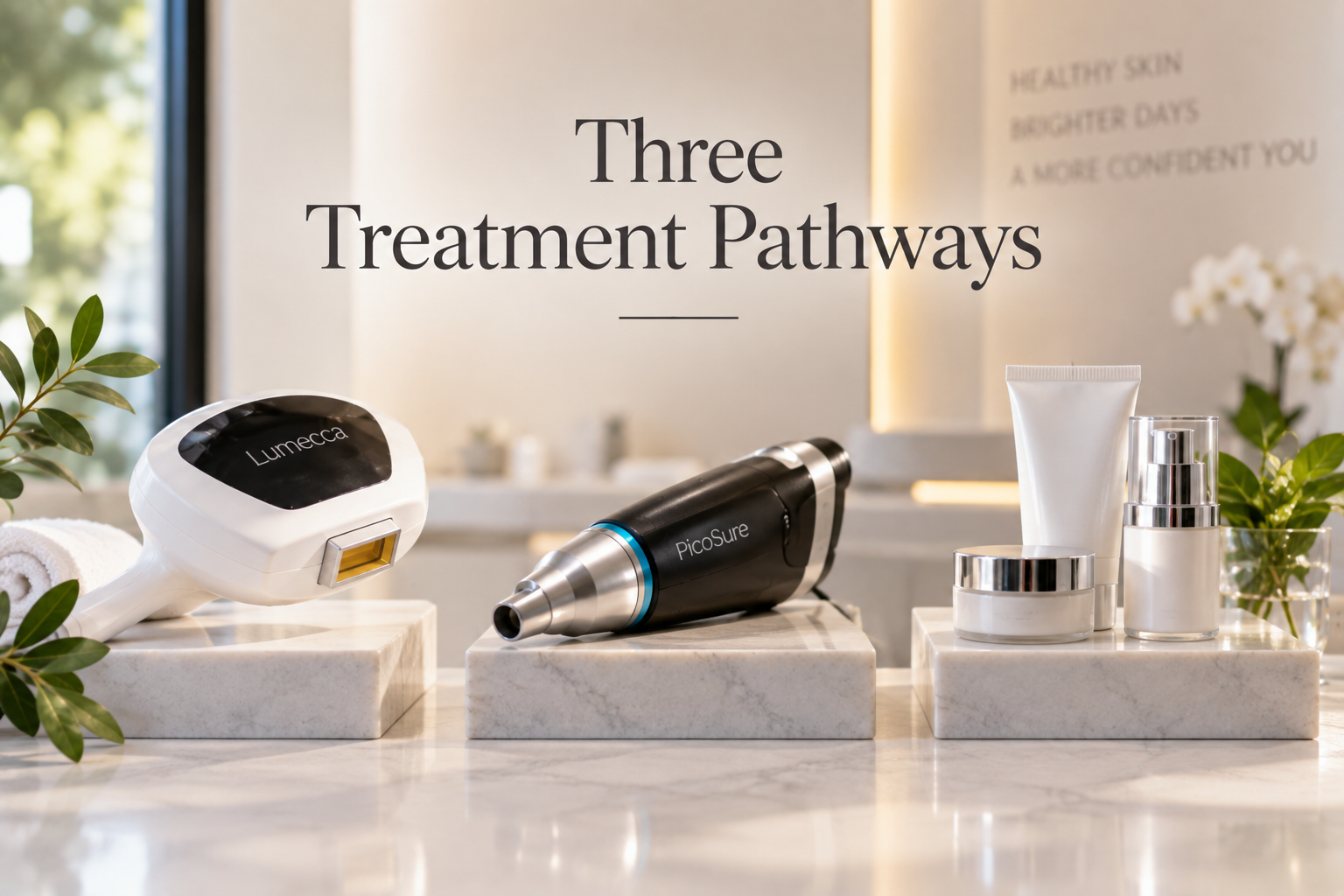
ME MEDSPA offers skincare options including SkinCeuticals and Valmont.
Depending on your skin, your provider may recommend an appropriate at-home routine alongside professional treatment.
This can help support your skin between appointments and make sun protection part of your everyday routine.
However, more isn't always better.
Aggressively combining exfoliating products, active ingredients, and procedures without appropriate guidance can irritate the skin.
For patients prone to post-inflammatory pigmentation, avoiding unnecessary irritation can be particularly important.
Can You Combine IPL and PicoSure?
Potentially—but there should be a specific reason for doing so.
A patient can have more than one concern.
For example, someone might have visible redness along with pigmentation or more than one type of discoloration.
That doesn't mean every available technology should be used during the same appointment.
Depending on the treatment plan, procedures may be:
Combined → alternated → spaced apart → or not combined.
Your provider should make that decision based on treatment targets, skin characteristics, recovery, previous response, and overall goals.
More treatments don't automatically mean better results.
How Should You Prepare for IPL or PicoSure?
Preparation instructions depend on the treatment and your individual circumstances.
Before treatment, make sure your provider knows about:
Your medications
Supplements
Prescription skincare
Active skincare products
Previous IPL or laser procedures
Recent chemical peels
Other recent aesthetic treatments
Recent tanning or significant sun exposure
Current skin irritation, infection, or rash
Follow the specific pre-treatment instructions provided by ME MEDSPA.
And don't discontinue prescribed medication unless the healthcare professional responsible for that medication advises you to do so.
What Should You Do After Treatment?
Your provider's treatment-specific instructions should always take priority.
Depending on the procedure, aftercare may include the following.
Keep Skincare Gentle
Treated skin may temporarily be more sensitive.
Avoid suddenly introducing aggressive new products while your skin is recovering unless your provider recommends them.
Protect Your Skin From the Sun
Sun protection is particularly important when treating pigmentation.
Don't Pick at Treated Areas
Certain pigmented areas may temporarily change appearance after treatment.
Avoid picking, scratching, or aggressively exfoliating them.
Ask Before Restarting Strong Active Ingredients
Retinoids, exfoliating acids, and other active products may need to be temporarily paused.
Ask your provider when they can safely be resumed.
Contact Your Provider About Concerning Reactions
Contact your treating provider if you experience an unexpected, severe, or persistent reaction.
Related Reading
Morpheus8 vs. Traditional Microneedling: Which Treatment Is Right for Your Skin?
How to Tighten Loose Skin Without Surgery: Best Non-Surgical Skin Tightening Treatments in Monterey Park
Best Non-Surgical Treatments for Smile Lines and Aging Skin
Frequently Asked Questions About IPL vs. PicoSure
Is PicoSure better than IPL for dark spots?
Not necessarily. The appropriate treatment depends on the type of pigmentation, your skin characteristics, treatment area, medical history, and other factors. Because IPL and PicoSure use different technologies, an assessment should help determine which approach may be appropriate.
What is the difference between Lumecca IPL and PicoSure?
Lumecca uses intense, pulsed light containing multiple wavelengths of light. PicoSure is a laser technology that delivers energy in extremely short pulses. Their different methods of energy delivery make them useful for different treatment strategies.
Is IPL good for sunspots?
IPL may be considered for appropriately evaluated pigmented lesions and visible photodamage. Your provider should assess the spots before treatment to determine whether IPL is appropriate.
Can PicoSure treat pigmentation?
PicoSure may be considered for appropriate pigmentation concerns depending on the indication, treatment parameters, skin characteristics, and provider assessment. Not every type of pigmentation should be treated the same way.
Can IPL help with redness?
IPL may also be considered for selected vascular concerns and visible redness. Whether it is appropriate depends on the patient's skin and the treatment target.
Can IPL or PicoSure treat melasma?
Melasma requires careful assessment because it can behave differently from isolated sun spots and other pigmentation concerns. Energy-based procedures aren't automatically appropriate for every patient with melasma, so treatment should be individualized.
How many IPL or PicoSure treatments will I need?
There is no universal number. Treatment schedules depend on the concern, technology, treatment parameters, skin characteristics, treatment area, and individual response.
Can dark spots come back after treatment?
Yes. Pigmentation can recur, and new discoloration can develop. Sun exposure and other contributing factors may influence pigmentation, which is why ongoing sun protection and an appropriate skincare plan remain important.
Book Your Consultation at ME MEDSPA in Monterey Park
If you're deciding between Lumecca IPL and PicoSure, you don't need to choose the treatment before your appointment.
The first step is understanding what type of pigmentation or discoloration you're actually seeing.
At ME MEDSPA in Monterey Park, CA, your provider can evaluate your skin, pigmentation concerns, treatment area, recent sun exposure, previous procedures, medical history, and aesthetic goals.
From there, your treatment discussion may include Lumecca IPL, PicoSure Laser + Plasma, SkinCeuticals Micro Peel, professional skincare, or another appropriate approach.
Ready to Get Started?
Book your consultation with ME MEDSPA today
📍 ME MEDSPA — Monterey Park, CA
📞 (626) 545-2018
BOOK YOUR CONSULTATION

