Non-Surgical Skin Tightening Monterey Park | ME MEDSPA
How to Tighten Loose Skin Without Surgery: Best Non-Surgical Skin Tightening Treatments in Monterey Park
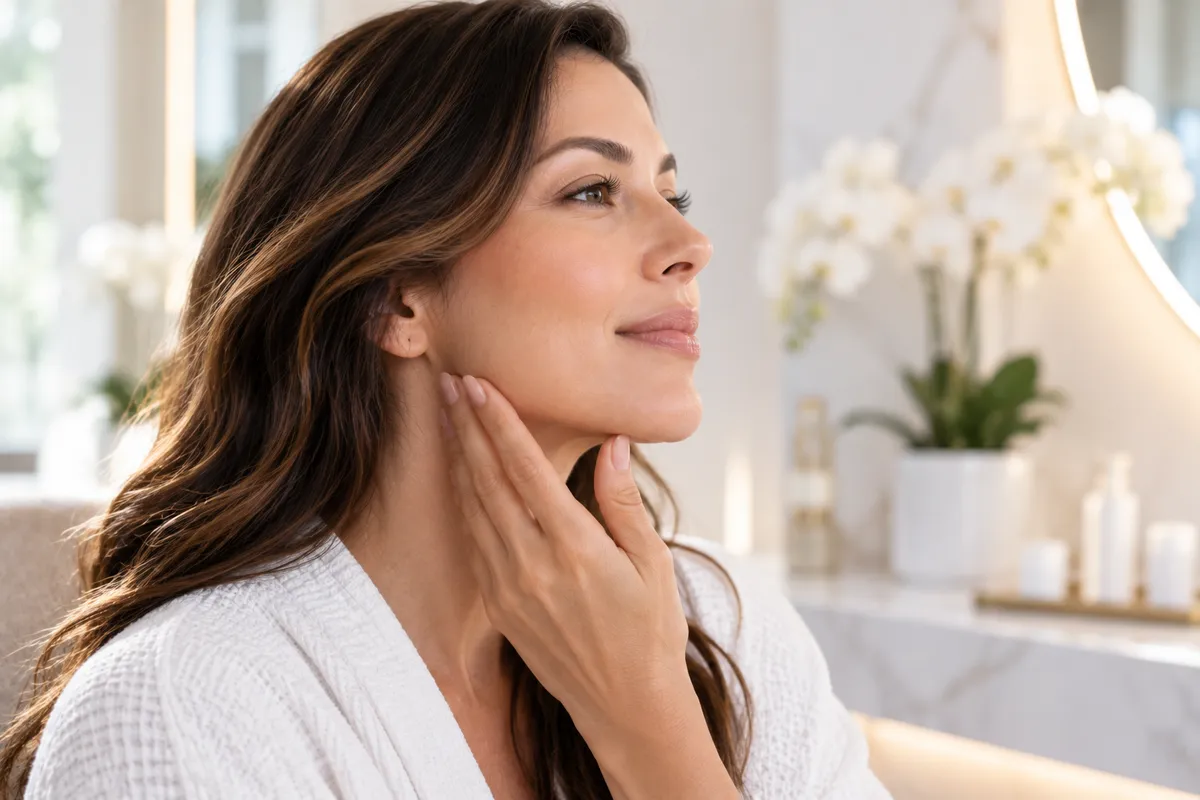
Have you looked in the mirror recently and noticed that your jawline doesn't seem quite as defined as it used to?
Maybe the skin around your cheeks or lower face feels a little less firm, or you've started noticing mild looseness around your neck.
These changes can happen gradually, and they're a normal part of aging. As the skin changes over time, factors such as collagen loss, sun exposure, genetics, and changes beneath the skin can all affect how firm and youthful your face appears.
The good news is that surgery isn't the only option.
Today, several non-surgical treatments can help address concerns involving skin laxity, firmness, texture, and overall skin quality. At Me Medspa in Monterey Park, options may include treatments such as XERF, Morpheus8, and Forma, depending on your skin and individual goals.
But these treatments don't all work in exactly the same way—and the strongest or most popular treatment isn't automatically the best treatment for you.
In this guide, we'll explain why skin becomes loose, what you can do to protect your skin as it ages, and how today's non-surgical skin-tightening treatments can fit into a personalized rejuvenation plan.
Why Does Skin Become Loose as You Age?
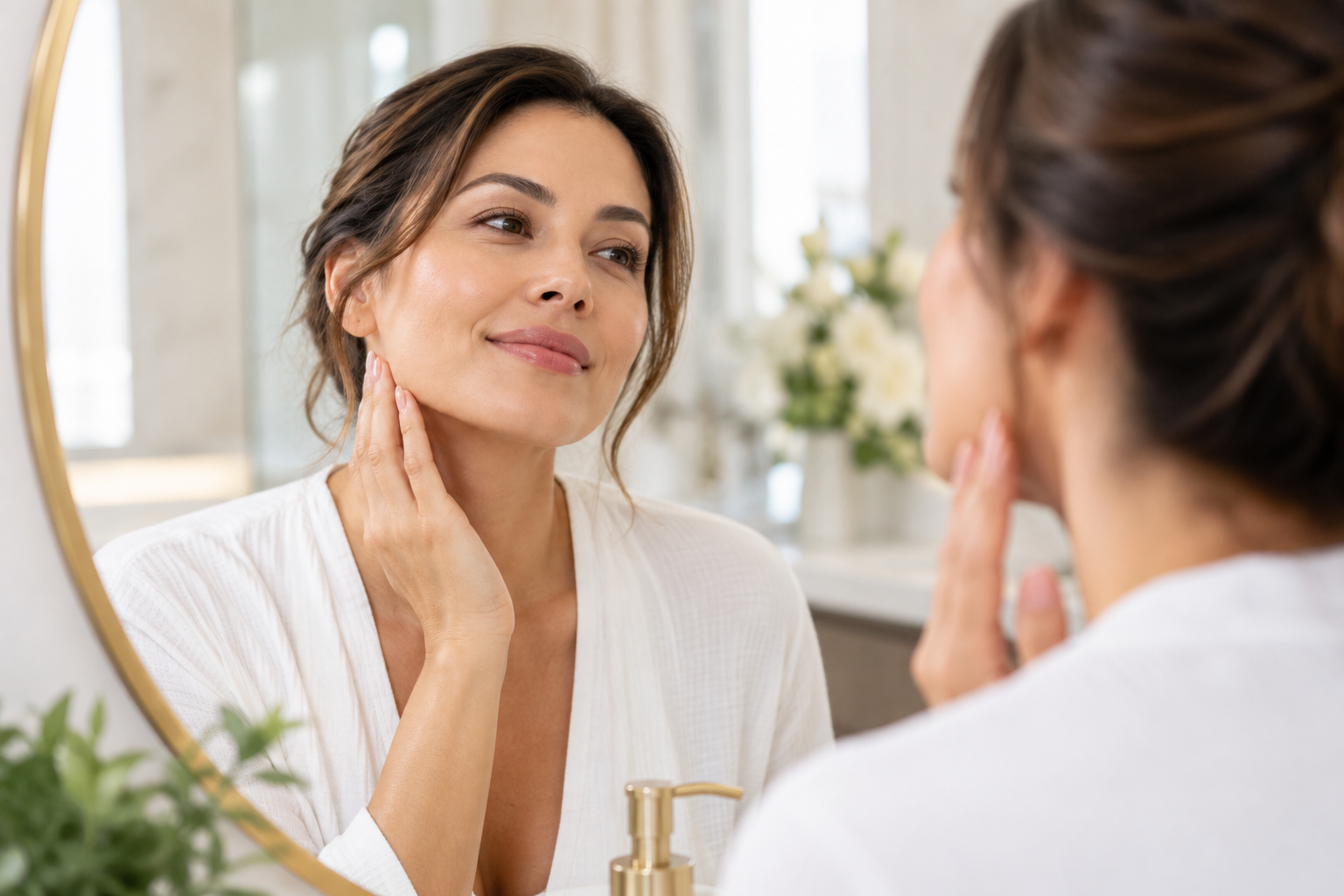
Loose skin doesn't usually appear overnight.
When you're younger, your skin contains structural proteins—including collagen and elastin—that help support firmness and elasticity.
As your skin ages, those supportive structures gradually change.
Over time, you may begin noticing:
Less definition around the jawline
Mild sagging along the lower face
Changes around the cheeks
Looser-looking skin on the neck
Fine lines and wrinkles
Changes in skin texture
Skin that doesn't seem as firm as it once did
But natural aging isn't the only factor.
Collagen Changes
Collagen provides important structural support to the skin.
Changes in collagen production and organization are part of the natural aging process. As this support changes, the skin may gradually become thinner or less firm.
If you've already been learning about collagen and aging, you may also enjoy reading:
Why Skin Ages After 30: Understanding Collagen Loss & How to Slow It Naturally
Sun Exposure
Years of ultraviolet exposure can contribute significantly to premature skin aging.
UV radiation can damage collagen and elastin, contributing to wrinkles, pigmentation changes, and reduced skin elasticity.
This is one reason daily sun protection is important even if you already receive professional aesthetic treatments.
Genetics
Some people naturally develop visible skin laxity earlier than others.
Your facial anatomy, skin characteristics, genetics, and how your face changes with age can all influence when sagging becomes noticeable.
Changes Beneath the Skin
One of the biggest misconceptions about facial aging is that everything you see in the mirror is caused by the skin itself.
It isn't.
Changes in facial fat, deeper tissues, and underlying facial structure can also affect the appearance of your cheeks, jawline, and lower face.
That's why simply asking:
“What's the best treatment for loose skin?”
doesn't always lead to the right answer.
A better question is:
“What's causing my face or skin to look less firm?”
Understanding that difference is an important part of creating natural-looking results.
Is Loose Skin the Same as Volume Loss?
No—and this distinction matters when you're considering aesthetic treatment.
Imagine two people who are both concerned about their lower face.
One may primarily have mild skin laxity.
The other may have changes involving facial volume and deeper structural support.
They may look somewhat similar in photographs, but they don't necessarily need the same treatment.
Skin-tightening treatments are generally designed to address concerns involving the skin and supporting tissue. They don't automatically replace lost facial volume.
Likewise, adding volume isn't necessarily the appropriate solution when the primary concern is skin laxity.
This is why treatment planning should begin with an evaluation rather than choosing a procedure based only on social media photos.
If you've also noticed deeper lines around your mouth, our guide:
Best Non-Surgical Treatments for Smile Lines and Aging Skin
explains why skin quality, laxity, facial volume, and anatomy should all be considered when evaluating facial-aging concerns.
Everyday Habits That Can Make Skin Aging More Noticeable
You can't completely stop your skin from aging.
However, certain habits can accelerate visible skin aging or make changes in texture and firmness more noticeable.
Skipping Sunscreen
UV exposure is an important contributor to premature skin aging.
Daily sun protection can help protect your skin from additional UV-related damage.
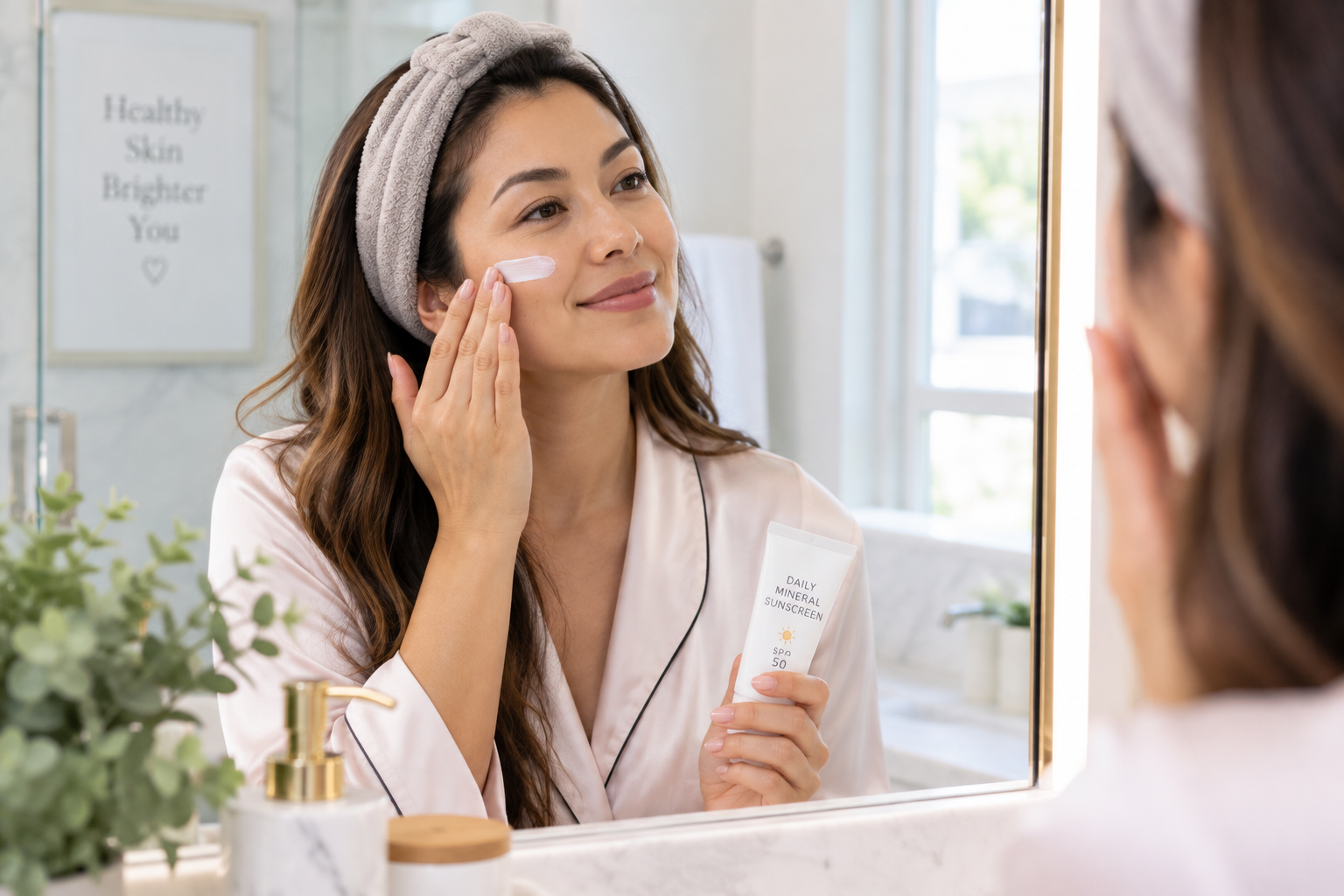
For everyday use, consider a broad-spectrum SPF 30 or higher, along with shade and protective clothing when appropriate.
Smoking
Smoking is associated with premature skin aging and can contribute to changes in skin quality and wrinkle formation.
Avoiding tobacco benefits far more than your appearance—it supports your overall health as well.
Inconsistent Skincare
You don't necessarily need an elaborate skincare routine.
A consistent routine that includes cleansing, moisturizing, sun protection, and appropriate active ingredients can help support healthier-looking skin.
Poor Sleep
Sleep is important for overall health, and consistently poor sleep can affect how refreshed and healthy your skin appears.
Rapid or Significant Weight Changes
Changes in body weight can also affect how skin and underlying tissues appear.
How much this affects an individual varies depending on factors such as age, genetics, skin elasticity, and the amount of weight gained or lost.
Healthy habits won't eliminate established skin laxity, but they can support your skin and complement professional treatments.
Can You Tighten Loose Skin Naturally?
This is one of the most common questions people ask before considering a medspa treatment.
Healthy lifestyle habits can absolutely support your skin.
But it's important to separate supporting healthy skin from promising that a cream, food, supplement, or facial exercise can dramatically tighten established loose skin.
Protect Your Skin From the Sun
If you're trying to preserve your skin's appearance, daily sun protection is one of the most useful habits you can build.
Use sunscreen consistently rather than only when you're spending the day at the beach.
Maintain a Consistent Skincare Routine
Depending on your skin, a routine may include:
Gentle cleansing
Moisturizer
Broad-spectrum sunscreen
Retinoids or retinol when appropriate
Vitamin C or other antioxidants
Other products recommended for your individual skin concerns
Topical skincare can improve aspects of skin quality, but it shouldn't be expected to produce the same changes as an energy-based treatment.
Eat a Balanced Diet
Adequate protein and a varied diet containing fruits and vegetables provide nutrients your body needs for normal tissue function.
Don't Forget the Basics
Hydration, regular physical activity, adequate sleep, avoiding smoking, and protecting your skin from excessive sun exposure all support general health.
However, lifestyle changes can't completely stop natural aging.
That's one reason some patients eventually begin exploring professional skin-rejuvenation treatments.
If you're starting to notice several aging changes at once, you may also want to read:
Best Non-Surgical Treatments for Loose Skin
Once skin laxity becomes noticeable, professional treatments may be considered to address firmness and overall skin quality.
At Me Medspa, several technologies are available.
The important thing to understand is that XERF, Morpheus8, and Forma are not simply three versions of the same treatment.
Each takes a different approach.
XERF
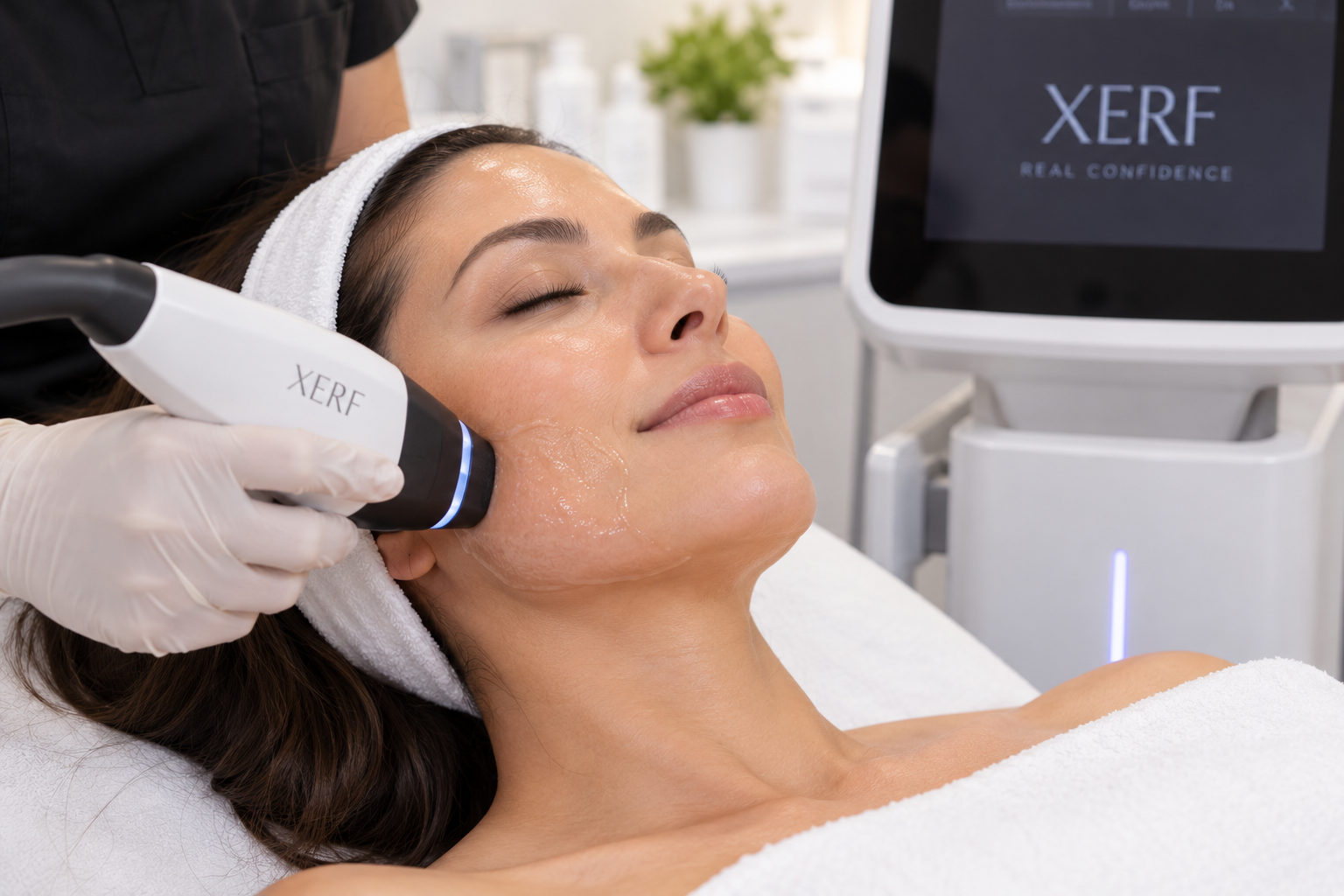
XERF is a non-invasive radiofrequency treatment used for skin tightening and rejuvenation.
Radiofrequency energy is delivered to targeted tissue to produce controlled heating. Depending on the patient and treatment area, XERF may be considered when concerns include mild skin laxity, reduced firmness, or other age-related changes in skin appearance.
One important difference is that XERF is non-invasive.
Unlike RF microneedling, it does not rely on microneedles entering the skin to deliver treatment.
For someone primarily interested in skin tightening who would prefer a non-invasive approach, XERF may therefore be worth discussing during a consultation.
Morpheus8
Morpheus8 approaches skin rejuvenation differently.
It combines microneedling with radiofrequency energy.
Because of this combination, Morpheus8 may be considered when a patient's concerns involve not only firmness but also issues such as skin texture or the appearance of acne scars.
Depending on the treatment plan, Morpheus8 may be used to address concerns such as:
Mild skin laxity
Uneven skin texture
Fine lines
Acne-scar appearance
Overall skin remodeling
Because microneedles enter the skin during treatment, Morpheus8 also has a different treatment experience and recovery profile than a non-invasive RF treatment.
Forma
Forma is another radiofrequency-based option available at Me Medspa.
It uses controlled RF energy and may be incorporated into a treatment plan focused on skin firmness and a smoother, refreshed-looking appearance.
At Me Medspa, you may also see this treatment referred to as Forma Celebrity Glow.
Because XERF and Forma are both non-invasive RF treatments, it's understandable that patients may wonder which one they should choose.
But comparing devices based only on the fact that they both use radiofrequency can be misleading.
The more useful comparison considers:
Your treatment area
Degree of skin laxity
Skin characteristics
Previous treatments
Desired outcome
Comfort and downtime preferences
A consultation can help determine which technology makes sense for your individual concerns.
XERF vs. Morpheus8 vs. Forma: Which Is Better?
There isn't one answer for everyone.
That's because “skin tightening” describes a goal—not a diagnosis.
Someone primarily concerned about mild laxity may have different needs from someone concerned about laxity plus acne scars and uneven texture.
Another person may be looking for a gentler rejuvenation treatment focused on maintaining skin quality.
Instead of asking:
“Which treatment is the strongest?”
consider asking:
“Which treatment best matches what's happening with my skin?”
For example, a provider may discuss:
XERF when a non-invasive radiofrequency approach to skin tightening is appropriate.
Morpheus8 when RF microneedling and skin-texture remodeling are part of the treatment goal.
Forma when a non-invasive RF treatment focused on firmness and a refreshed appearance fits the patient's needs.
None of this means that every patient will be a candidate for all three.
Your skin, anatomy, treatment history, expectations, and medical history should be considered before deciding which treatment is appropriate.
When Should You Consider a Professional Skin-Tightening Treatment?
There isn't a specific age when everyone should begin skin-tightening treatments.
Some people start noticing changes in their 30s, while others may not become concerned about skin laxity until much later.
Instead of focusing only on age, it can be more helpful to look at the changes you're actually seeing.
You may want to schedule a consultation if you've begun noticing:
Less definition around your jawline
Mild sagging along the lower face
Looser-looking skin around the neck
Changes in skin firmness or elasticity
Fine lines combined with changes in texture
Skin that looks less smooth or resilient than before
Changes that aren't adequately addressed by your skincare routine
You also don't need to wait until skin laxity becomes severe before asking about your options.
A consultation can simply help you understand what is causing the changes you're seeing and whether treatment is appropriate yet.
What Happens During a Skin-Tightening Consultation?
One of the most important parts of treatment happens before a device ever touches your skin.
During your consultation at Me Medspa, your provider can evaluate your skin and discuss what you would like to improve.
Your consultation may include reviewing your:
Treatment area
Where are you noticing the change? Your cheeks, jawline, lower face, neck, or another area?
Degree of skin laxity
Mild laxity and substantial excess skin are very different concerns.
Skin quality
Texture, wrinkles, acne scars, sun damage, and other concerns can influence the treatment plan.
Facial anatomy
What appears to be sagging skin may sometimes involve changes in facial volume or deeper structures as well.
Previous treatments
Your provider should know about previous aesthetic procedures and relevant skincare treatments.
Medical history
Medical conditions, medications, pregnancy status, implanted devices, previous procedures, and other factors may affect whether a treatment is appropriate.
Your expectations
Perhaps most importantly, your provider needs to understand what you actually want to change.
The goal isn't simply to choose a machine.
It's to determine whether XERF, Morpheus8, Forma, another treatment, a combination approach, or no treatment at this time best fits your concerns.

What Results Can You Expect from Non-Surgical Skin Tightening?
This is where realistic expectations become especially important.
Non-surgical skin-tightening treatments should not be presented as though they produce the same degree of lifting as surgery.
They work differently.
Depending on the treatment and individual response, the goal may be an improvement in the appearance of firmness, texture, mild laxity, or overall skin quality.
Results can also vary significantly from one patient to another.
Your outcome may be influenced by factors including:
Your starting skin condition
Degree of laxity
Age and skin characteristics
Treatment area
Technology used
Treatment settings
Number of treatments
Previous procedures
Individual healing and biological response
Some changes may also develop gradually rather than immediately.
That's why dramatic promises such as “instant facelift” or guaranteed percentages of improvement can create unrealistic expectations.
Your provider should instead explain what is reasonably achievable for your skin and your treatment plan.
How Many Skin-Tightening Treatments Will You Need?
There isn't one treatment schedule that applies to everyone.
The recommended number and spacing of sessions can depend on the technology being used, the area being treated, your starting condition, your goals, and how your skin responds.
Some treatment plans may involve a series of sessions, while others may use a different schedule.
Maintenance treatments may also be discussed depending on the procedure and your long-term goals.
During your consultation, ask:
How many treatments are being recommended for me, why that schedule is appropriate, and when should I realistically evaluate my results?
Those questions are more useful than relying on someone else's treatment schedule from social media.
Is There Downtime After Skin Tightening?
Downtime depends heavily on the treatment.
This is another reason XERF, Morpheus8, and Forma shouldn't simply be grouped together as if they're identical procedures.
After XERF
Because XERF is non-invasive, there are no microneedle punctures involved in the treatment.
Temporary treatment-area reactions may still occur, including warmth, redness, tenderness, sensitivity, or swelling.
Your provider should explain what to expect based on the area and treatment parameters being used.
After Morpheus8
Morpheus8 involves microneedling combined with radiofrequency energy.
Because the needles penetrate the skin, temporary redness, swelling, sensitivity, pinpoint marks, or other treatment-area reactions can occur during recovery.
Follow the aftercare instructions provided by your treating professional.
After Forma
Forma is also non-invasive.
Temporary warmth or redness may occur following treatment, although individual experiences vary.
Regardless of the treatment, contact your provider if you develop symptoms that concern you or reactions that are more severe or persistent than expected.

Can Skin-Tightening Treatments Be Combined With Other Treatments?
Sometimes.
Facial aging often involves more than one concern.
A patient might have mild laxity along with pigmentation, uneven texture, acne scars, fine lines, or changes in facial volume.
In those situations, your provider may discuss a treatment plan that addresses different concerns separately rather than expecting one procedure to accomplish everything.
For example, ME MEDSPA offers other aesthetic treatments for concerns involving skin rejuvenation, pigmentation, texture, facial volume, and wrinkles.
But combining treatments doesn't automatically mean doing everything at once.
The appropriate sequence, timing, and combination depend on the treatments involved and your individual circumstances.
A personalized plan should have a reason behind each recommendation.
What About Fillers or Injectables for Sagging Skin?
Injectables and skin-tightening treatments serve different purposes.
For example, dermal fillers can be used in appropriate patients to restore or add volume in specific facial areas.
Neuromodulators such as Botox or Dysport are used for certain wrinkles related to muscle activity.
Neither should simply be described as a substitute for skin tightening.
If your appearance is being affected by a combination of skin laxity, volume changes, and dynamic wrinkles, your provider may evaluate each component separately.
This is particularly important if your concern involves the lower face.
Sometimes what a patient describes as “sagging” isn't caused by one thing.
You may also enjoy reading:
Best Non-Surgical Treatments for Smile Lines and Aging Skin
to learn more about how skin quality, facial volume, laxity, and anatomy can contribute to an aging appearance.
Can Non-Surgical Treatments Replace a Facelift?
Not always.
This is an important distinction for anyone researching treatments online.
Non-surgical technologies can be useful for appropriately selected patients with certain concerns involving firmness, texture, and mild laxity.
But they don't surgically remove excess skin or reposition tissue in the same way as a facelift.
If someone has more substantial skin laxity, a non-surgical treatment may not be capable of producing the degree of change they want.
A responsible consultation should include that conversation.
Sometimes the right recommendation is a medspa treatment.
Sometimes it's adjusting expectations.
And sometimes it may mean discussing evaluation by an appropriately qualified surgical specialist if the desired outcome is beyond what non-surgical treatment can reasonably provide.
Non-Surgical Skin Tightening in Monterey Park, CA
If you're noticing changes in your jawline, lower face, neck, or overall skin firmness, you don't have to choose a treatment before scheduling your appointment.
At Me Medspa in Monterey Park, California, the first step is determining what is contributing to the change you're seeing.
Depending on your concerns and candidacy, your personalized treatment discussion may include options such as:
XERF — non-invasive radiofrequency skin tightening and rejuvenation.
Morpheus8 — radiofrequency microneedling for concerns involving skin texture, remodeling, and mild laxity.
Forma Celebrity Glow — non-invasive radiofrequency treatment focused on firmness and a refreshed-looking appearance.
Other aesthetic treatments may also be discussed when concerns such as pigmentation, facial volume, wrinkles, or overall skin quality are part of the picture.
ME MEDSPA serves patients in Monterey Park and surrounding San Gabriel Valley communities, including Alhambra, San Gabriel, Rosemead, and nearby areas.
The goal isn't to recommend the same procedure to everyone.
It's to create a treatment plan based on your skin, anatomy, concerns, and realistic goals.
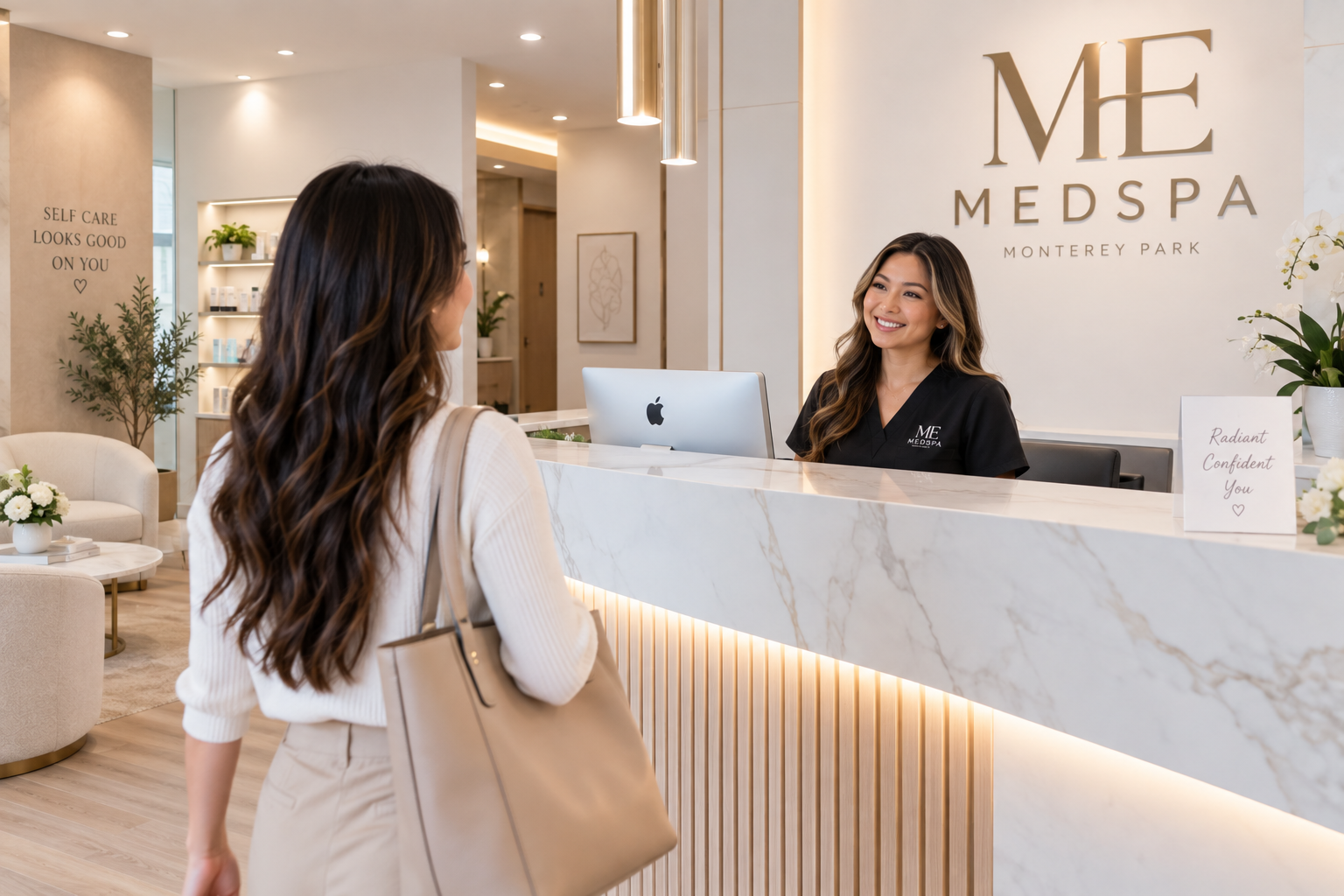
Which Skin-Tightening Treatment Is Right for You?
You don't need to know the answer before your consultation.
If your primary concern is mild skin laxity and you're interested in a non-invasive radiofrequency approach, your provider may discuss XERF.
If you're concerned about texture or acne-scar appearance in addition to firmness, Morpheus8 may be worth considering.
If you're looking for a non-invasive RF treatment focused on firmness and a refreshed appearance, Forma may be discussed.
But those are starting points—not treatment prescriptions.
The best choice depends on what your provider sees during your assessment and what you're hoping to accomplish.
That's why personalized treatment planning matters.
Related Reading
Why Skin Ages After 30: Understanding Collagen Loss & How to Slow It Naturally
Signs of Aging Skin: When Should You Start Anti-Aging Treatments?
Best Non-Surgical Treatments for Smile Lines and Aging Skin
Frequently Asked Questions About Non-Surgical Skin Tightening
What is the best non-surgical treatment for loose skin?
There isn't one treatment that's best for everyone. The appropriate option depends on the degree and location of laxity, skin quality, treatment goals, medical history, and other factors. XERF, Morpheus8, and Forma use different approaches, so a consultation can help determine which option is appropriate.
Is XERF the same as Morpheus8?
No. XERF is a non-invasive radiofrequency treatment, while Morpheus8 combines microneedling with radiofrequency energy. Because Morpheus8 uses microneedles, the procedures also differ in treatment experience and recovery.
Is XERF better than Forma?
Not necessarily. Both use radiofrequency technology, but the appropriate treatment depends on your skin, treatment area, concerns, goals, and the treatment plan recommended by your provider.
Can non-surgical treatments tighten my jawline?
Non-surgical skin-tightening treatments may be considered for appropriate patients concerned about mild laxity around the lower face or jawline. However, jawline appearance can also be influenced by facial volume, anatomy, fat distribution, and other factors.
How long do skin-tightening results last?
There isn't one duration that applies to every patient or technology. Results vary according to the treatment, treatment plan, skin characteristics, aging process, lifestyle, and individual response. Maintenance may be recommended depending on your treatment plan.
Is non-surgical skin tightening painful?
Comfort varies by treatment, settings, treatment area, and individual sensitivity. RF treatments generally involve a warming sensation, while RF microneedling has a different treatment experience because microneedles enter the skin. Your provider can explain comfort measures for the specific procedure being considered.
Is there downtime after XERF?
XERF is non-invasive, but temporary redness, warmth, sensitivity, tenderness, or swelling may occur. Your provider should give you treatment-specific aftercare instructions.
At what age should I start skin-tightening treatments?
There is no universal age. Treatment decisions should be based on your actual skin concerns, degree of laxity, goals, medical history, and candidacy rather than age alone.
Book Your Consultation
If you're noticing loose skin, reduced firmness, or changes around your jawline, lower face, or neck, a personalized consultation can help you understand which treatment options may be appropriate for you.
At ME MEDSPA in Monterey Park, CA, your provider will evaluate your skin, treatment area, medical history, previous procedures, and aesthetic goals before recommending a treatment plan.
Depending on your individual concerns, your options may include XERF, Morpheus8, Forma, or another approach designed around your needs.

