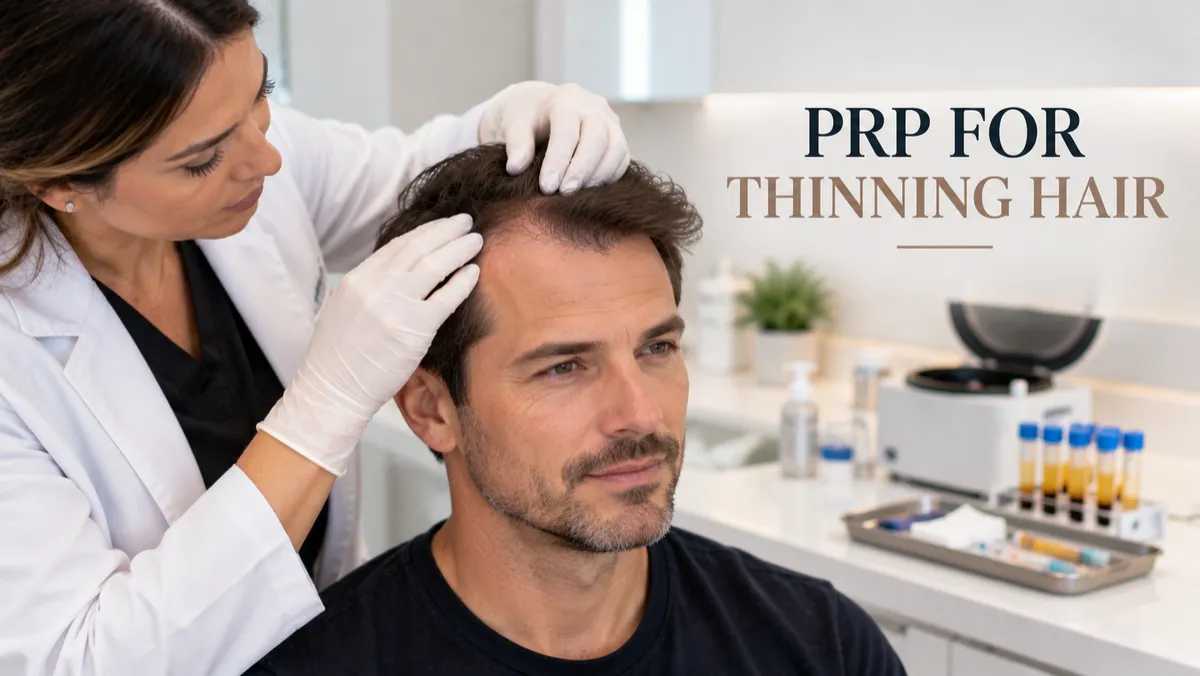
PRP Hair Treatment in Monterey Park, CA | ME MEDSPA
PRP for Hairline Thinning: How Does PRP Hair Treatment Work?
Noticing that your hairline looks thinner, your part appears wider, or your hair seems less dense than it used to can be frustrating. But hair thinning has many possible causes, which means the right treatment starts with understanding what may be contributing to the change.
At ME MEDSPA in Monterey Park, CA, PRP is offered as part of its rejuvenation services, including treatment for the hairline. PRP uses components obtained from the patient's own blood and is used in aesthetic medicine as a regenerative treatment approach.
But PRP isn't a guaranteed solution for every type of hair loss. Here's what patients should understand before considering treatment.
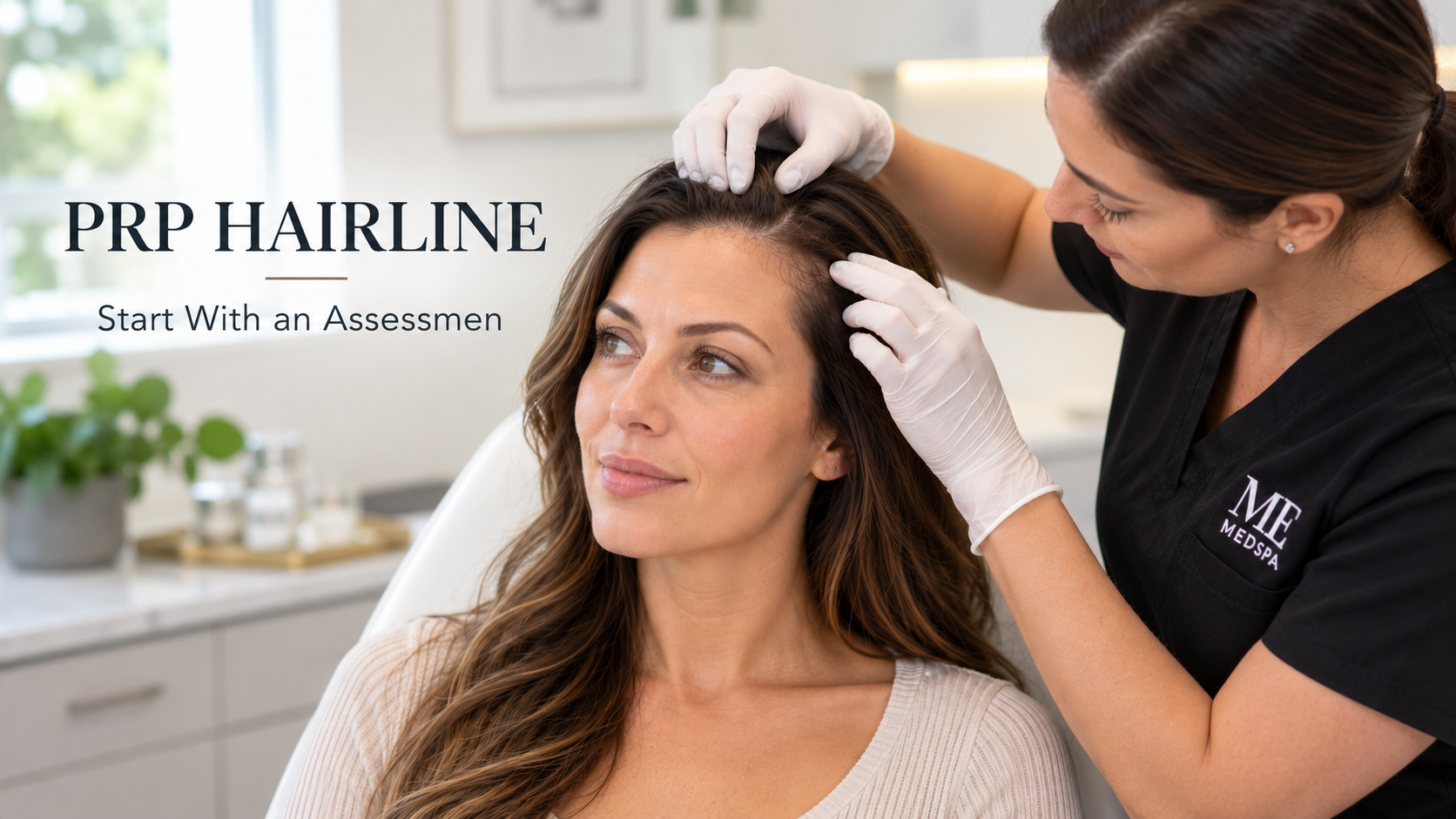
What Is PRP?
PRP stands for platelet-rich plasma.
The process starts with a small amount of the patient's own blood. That blood is processed to separate and concentrate a platelet-rich portion, which is then used for the planned treatment.
Platelets are best known for their role in blood clotting, but they also contain signaling proteins and growth factors involved in normal tissue repair processes.
For hair-related treatment, PRP is administered into selected areas of the scalp rather than applied like a shampoo, serum, or topical hair product.
How Does PRP Hair Treatment Work?
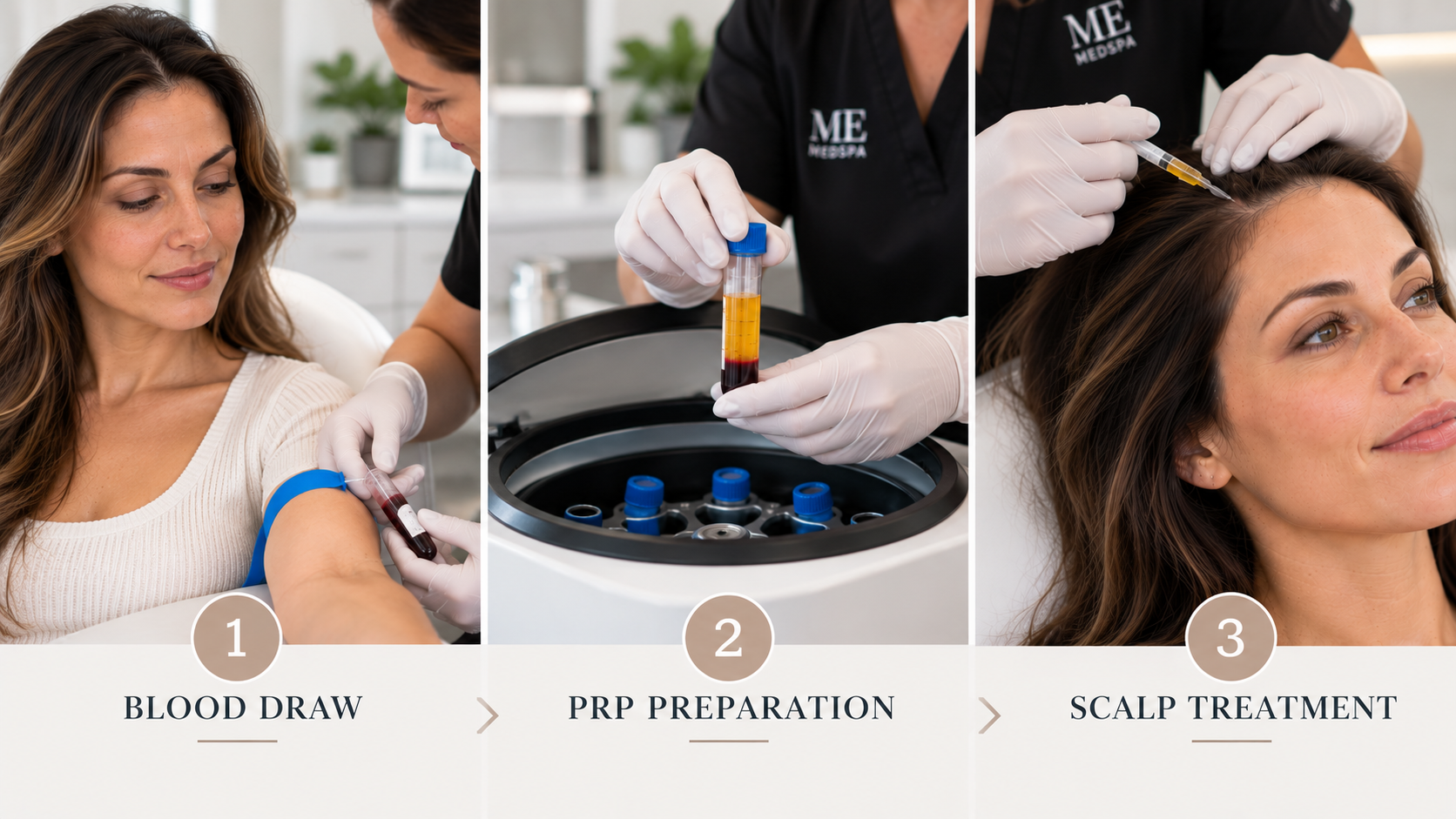
A typical PRP hair treatment involves three basic stages:
Blood Draw → PRP Preparation → Scalp Treatment
After blood is collected, it is processed—commonly using a centrifuge—to separate the components needed for treatment. The prepared PRP is then administered to targeted areas of the scalp according to the treatment plan.
The goal is to use the patient's own platelet-rich plasma in areas affected by appropriate forms of hair thinning.
PRP does not create entirely new hair follicles, and results depend heavily on why the patient is losing hair and whether suitable follicles remain in the treatment area.
What Kind of Hair Thinning May Be Evaluated for PRP?
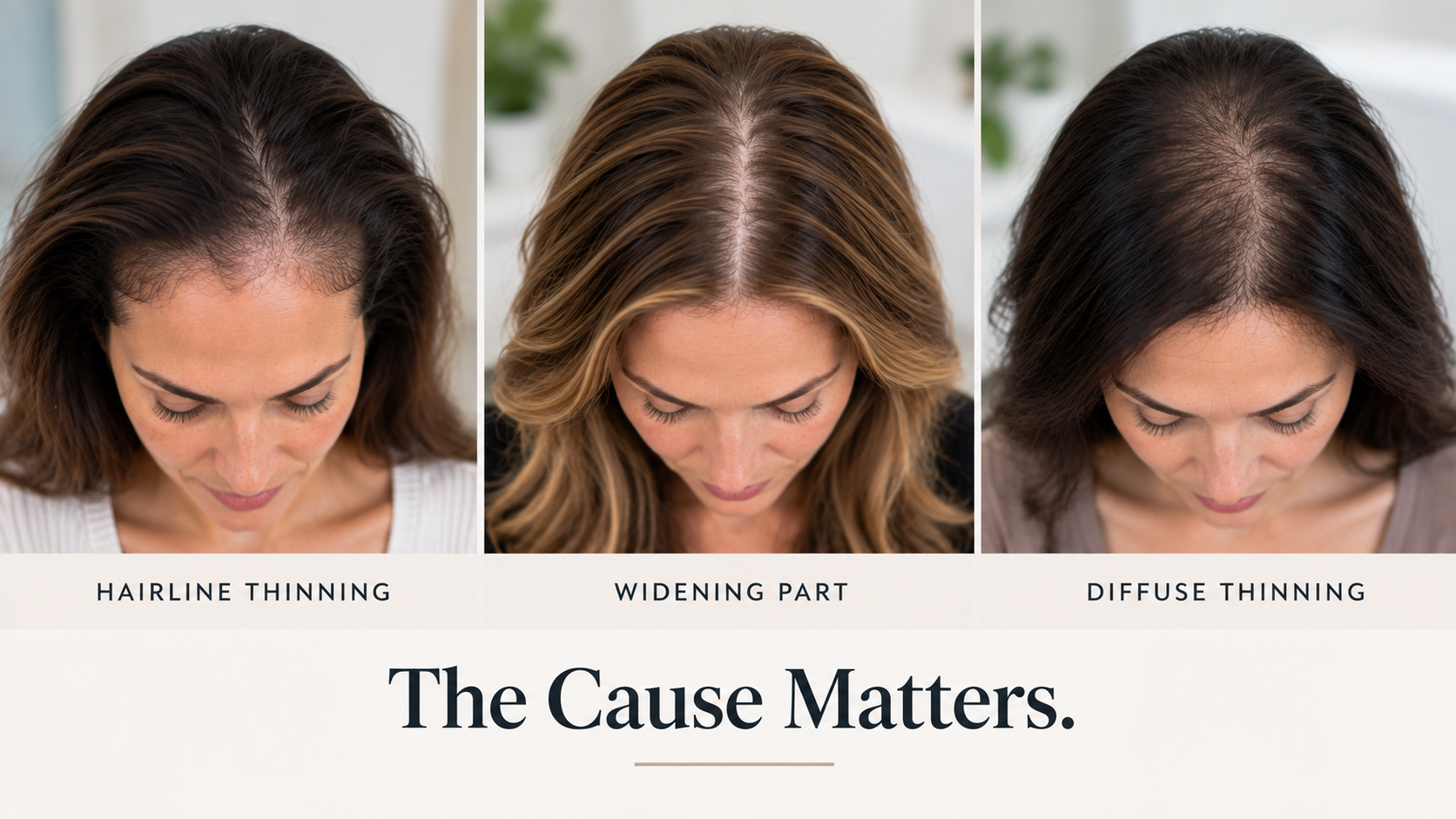
Hair loss isn't one condition.
Some people gradually notice reduced density around the hairline or widening of the part, while others experience sudden shedding, patchy loss, scalp symptoms, or more advanced hair loss.
This distinction matters because PRP isn't appropriate for every situation.
A consultation should consider factors such as:
Pattern and location of thinning
How long the change has been occurring
Whether shedding is gradual or sudden
Family history
Scalp condition
Current medications
Previous hair treatments
General medical history
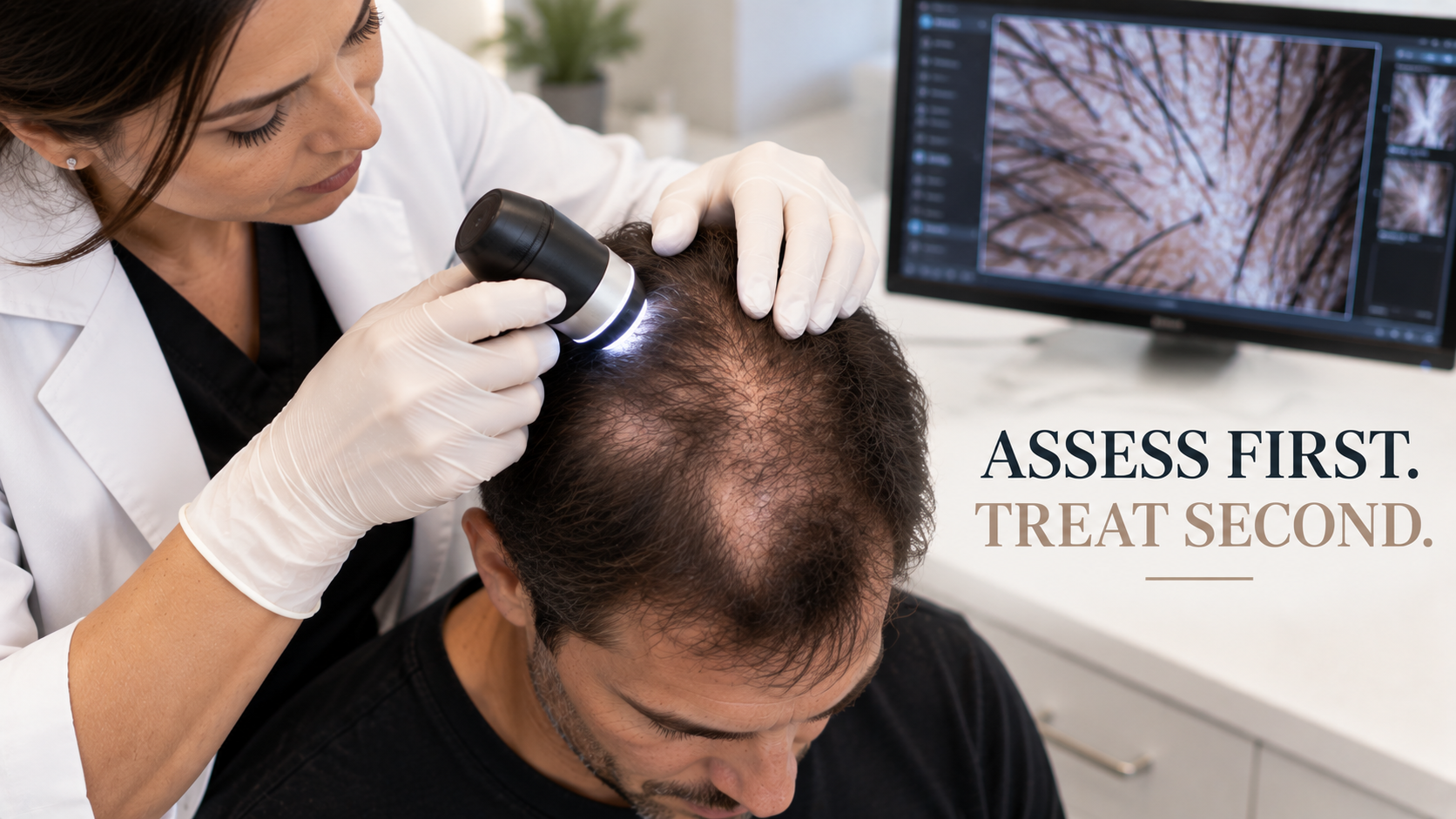
Sudden, unexplained, patchy, or rapidly progressing hair loss may warrant evaluation by an appropriate medical professional to investigate the underlying cause rather than immediately treating the area cosmetically.
Why Does the Cause of Hair Loss Matter?
Hair can become thinner for many reasons, including hereditary hair-loss patterns, hormonal changes, nutritional factors, certain medications, illness, physical or emotional stress, scalp disorders, and other medical conditions.
These causes don't all respond to the same treatment.
That's why the question shouldn't simply be:
“Can PRP grow my hair back?”
A better question is:
“What is causing my hair thinning, and is PRP appropriate for that type of hair loss?”
PRP should be considered as part of an individualized treatment plan rather than a universal solution.
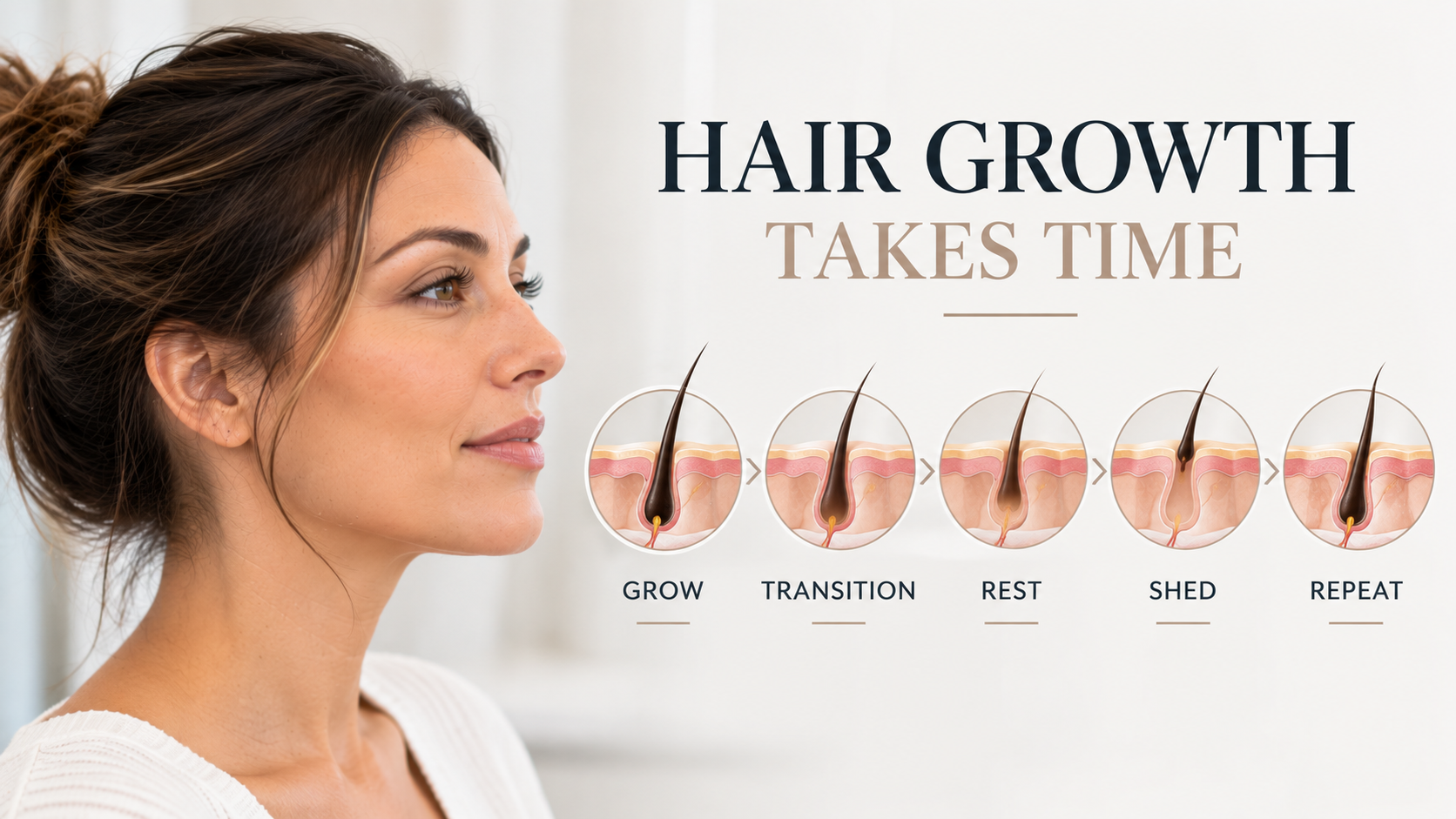
What Is the Hair-Growth Cycle?
Hair doesn't grow continuously at exactly the same rate.
Individual follicles move through different phases that include active growth, transition, rest, and shedding. This is one reason meaningful changes in hair density cannot realistically be judged immediately after a PRP appointment.
Hair changes happen gradually.
Patients considering PRP should therefore expect their progress to be assessed over time rather than looking for dramatic new growth within a few days.
What Happens During PRP Hairline Treatment?
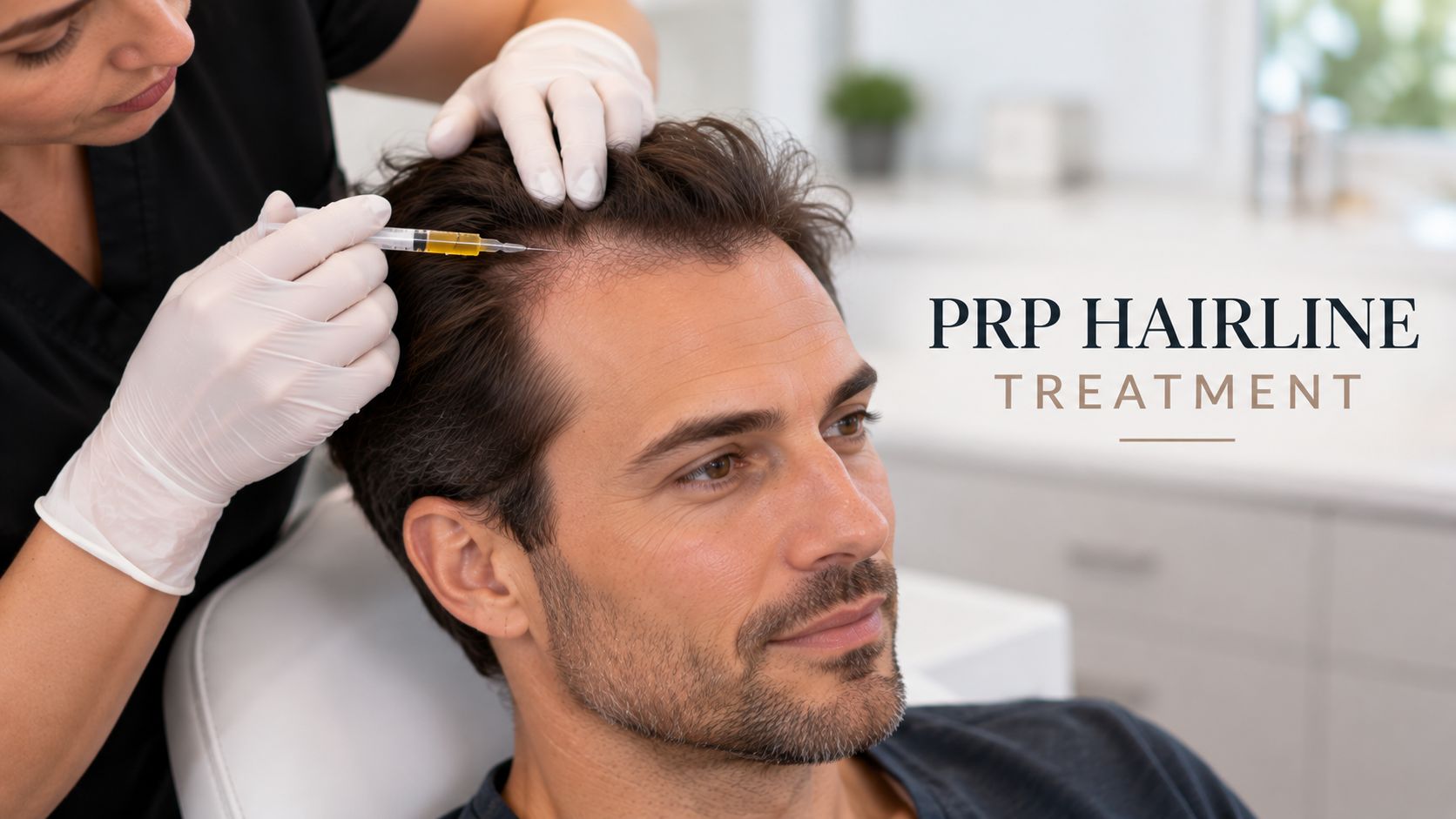
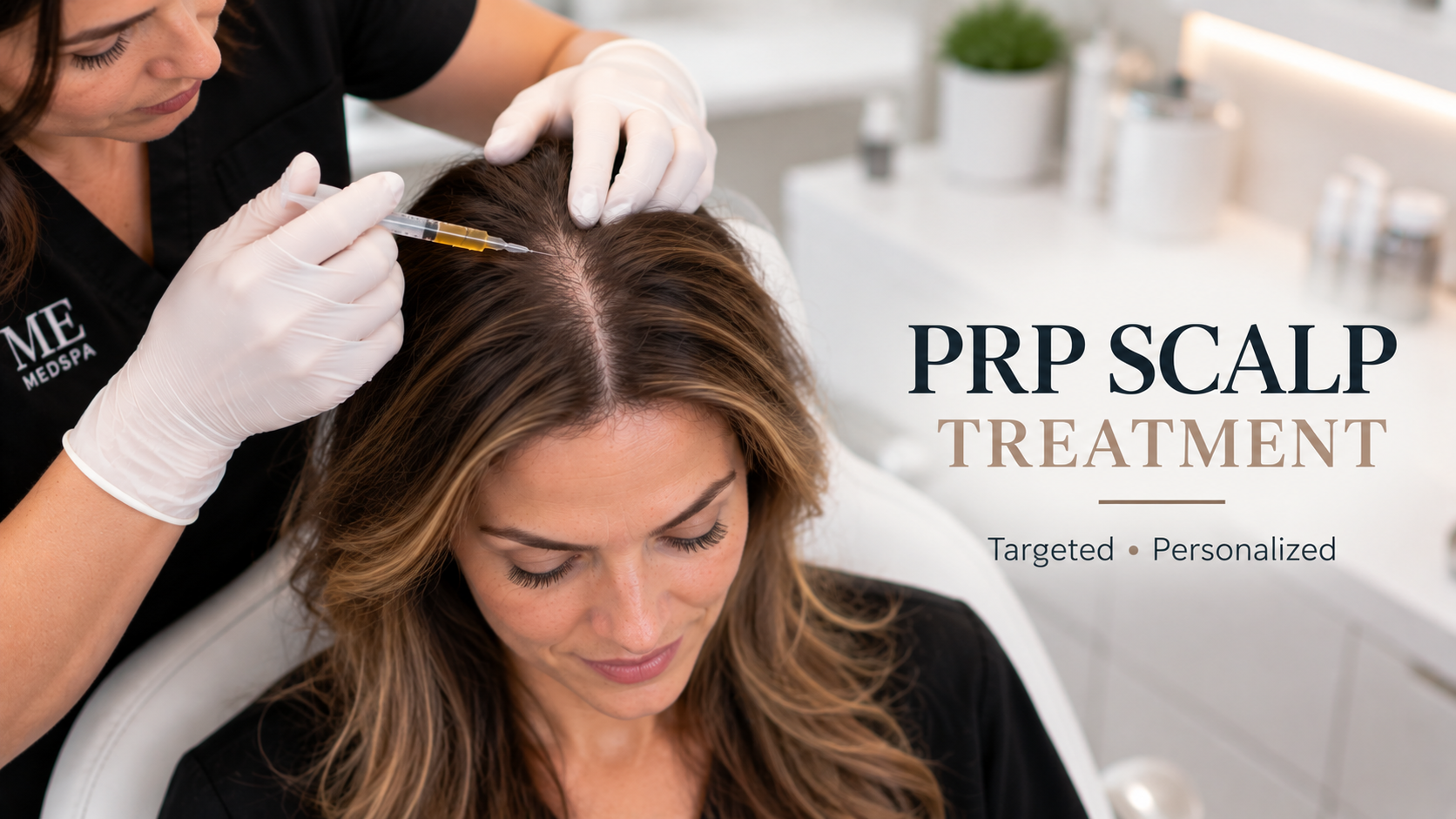
After an assessment, blood is collected and processed to prepare the platelet-rich plasma.
The provider then treats selected areas of the scalp or hairline according to the patient's pattern of thinning and treatment plan.
Because the procedure involves both blood collection and injections into the scalp, patients should understand that PRP hair treatment is different from a relaxing salon or topical scalp treatment.
Temporary tenderness or other treatment-site reactions may occur afterward.
PRP Is Not the Same as a Hair Transplant
This is an important distinction.
A hair transplant is a surgical procedure that relocates hair follicles from donor areas to areas experiencing hair loss.
PRP does not transplant follicles.
Instead, it uses platelet-rich plasma prepared from the patient's blood as a non-surgical treatment approach for appropriate hair-thinning concerns.
Someone with significant hair loss or areas where follicles are no longer viable may have very different treatment options from someone experiencing earlier-stage thinning.
Can PRP Completely Restore a Receding Hairline?
Patients should be careful with dramatic promises.
PRP shouldn't be marketed as a treatment that will automatically rebuild every receding hairline, restore a person's teenage hairline, or permanently cure hair loss.
Results vary according to factors such as the cause and extent of hair loss, follicle condition, age, individual response, treatment protocol, and other health considerations.
For appropriate patients, the goal is a realistic improvement in hair and scalp appearance, not guaranteed complete restoration.
Why Consider PRP Hairline Treatment at ME MEDSPA?
ME MEDSPA already uses PRP within its rejuvenation services, and Hairline is specifically listed among its PRP treatment options.
This makes PRP hairline treatment distinctly different from many of the facial concerns we've discussed in other ME MEDSPA articles. Instead of targeting wrinkles, pigmentation, facial volume, skin hydration, or laxity, this treatment focuses on an entirely different concern: appropriate cases of thinning hair around the scalp and hairline.
The important first step is determining whether PRP actually fits the patient's pattern of hair thinning.
What Does PRP Hair Treatment Feel Like?
PRP hair treatment involves both a blood draw and injections into selected areas of the scalp, so some discomfort is possible.
During scalp treatment, patients may notice brief pinching, pressure, tenderness, or sensitivity. The experience varies depending on the treatment area, individual sensitivity, and technique used.
Because PRP is an injectable treatment, it should not be compared to a painless topical hair serum or salon scalp treatment.
Is There Downtime After PRP Hair Treatment?
PRP hair treatment is non-surgical, but that doesn't mean there can never be temporary reactions.
Depending on the individual and treatment technique, patients may experience scalp tenderness, redness, swelling, sensitivity, bruising, or mild discomfort around injection sites.
Your provider should give you specific instructions about washing your hair, using hair products, exercise, sun or heat exposure, and other activities following treatment.
Always follow the aftercare instructions provided for your individual procedure.
How Many PRP Hair Treatments Are Needed?
There isn't one treatment schedule appropriate for everyone.
PRP hair treatment may involve an initial series of appointments followed by reassessment or maintenance treatments, depending on the patient's response and treatment plan.
The appropriate schedule can be influenced by:
Pattern and extent of thinning
Underlying reason for hair loss
Baseline hair density
Treatment response
Individual health factors
Provider's protocol
More sessions don't automatically mean better results. Progress should be evaluated before deciding on additional treatment.
When Might You Notice Changes?
Hair growth is slow, so PRP should not be judged immediately after treatment.
Changes in shedding, hair appearance, density, or thickness—when they occur—may develop gradually. The timing and degree of improvement vary considerably between patients.
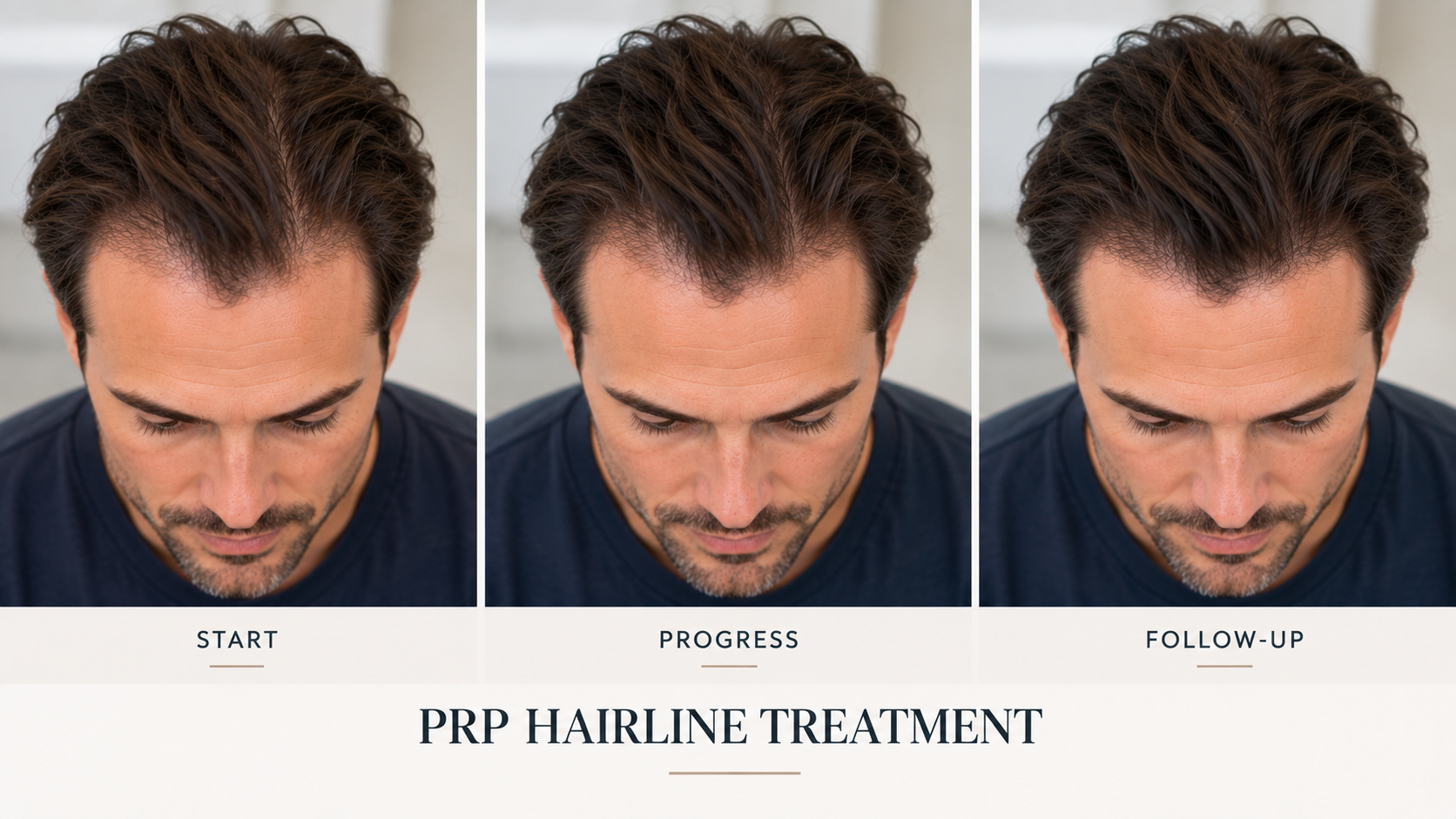
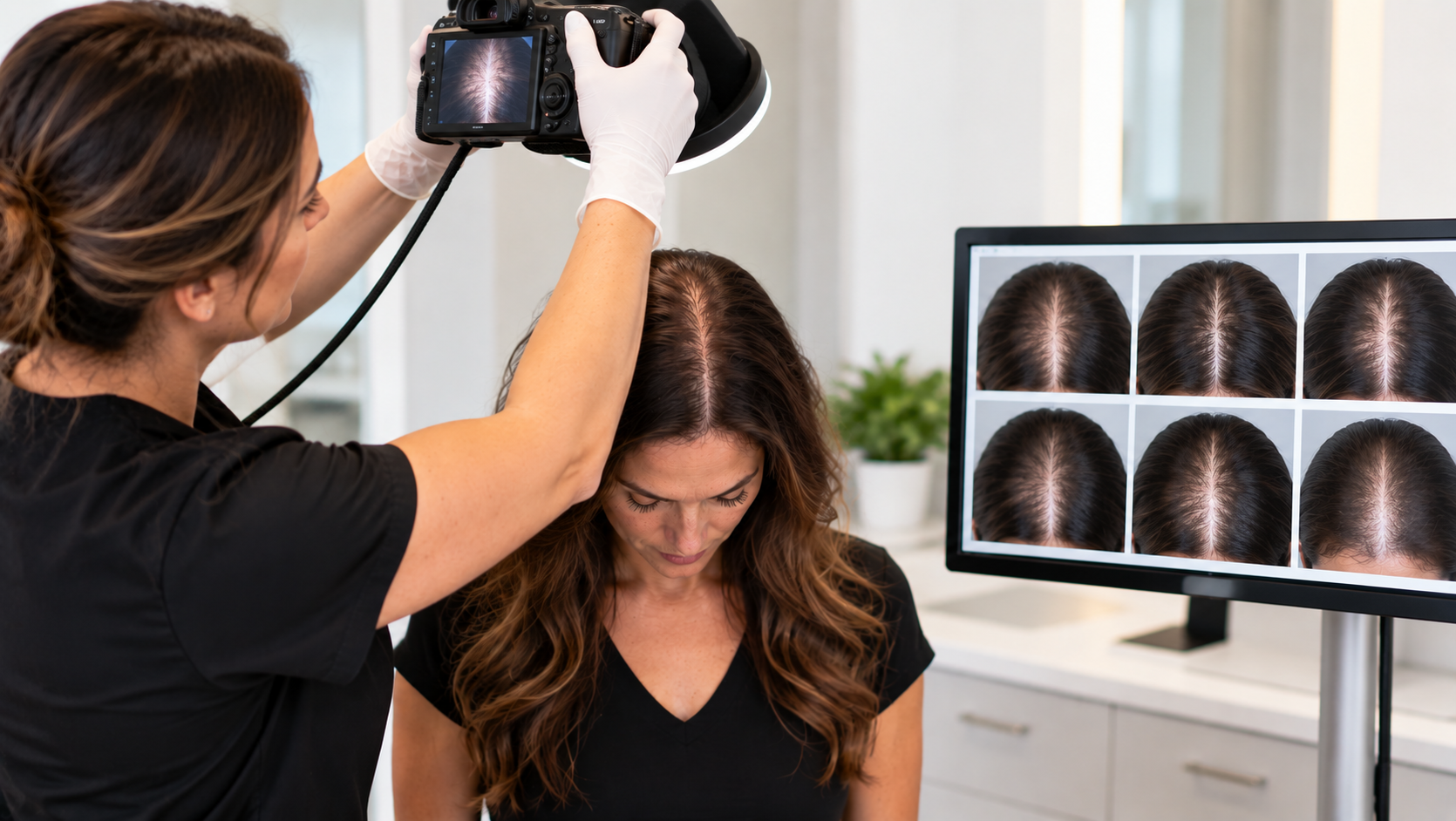
This is why standardized photographs can be useful. Using the same lighting, hairstyle, camera angle, hair length, and positioning creates a more reliable way to evaluate progress than relying on memory alone.
PRP should not be advertised as producing dramatic hair growth overnight.
Who May Be a Candidate for PRP Hair Treatment?
PRP may be considered for certain adults experiencing appropriate forms of hair thinning, but candidacy should be determined individually.
A consultation should consider your pattern of hair loss, scalp health, medical history, medications, previous treatments, and overall health.
Tell your provider about medical conditions, medications and supplements, bleeding or clotting concerns, scalp infections or irritation, previous hair-restoration procedures, and other relevant health information.
When Should Hair Loss Be Medically Evaluated?
Not every hair-loss concern should immediately be treated cosmetically.
Seek appropriate medical evaluation if hair loss is sudden, unexplained, rapidly progressing, distinctly patchy, or accompanied by scalp pain, significant itching, scaling, inflammation, sores, or other unusual symptoms.
Hair changes can sometimes be associated with underlying medical, hormonal, nutritional, medication-related, or scalp conditions.
Identifying the cause can be more important than simply choosing a treatment.
PRP vs. Topical Hair Treatments
PRP and topical products are fundamentally different approaches.
PRP involves collecting and processing the patient's blood and administering the prepared platelet-rich plasma into selected scalp areas.
Topical treatments are applied directly to the scalp and may include prescription, over-the-counter, or cosmetic products depending on the concern.
One doesn't automatically replace the other.
For some types of hair loss, evidence-based medications may play an important role. Patients shouldn't discontinue or replace prescribed hair-loss medication with PRP unless advised by the clinician managing their treatment.
What About Vitamins and Hair-Growth Supplements?
Hair supplements are heavily marketed, but more isn't necessarily better.
A nutritional deficiency can contribute to hair changes in some people, but taking large amounts of vitamins without an identified deficiency does not guarantee additional hair growth and can sometimes be inappropriate.
When nutritional deficiency or another medical issue is suspected, appropriate medical evaluation may be more useful than simply purchasing another supplement.
PRP also doesn't correct an underlying nutritional deficiency.
Can PRP Be Combined With Other Hair-Loss Treatments?
Potentially.
Hair thinning can have multiple contributing factors, so some patients may have a broader treatment plan rather than relying on one procedure.
However, combining treatments should be based on the cause of hair loss, medical history, medications, scalp condition, and professional recommendations.
The objective isn't to use as many treatments as possible. It is to select treatments that make sense for the individual.
What Should Realistic PRP Results Look Like?
Hair-restoration advertising can easily create unrealistic expectations.
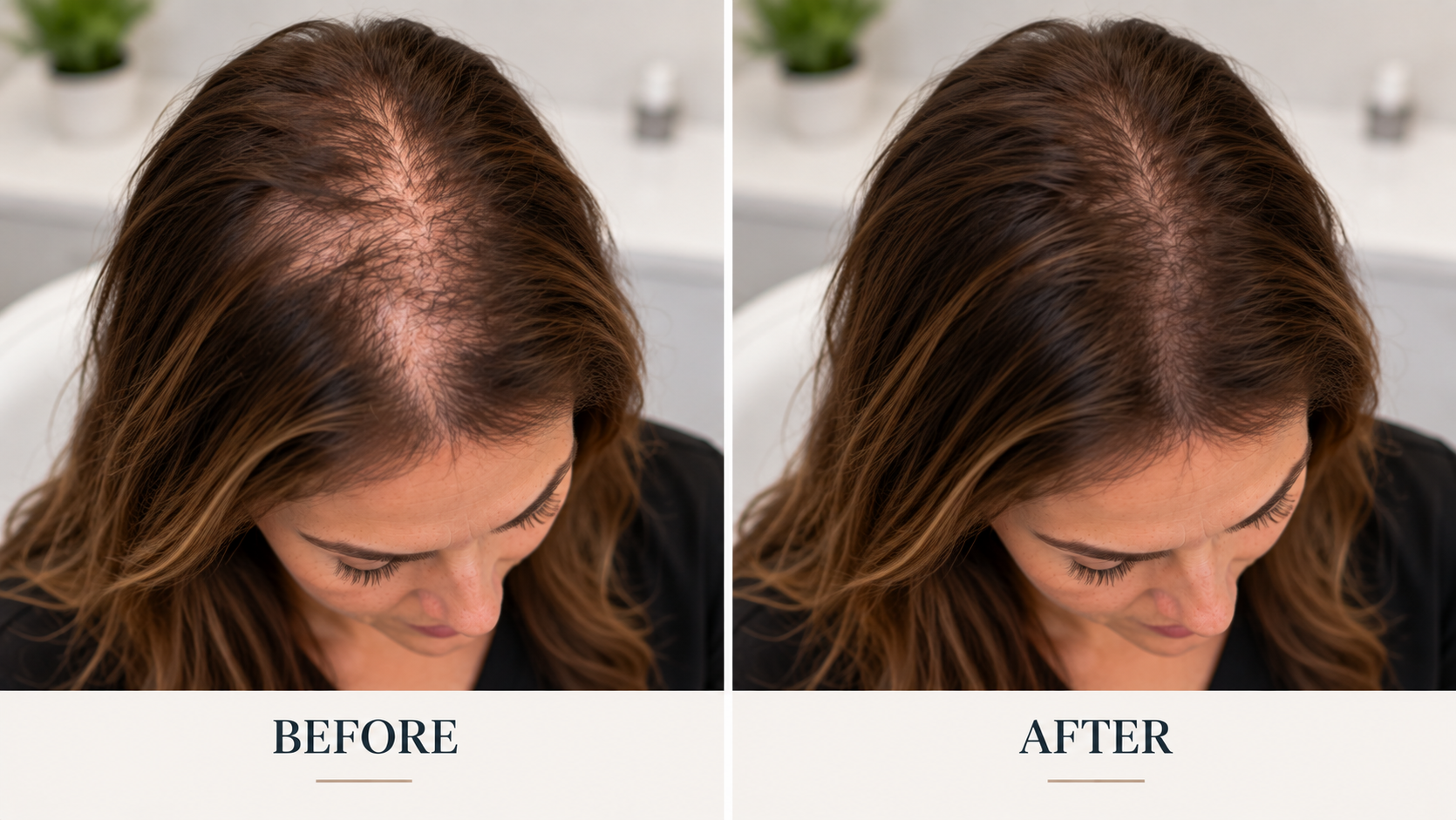
PRP results should be evaluated through consistent, realistic photography and changes in hair appearance over time.
The goal should not be:
“Completely restore all lost hair.”
A more realistic goal for an appropriate candidate is improvement in factors such as hair density, thickness, or overall appearance, depending on individual response.
Results aren't guaranteed, and PRP does not create new follicles where viable follicles are absent.
PRP Hairline Treatment in Monterey Park, CA
At ME MEDSPA in Monterey Park, Hairline is included among the clinic's PRP rejuvenating treatment options.
A consultation is important because hair thinning is not a single condition. Understanding the pattern, progression, scalp condition, medical history, and goals helps determine whether PRP is an appropriate option or whether further medical evaluation should come first.
ME MEDSPA also serves patients from Alhambra, San Gabriel, Rosemead, East Los Angeles, and surrounding San Gabriel Valley communities.
Related Reading
Frequently Asked Questions
What is PRP hair treatment?
PRP hair treatment uses platelet-rich plasma prepared from the patient's own blood. The prepared PRP is administered to selected areas of the scalp as part of a treatment plan for appropriate hair-thinning concerns.
Does PRP grow new hair follicles?
PRP does not create entirely new hair follicles. Its potential usefulness depends partly on the type of hair loss and the condition of existing follicles.
How many PRP hair treatments do I need?
There is no universal number. Treatment frequency depends on the pattern and cause of thinning, individual response, provider protocol, and treatment goals.
Is PRP hair treatment permanent?
PRP should not be considered a guaranteed permanent cure for hair loss. Hair thinning may continue to be influenced by genetics, aging, hormones, medical factors, and other causes, and maintenance may be discussed when appropriate.
Is there downtime after PRP scalp treatment?
Temporary tenderness, redness, swelling, sensitivity, bruising, or discomfort may occur around treated areas. Recovery varies between patients.
Can PRP treat every type of hair loss?
No. Hair loss has many potential causes, and PRP isn't appropriate for every condition. Sudden, patchy, unexplained, symptomatic, or rapidly progressing hair loss may require medical evaluation.
Book Your Consultation at ME MEDSPA in Monterey Park
If you've noticed hairline thinning, reduced density, or changes in the appearance of your hair, determining the possible cause is an important first step.
A consultation at ME MEDSPA can help evaluate your concerns and determine whether PRP Hairline treatment may be appropriate for your goals.
Ready to Get Started?
Book your consultation with ME MEDSPA today
📍 ME MEDSPA — Monterey Park, CA
📞 (626) 545-2018
BOOK YOUR CONSULTATION

